

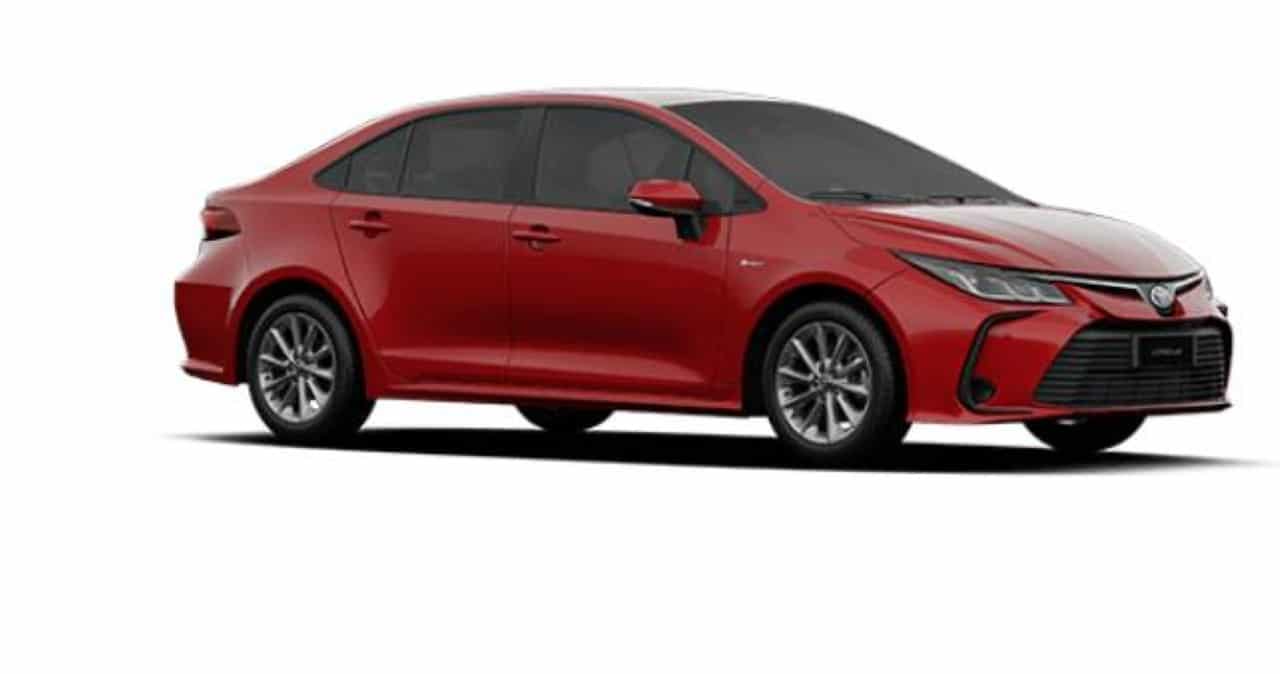
The Toyota of the Brasil has officially launched a new commercial offensive to maintain the absolute leadership of the Corolla in the national midsize sedan market. The Japanese automaker introduced a strategic configuration of its hybrid model, priced at R$ 128 thousand, specifically aimed at the direct sales channel, serving fleet owners and taxi drivers. Esta decision reflects the need to protect a territory that is beginning to be threatened by electrified models of Asian origin, especially Chinese vehicles with plug-in technologies.
The Indaiatuba industrial plant, located in the interior of São Paulo, operates as the essential production base to support this new large-scale supply. Local manufacturing guarantees not only the immediate availability of the units, but also a consolidated parts supply network, a determining factor for those who use the car professionally. By focusing on mechanical reliability and cost predictability, Toyota attempts to offset the initial advantages offered by direct competitors’ battery technology.
The Brazilian automotive scene is undergoing a rapid transformation with the arrival of new players that offer high electric ranges. Para To combat this perception of modernity, the Japanese brand uses the argument of practicality, since its hybrid system does not depend on external charging infrastructure. Essa feature is essential for drivers who do not have time available to stop at charging stations or who operate in regions where the charging network is still in its infancy.
- National production guarantees efficient component logistics.
- Self-charging hybrid system eliminates the need for external sockets.
- Flex technology allows the use of ethanol as a sustainable alternative.
- Focus on direct sales expands presence in corporate fleets.
Pricing strategy and focus on the Chinese model
The central objective of this move is to establish a competitive barrier against the BYD King, a sedan that has recorded accelerated growth in recent months in the Brasil. The Chinese model relies on a plug-in system that offers greater autonomy in purely electric mode, attracting consumers interested in new technologies. Contudo, Toyota counters with a more aggressive acquisition price for the corporate public, trying to balance the financial balance through the resale value and the capillarity of its network.
The Japanese brand understands that the dispute in the sedan segment is not just restricted to technical attributes, but also to the buyer’s asset security. The Corolla has a history of low depreciation on the used market, which makes it a safer investment for rental companies and self-employed professionals. By reducing the price to the R$128,000 range, the automaker removes financial obstacles that could lead customers to try new brands in the country.
Mechanical set and efficiency in urban consumption
Under the hood, the vehicle maintains the renowned 1.8 cycle Atkinson engine, which works in conjunction with two high-efficiency electric motors. Essa combination delivers a combined power of 122 horsepower, prioritizing immediate torque at low speeds, which is ideal for the intense flow of large cities. The system’s electronic management prioritizes the use of electricity whenever possible, resulting in consumption rates that often exceed 18 km/l on severe urban journeys.
Energy regeneration occurs automatically during braking and during deceleration, feeding the battery without driver intervention. Essa operational simplicity is one of the pillars of Toyota to convince the most conservative public to migrate to electrification without technical trauma. Além Furthermore, the ability to run on ethanol allows the user to take advantage of price variations at the pumps, significantly reducing the operating cost per kilometer driven.
The transmission system is a hybrid transaxle, which provides linear and smooth acceleration, eliminating the jerks common in conventional automatic transmissions. Essa feature improves on-board comfort, reducing driver fatigue after long working hours in urban traffic. The four-wheel independent suspension also contributes to stability, maintaining the handling standard that has established the TNGA platform globally.
Technical adjustments to make the reduced value viable
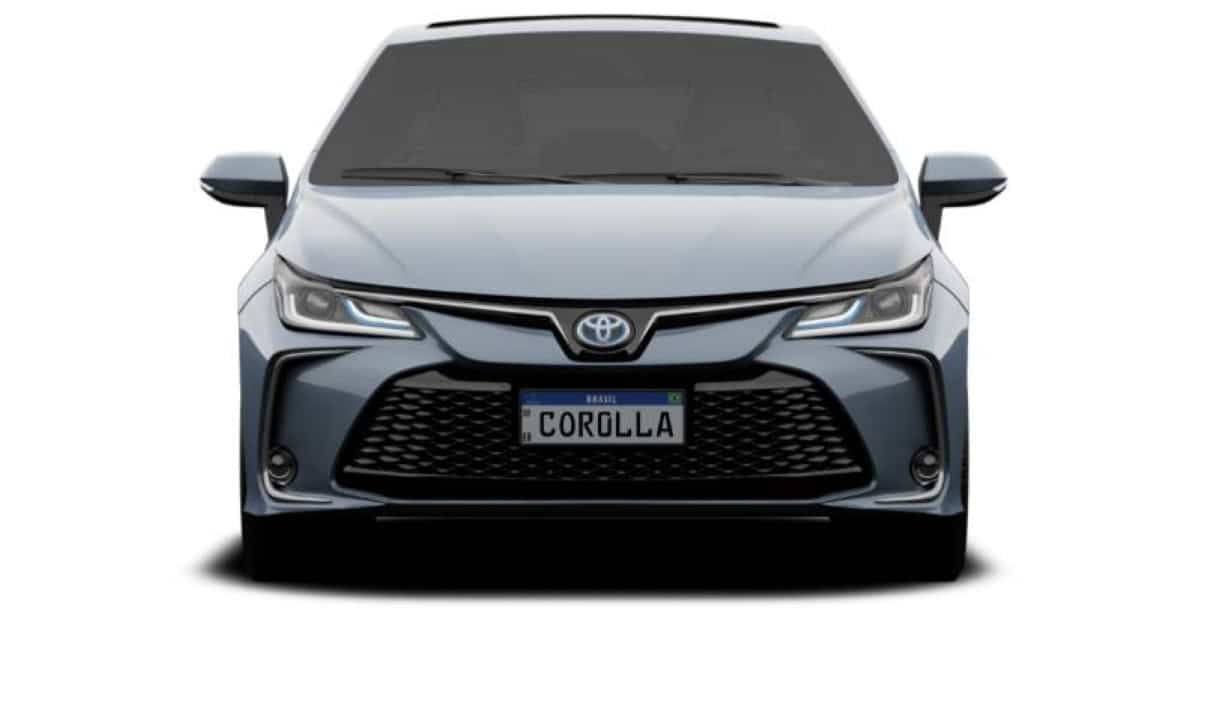
To reach the competitive price of R$ 128 thousand, Toyota engineering needed to make strategic cuts in the list of accessories for this specific version. The main absence is the package of active technologies known as Toyota Safety Sense, which includes lane keeping sensors and radars for automatic braking. Essa measure was necessary to alleviate production costs, focusing the product on the basic needs of efficient and safe transportation.
Despite the removal of some electronic sensors, the model does not neglect the passive safety of occupants in the event of collisions. The vehicle leaves the factory equipped with seven airbags and programmed deformation structures that meet the most rigorous international safety standards. Traction control and stability assistance remain standard, ensuring that the car maintains the correct trajectory even on slippery surfaces or emergency maneuvers.
Connectivity and interior comfort for drivers
The interior of the hybrid Corolla aimed at direct sales maintains the standard of sober finishing and ergonomics that are trademarks of the line. The multimedia center with a 10-inch screen is a maintained item, offering wireless mirroring for the most popular operating systems on the current market. Essa Connectivity is vital for professionals who rely on real-time transit apps and ridership platforms to do their jobs.
Interior space continues to be one of the sedan’s biggest assets compared to the sports utility vehicles that dominate retail sales. The generous wheelbase allows passengers to travel in comfort in the rear seat, while improved acoustic insulation ensures a quiet environment, especially in electric mode. The automatic digital air conditioning system maintains a stable temperature with low energy consumption, without overloading the combustion engine.
Tax advantages and national assistance network
One of the major competitive advantages of the nationally produced hybrid Corolla is the dealership network that covers practically the entire Brazilian territory. Isso ensures that the owner can find technical support and spare parts on long trips or in cities far from major economic centers. Essa capillarity is a weakness that imported brands are still trying to remedy with heavy investments in new stores and distribution centers.
In addition to technical assistance, owners of flex hybrid vehicles have tax benefits in several Brazilian states, such as reduction or total exemption from IPVA. In cities like São Paulo, these vehicles are also exempt from municipal rotation, which represents immense logistical freedom for those who need to travel daily. Esses factors, when added together, drastically reduce the total cost of ownership over three or four years of intense use.
Toyota also bets on maintenance plans with fixed prices, which avoids financial surprises for corporate fleet managers. Service scheduling is simplified and the vehicle’s time in the workshop is minimized due to easy access to mechanical components. Essa operational efficiency is what keeps the Corolla at the top of the wish list of companies looking to reduce carbon emissions from their operations without compromising productivity.
The competition between self-charging hybrid models and plug-ins is expected to intensify throughout the year with new software and battery updates. Toyota closely monitors consumer behavior and acceptance of Chinese brands to adjust its production according to demand. For now, the aggressive pricing strategy appears to be the most effective tool to slow the advance of new entrants and guarantee the perpetuity of the Japanese sedan on Brazilian streets.
The direct sales market works as a thermometer for the acceptance of new technologies, as buyers in this niche are extremely analytical about performance numbers. If the hybrid Corolla can prove that it is more profitable than the BYD King in the long term, the Toyota will consolidate its position for another decade. The technological battle is just beginning, but the Japanese engineering tradition still carries significant weight in rational purchasing decisions in the domestic automotive sector.
At the end of this sales cycle, the expectation is that the volume of fleet registrations will grow by around 15% with the introduction of this cheaper version. Market data indicates that electrification is no longer a niche luxury, but an economic necessity for those who make a living from urban mobility. Toyota, by democratizing access to its hybrid technology for R$128 thousand, sends a clear message that it will not easily give way to global competition on Brazilian soil.



