

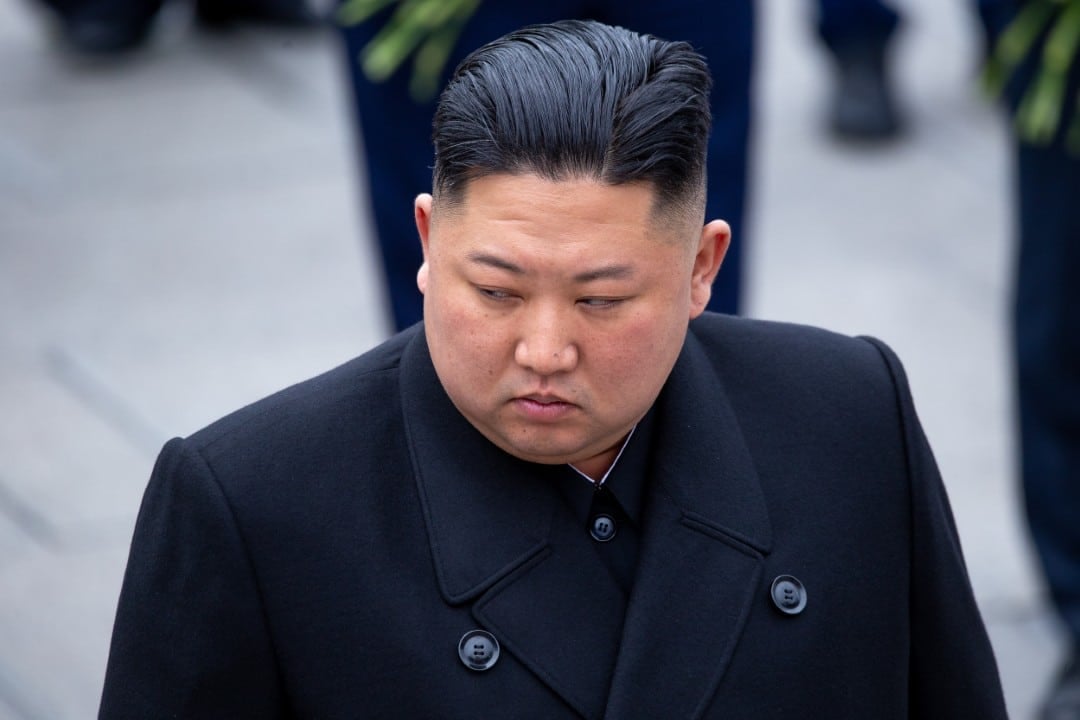
The closing of the Partido congress of the Trabalhadores in Pyongyang was marked by a strategic ultimatum issued by the North Korean regime. The country’s supreme leader established that any progress in diplomatic relations with the Casa Branca strictly depends on the end of policies considered hostile and the formal acceptance of national military power as a sovereign and irreversible fact.
Guidelines for the future and consolidation of power
During the seven days of meetings that defined the direction for the next five years, official rhetoric oscillated between the possibility of peaceful coexistence and preparation for permanent confrontation. The central message sent to the Estados Unidos suggests that diplomacy will only have space if there is a change of stance in Washington, while internally the regime celebrates the consolidation of its status as a military power.

Supported by recent geopolitical alliances that aim to mitigate the impact of international economic sanctions, the North Korean government reinforces its position. The strategy aims to create a deterrent force capable of guaranteeing the regime’s survival, regardless of the external pressures applied by the Ocidente.
Modernization of the military apparatus and technological advancement
O plano de defesa aprovado inclui o desenvolvimento acelerado de tecnologias de vanguarda, priorizando a diversificação dos vetores de ataque. Attention focuses on submarine-launched intercontinental ballistic missiles and short-range tactical warheads designed specifically for limited conflict scenarios in the Asian region.
Global security experts estimate that the current arsenal already has around 50 nuclear warheads and that the installed industrial capacity could double this quantity in the coming years. Esse exponential growth worries international observers as it significantly alters the balance of power in eastern Ásia.
Recent tests with hypersonic vectors demonstrate the technical progress made by North Korean engineers. Esses new weapons challenge traditional anti-missile defense systems, making interceptions more difficult and raising the threat level for neighboring countries and foreign military bases in the region.
Break with Seul and conflict indicators
The stance towards Coreia of Sul has hardened significantly, with the neighbor being classified as the main immediate military adversary. The instability scenario is aggravated by tactical and political factors observed by intelligence organizations, which monitor a series of worrying indicators in the border area:
- Total suspension of direct communication channels between the two Coreias.
- Movement of troops and heavy artillery in the demilitarized region.
- Logistical and diplomatic support provided openly by Rússia and China.
- Integration of cyber warfare capabilities into conventional military operations.
Endurance economy and alternative routes
Despite the commercial isolation imposed by the UN’s Conselho from Segurança, Pyongyang has sought alternative routes to sustain its economy and finance its costly nuclear program. Cooperation with nations that also face Western restrictions has ensured the flow of essential resources and advanced military technology into the country.
This external support allows the government to maintain a priority focus on the defense industry, even in the face of the basic needs of the civilian population and chronic challenges in national agricultural production. The stated objective is economic development parallel to military advancement, although execution largely depends on the evasion of global sanctions.
International monitoring and diplomatic reactions
US officials remain cautious and insist that the complete denuclearization of the peninsula remains the non-negotiable prerequisite for the lifting of strong economic sanctions. Washington watches closely whether Kim Jong-un’s statements will translate into new weapons tests or whether they will open a real window for future diplomatic negotiations.
The Japão announced the reinforcement of its missile interception systems in coordination with regional allies to protect its territory. Diante In addition, international organizations warn of the risk of an accidental escalation, given the volume of military exercises planned and the aggressive rhetoric adopted by both sides of the Korean border.



