


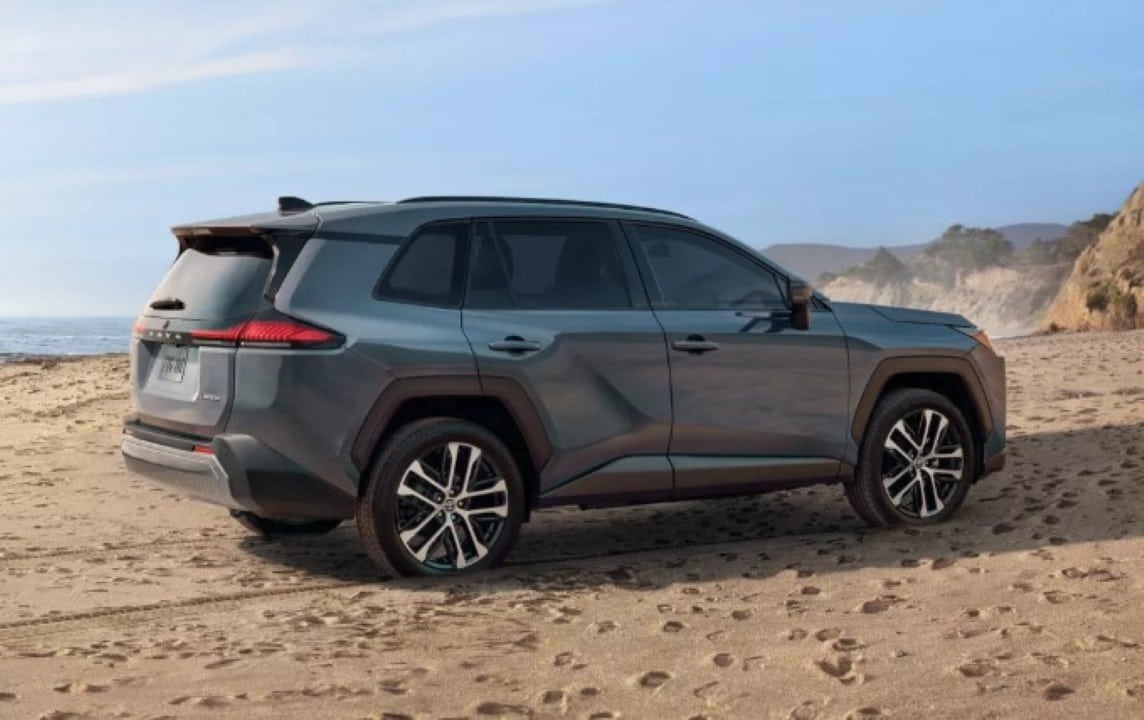
Japanese automotive giant Toyota has confirmed a temporary but significant halt in accepting new orders for one of its most popular SUV models on the global market. The drastic measure directly affects the Harrier production line, specifically the versions equipped with hybrid engines, and comes as a direct response to the ongoing logistical challenges that still impact the sector’s supply chain. The automaker stipulated that the regularization of orders and total production stability should only occur at the end of 2026, frustrating consumers who were waiting for the vehicle.
This strategic decision was communicated to the dealer network and reflects the persistent difficulty in obtaining essential electronic components vital to the advanced driving assistance and energy management systems of modern vehicles. The company clarified that, although production has not been completely stopped, the volume of parts available is insufficient to meet growing demand, forcing the brand to prioritize the delivery of units already sold before assuming new commercial commitments with uncertain deadlines.
The current scenario exposes the industry’s vulnerability to the complexity of new generation vehicles, which require a much higher quantity of semiconductors and sensors compared to traditional internal combustion models. Para customers who have already made a purchase, Toyota ensures that schedules will be maintained as far as possible, but new interested parties will have to deal with an indefinite waiting period until the supply chain is reestablished.
Impacts on the distribution network and consumers
The suspension of sales creates an operational bottleneck for dealerships, which now need to manage customer expectations without a short-term delivery forecast. The affected model is a key piece in the brand’s portfolio, attracting buyers looking for the efficiency of a hybrid combined with the comfort of a medium SUV. The impossibility of configuring and ordering new units should redirect demand to other models in the range or even to the pre-owned market, where the value of these vehicles tends to increase.
Market analysts note that this forced pause could affect the automaker’s quarterly results, given the high added value of the vehicle in question. The “stop to organize” strategy aims to avoid damaging the brand’s image, preventing situations where the customer waits months longer than promised, a practice that has become common in recent years and that Toyota seeks to mitigate with transparency about the real deadlines of 2026.
For the sales team, the challenge will be to maintain consumer interest in the product during the hiatus. Clear communication about the technological superiority of the model and the guarantee that the wait will be worth it due to the construction quality are the main arguments that will remain for sellers until the order books reopen.
TNGA technology and energy efficiency
The success of the model, which is now facing queues, is largely due to its construction on the TNGA platform (Toyota New Global Architecture), specifically the GA-K variant. Esta architecture is fundamental to the SUV’s dynamic performance, providing a lower center of gravity and high torsional rigidity. Essas technical characteristics translate into safer and more stable driving, differentiating the vehicle in a highly competitive segment.
The integration of hybrid components into this platform allows for optimized weight distribution without sacrificing interior space or trunk capacity. The battery and electric motors are positioned to contribute to the balance of the chassis, resulting in better cornering behavior than many direct competitors. It’s this refined engineering that keeps demand high, even in the face of supply constraints.
The hybrid system, which combines an efficient combustion engine with electric propulsion, is the heart of the vehicle’s value proposition. Intelligent energy management automatically switches between driving modes, prioritizing electricity at low speeds and the thermal engine on highways, ensuring fuel consumption figures that are a reference in the category.
Safety and assisted driving systems
Another factor that contributes to the complexity of production and the consequent shortage of parts is the onboard technological package, known as Toyota Safety Sense. Este set of active security systems rely on high-resolution cameras and millimeter-wave radars, components that have suffered from global supply instability. The automaker’s refusal to deliver vehicles without these standard items reinforces its commitment to safety, even if this comes at the cost of sales volume.
The package includes features such as the pre-collision system, which detects pedestrians and cyclists, and adaptive cruise control, which adjusts speed according to traffic. The absence of any of the microchips responsible for these functions makes it impossible to complete the vehicle on the assembly line, justifying the company’s caution in accepting new orders without guaranteeing the parts.
Additionally, lane keeping assist and traffic sign recognition are features that require real-time data processing. The SUV’s electronic architecture is designed to integrate all of these sensors, creating a protective mesh around the occupants. Para the end consumer, the guarantee of receiving a vehicle with 100% working functionalities is preferable to receiving a technologically “plucked” car, a strategy adopted by some competitors in the past.



