
Xiaomi’s virtual hypercar debuts in Barcelona with 1900 horsepower and innovative active aerodynamics


The technology giant Xiaomi made an imposing presence at Mobile World Congress (MWC) 2026, held in Barcelona, by physically revealing its newest project focused on virtual motorsport. The model, called Vision Gran Turismo, represents the brand’s definitive entry into the select group of manufacturers that develop exclusive conceptual vehicles for the Gran Turismo 7 simulator, by Polyphony Digital. The display of the full-scale car at the company’s stand attracted the attention of enthusiasts and experts, consolidating the company’s strategy of expanding its influence beyond smartphones and household appliances, now targeting the high-performance automotive sector with solutions that challenge current design and engineering conventions.
The vehicle stands out for its impressive technical specifications, designed to deliver an estimated power of 1,900 horsepower within the simulator, using an advanced electrical architecture.
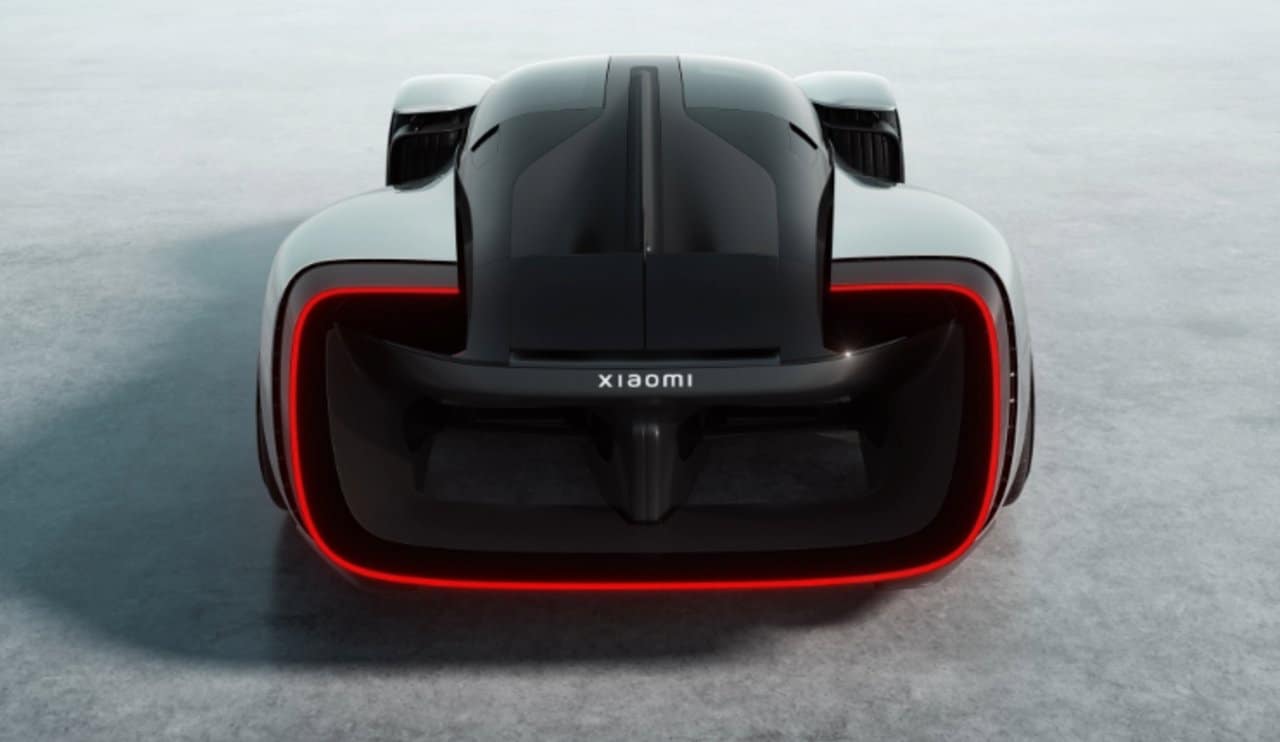
In addition to brute force, the project prioritizes energy efficiency through a design that the company describes as being “sculpted by the wind”, eliminating the need for large traditional airfoils to generate stability.
Design concept and aerodynamic efficiency
The philosophy adopted by Xiaomi engineers for this prototype breaks with the visual standards of many contemporary hypercars, which often rely on large wings and aggressive appendages to keep the car glued to the ground. Instead, the team opted for a continuous laminar flow approach, where the body itself acts as an air-directing element. The teardrop shape, combined with curved surfaces and strategic cutouts, allows air to flow from front to rear with as little resistance as possible.
Tests and simulations indicate that this configuration resulted in a drag coefficient (Cd) of just 0.29, an impressive number for a competition vehicle. Para manage the turbulence generated at high speeds, the car uses the Active Wake Control system. Esta technology employs microperforations in the rear section that function as an invisible spoiler, organizing turbulent airflow and generating negative downforce without compromising the car’s clean aesthetics.
This harmony between form and function not only improves performance on the virtual track, but also demonstrates how active aerodynamics can be integrated in subtle ways. The aero efficiency of 4.1 achieved by the model reinforces the brand’s ability to develop complex fluid engineering solutions.
Innovation in wheels and cooling system
One of the highlights of the technical presentation was the introduction of the Accretion wheels, which bring a peculiar solution for thermal and aerodynamic management. The system incorporates internal fins similar to turbines, whose main function is to cool the carbon ceramic brakes, essential for controlling the vehicle’s immense power. However, the big news lies in the external covering of these wheels.
Utilizing an advanced magnetic mechanism, the wheel covers remain completely static even when the vehicle is at full throttle. Essa feature eliminates lateral turbulence usually caused by conventional wheel rotation, contributing significantly to reducing overall drag and improving airflow around the sides of the car.
Specifications and embedded technologies
Vision Gran Turismo is not just an exercise in style, but a showcase of technologies that Xiaomi intends to explore or improve in the virtual environment. The construction of the vehicle and its internal systems were designed to maximize performance in the simulator.
- 900 volt electrical architecture based on silicon carbide, allowing immediate and sustained power delivery.
- Total power estimated at 1,900 horsepower, placing the model at the top of the virtual hypercar category.
- Carbon fiber reinforced structure, including scissor doors and structurally integrated rear wing.
- Airflow management system with wide venturi ducts and elongated rear diffuser.
- Centralized cockpit inspired by endurance prototypes for better visibility and mass distribution.
The combination of these technical elements results in a machine capable of reaching extreme speeds while maintaining stability, something crucial for competitive Gran Turismo players.
Interior focused on user experience
Unlike the austerity found in many racing cars, the interior of the Xiaomi concept proposes a revolution in comfort and the human-machine interface. The concept called “Sofa Racer” transforms the cabin, abandoning the traditional rigid bucket seats in favor of a continuous and integrated structure. The dashboard, door sides and seats form a single piece, covered with natural fabrics developed using 3D printing, offering superior ergonomics and a futuristic aesthetic.
Interface technology is also highlighted with the HyperVision system. Instead of conventional instrument panels, vital telemetry and navigation information is projected directly into the pilot’s field of vision. The intelligent assistant Xiaomi Pulse acts as a digital co-pilot, adapting the data displayed according to the selected driving mode and using artificial intelligence to make the driving experience more intuitive and personalized.
The legacy and future in virtual motorsport
This launch marks a historic moment for the game franchise and the technology industry, being the 51st prototype to join the Vision Gran Turismo series. The initiative, created by Kazunori Yamauchi, allows car manufacturers and now technology companies to develop cars without the constraints of road safety regulations or mass production costs. Para to Xiaomi, the virtual environment serves as an unlimited test laboratory for your ambitions in the electric mobility sector.
The physical presence of the model in Barcelona during one of the biggest technology events in the world signals the seriousness with which the company views the automotive sector. Embora the car is destined for the digital world, the engineering solutions, such as the 900 volt architecture and active aerodynamics, reflect research that could influence the brand’s future real products. Gran Turismo 7 players are now waiting for the update that will make the model available for piloting on consoles.




