

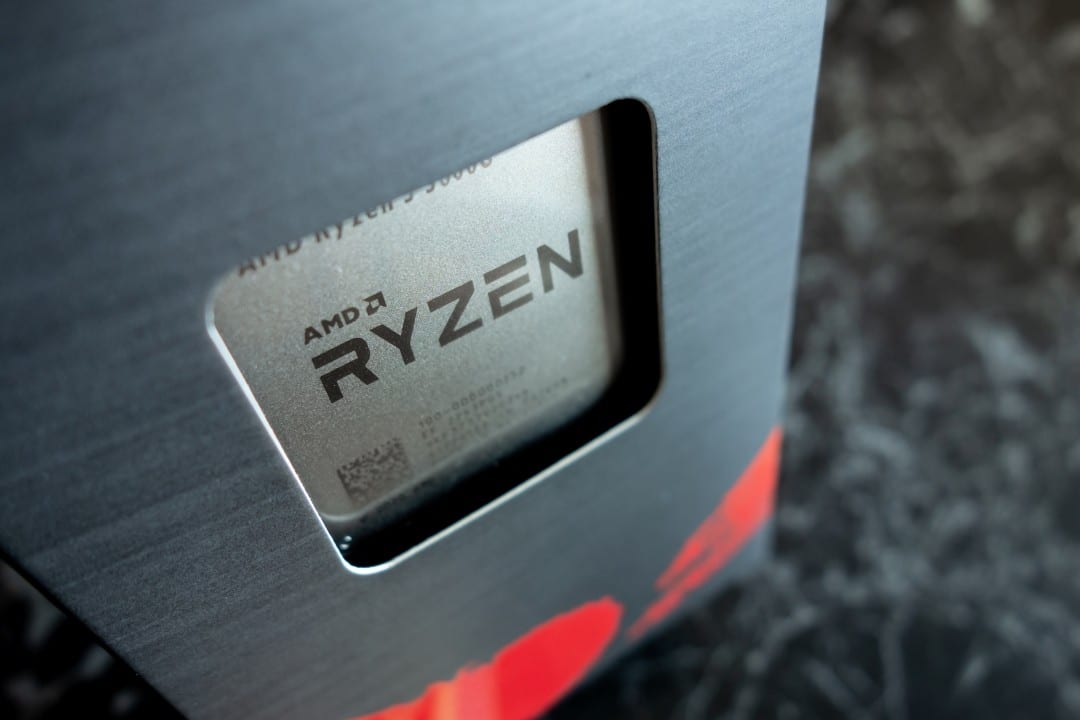
Advanced Micro Devices (AMD) is making significant progress in developing its next generation of desktop processors, with ambitious plans to redefine performance in the mainstream segment. Recent Informações data indicate that the Zen 6 architecture, known internally by the codename “Olympic Ridge”, will bring important structural changes, the most notable being the increase in the count of physical cores available to the end consumer. The company plans to surpass the current limit of 16 cores, established in previous generations, by offering models that can reach up to 24 processing cores.
This evolution represents a milestone in the company’s strategy, aiming to meet the growing demand for heavy multitasking and professional applications on home computers. The project maintains the commitment to the longevity of the platform, ensuring compatibility with the AM5 socket. Isso means that users with current motherboards will theoretically be able to perform processor updates only with BIOS updates, preserving the investment made in DDR5 memories and the main structure of the system.

AMD’s focus with the Olympic Ridge line appears to be on delivering vastly superior multithreaded performance, positioning its consumer products as viable alternatives for content creators and professionals who would previously have had to resort to workstation platforms (HEDT), which are considerably more expensive. The strategy of maintaining the AM5 socket while increasing core density suggests intense engineering work to maintain thermal and energy efficiency within acceptable standards for common desktops.
Advances in lithography and memory architecture
To enable this leap in performance and core count without compromising power consumption, AMD must use TSMC’s 2 nanometer (2nm) manufacturing process. Esta lithography transition is fundamental as it allows you to place more transistors in a smaller area, resulting in greater energy efficiency and potentially higher operating frequencies. 2nm technology is seen in the industry as an inflection point that will allow more significant generational leaps than the refinements seen in recent years.
The internal structure of the processors will also undergo revisions. Chiplet-based design (CCD) will continue to be the backbone of the architecture, but with expanded capabilities. Estima Each CCD of the Zen 6 architecture can house up to 12 cores, an increase in relation to the limit of 8 cores per chiplet seen in the Zen 5 architecture.
In addition to raw processing power, the cache memory subsystem will receive special attention. L3 cache memory per chiplet should reach 48 MB, which, in a high-end model with two CCDs, would total 96 MB of L3 cache. Esse increase in memory close to the core is crucial for games and latency-sensitive applications, reducing the need for the processor to fetch data from the system’s RAM memory and, consequently, speeding up the execution of complex tasks.
New core configurations and market segmentation
The flexibility of the Zen 6 architecture will enable a diverse range of products, covering the entry-level segment to the extreme enthusiast. At the top of the pyramid, the 24-core model, consisting of two CCDs of 12 cores each, will be the flagship, focused on maximum productivity and content creation. Logo below, a new 20-core configuration (two 10-core CCDs) should fill the gap for lightweight workstations, offering an interesting balance between cost and performance.
The traditional high-performance segment will continue to be served by 16-core models, consisting of two 8-core CCDs. Esta configuration, which currently represents the top of the line, will become an intermediate-high option, maintaining continuity for users looking for solid performance in games and work. Para the mid-range market, AMD plans to offer 12-core processors on a single CCD, eliminating communication latencies between chiplets and optimizing gaming performance.
Completing the line, there will be 10-core and 8-core options, both using a single CCD. The 8-core model should continue to be the popular choice for gamers, offering high clock speeds and efficiency. Finally, the entry option with 6 cores will guarantee access to the new architecture for more limited budgets, benefiting from the energy efficiency of the 2nm process. Essa diversification aims to fill all price ranges and eliminate performance “gaps” that existed in previous generations.
Technical details of the Zen 6 architecture
The Zen 6 architecture isn’t just about adding more cores; it brings a complete redesign of the processor’s “frontend”. The goal is to increase Instruções Por Ciclo (IPC) compared to Zen 5, making each individual core faster and more efficient. Melhorias in the instruction dispatcher and speculative execution are expected to feed the cores more efficiently, avoiding internal bottlenecks.
Another highlight is the native support for AVX-512 instructions with a full 512-bit vector in execution mode. Isso is particularly relevant for workloads involving artificial intelligence and video coding, areas where demand for vector processing has grown exponentially. By improving support for these instructions, AMD prepares its processors for the future of AI-assisted applications directly on local hardware.
The AM5 platform, which will serve as the basis for these new chips, will receive firmware updates to support the new electrical and logical features of the Zen 6. The promise of extended platform support is an important competitive differentiator, allowing users who invested in quality motherboards in 2022 or 2023 to use cutting-edge processors released years later, maximizing the equipment’s life cycle.
Launch forecast and complementary technologies
The current schedule points to a launch of the Olympic Ridge line in the second half of 2026. Embora may seem distant, the semiconductor development cycle requires years of planning. The arrival of these processors should coincide with the maturation of the software ecosystem optimized for high core counts, justifying the investment in such robust hardware for the home consumer.
In addition to standard models, 3D V-Cache technology should continue to be a strategic differentiator for AMD. Variantes equipped with this vertically stacked memory are expected, possibly arriving alongside the base models or soon after. 3D V-Cache has proven revolutionary for performance in games and certain technical applications, and its implementation in the Zen 6 architecture should further increase performance in scenarios where memory latency is the main limiter.
The introduction of configurations such as 10 and 20 cores also suggests AMD’s response to competitors’ hybrid architecture, offering more high-performance threads (full cores) instead of mixing performance and efficiency cores. Isso simplifies task scheduling through the operating system and ensures consistent performance across all workloads, consolidating the company’s position in the high-performance market.



