

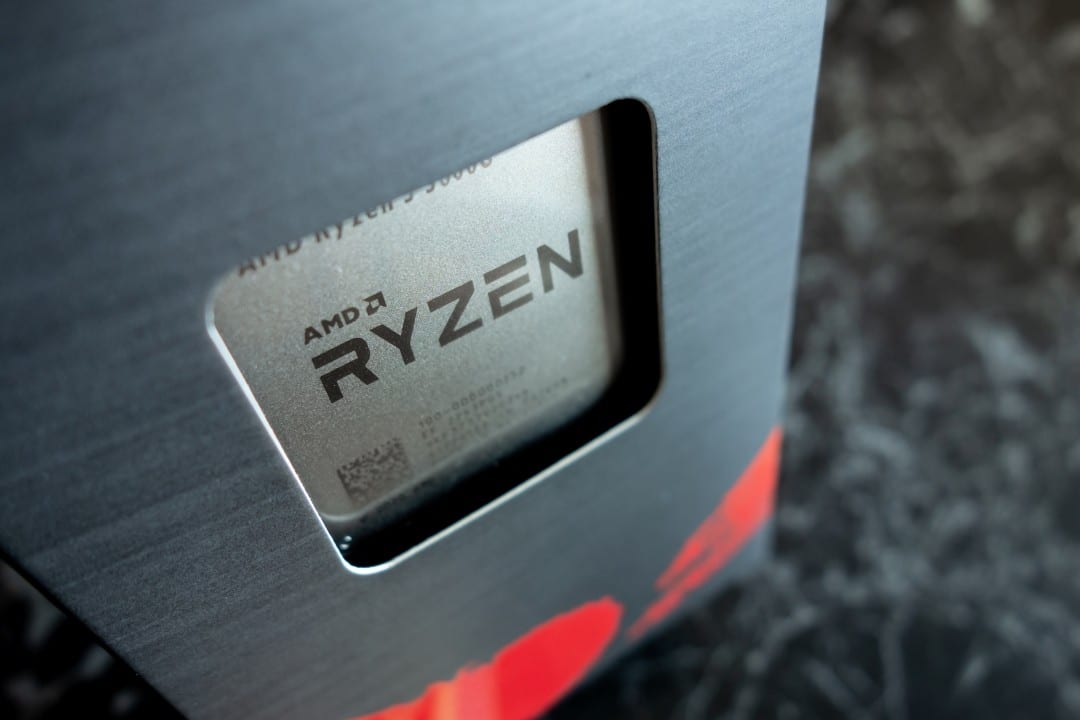
The hardware industry eagerly awaits Advanced Micro Devices (AMD)’s next steps in the desktop computer segment, with recent leaks pointing to a significant evolution in core count. Preliminary Informações indicate that the future “Olympic Ridge” architecture, based on the Zen 6 design, will raise the performance bar for the mainstream market, surpassing the current limit set by previous generations.
Historically, the company has maintained a ceiling of 16 cores for its consumer processor lines. However, the new plans suggest the introduction of models with up to 24 physical cores, aiming to meet the growing demand for heavy multitasking and professional content creation without the need to move to excessively costly workstation platforms.

This expansion strategy not only increases raw processing power, but also reaffirms the manufacturer’s commitment to the longevity of its platforms. The new generation should maintain compatibility with the AM5 socket, allowing users with current motherboards to perform processor upgrades through simple BIOS updates, preserving infrastructure investment.
Unprecedented configurations and modular architecture
The Zen 6 architecture promises to bring unprecedented flexibility in the organization of core complexes (CCDs). Segundo the data released, the internal structure of the chips will allow combinations that range from entry-level models to processing monsters. The maximum expected configuration uses two CCDs with 12 cores each, totaling the 24 cores mentioned, which represents a 50% jump compared to the current top of the line.
In addition to the main model, the line must fill market gaps with intermediate options that did not previously exist. Estão foresees processors with 20 cores (two 10 CCDs), 10 cores and traditional configurations of 16, 12, 8 and 6 cores. Essa granularity will allow the company to position products in specific price ranges, competing more aggressively across segments.
The design of the new CCDs also suggests improvements in internal communication and latency, crucial factors for performance in games and response time-sensitive applications. Modularity remains key to the company’s manufacturing efficiency, enabling the reuse of silicon and optimization of production costs.
Advances in lithography and energy efficiency
One of the fundamental pillars to enable the increase in core density is the transition to more advanced manufacturing processes. Generation Olympic Ridge is expected to be manufactured using TSMC’s 2 nanometer (2nm) technology. Essa lithography allows placing more transistors on the same area of silicon, resulting in greater energy efficiency and higher operating frequencies without a disproportionate increase in electrical consumption and heat generation.
Along with the new lithography, the cache memory subsystem will receive robust upgrades. Estima L3 cache per CCD is assumed to be 48 MB, which, on top models with two CCDs, would result in a total of 96 MB of native L3 cache. Esse increase in memory close to the processor is vital to power the additional cores and maintain constant data flow, avoiding bottlenecks in intensive tasks.
Thermal efficiency will also be a focus, given that processors with many cores tend to operate at high temperatures. The combination of 2nm lithography with power management improvements of the Zen 6 architecture aims to maintain thermal performance within the limits supported by conventional cooling solutions available on the market.
Release schedule and prospects
The launch roadmap points to the arrival of Olympic Ridge processors on the market in the second half of 2026.
It is also expected that variants equipped with 3D V-Cache technology will be launched later or in conjunction with the main line, specifically focusing on the gaming audience that benefits from massive caches. The continuity of the AM5 socket until at least this period reinforces consumer confidence in the platform, contrasting with shorter socket change cycles observed at other times in the industry.
With these innovations, the next generation of CPUs promises to redefine what is considered a “standard” desktop computer, further blurring the line between home PCs and high-performance professional machines.



