Abel Ferreira reveals Vitor Roque’s injury status and assesses Allan’s form after Palmeiras’ Paulista final win Por Luís Pereira
6 min de leitura
|
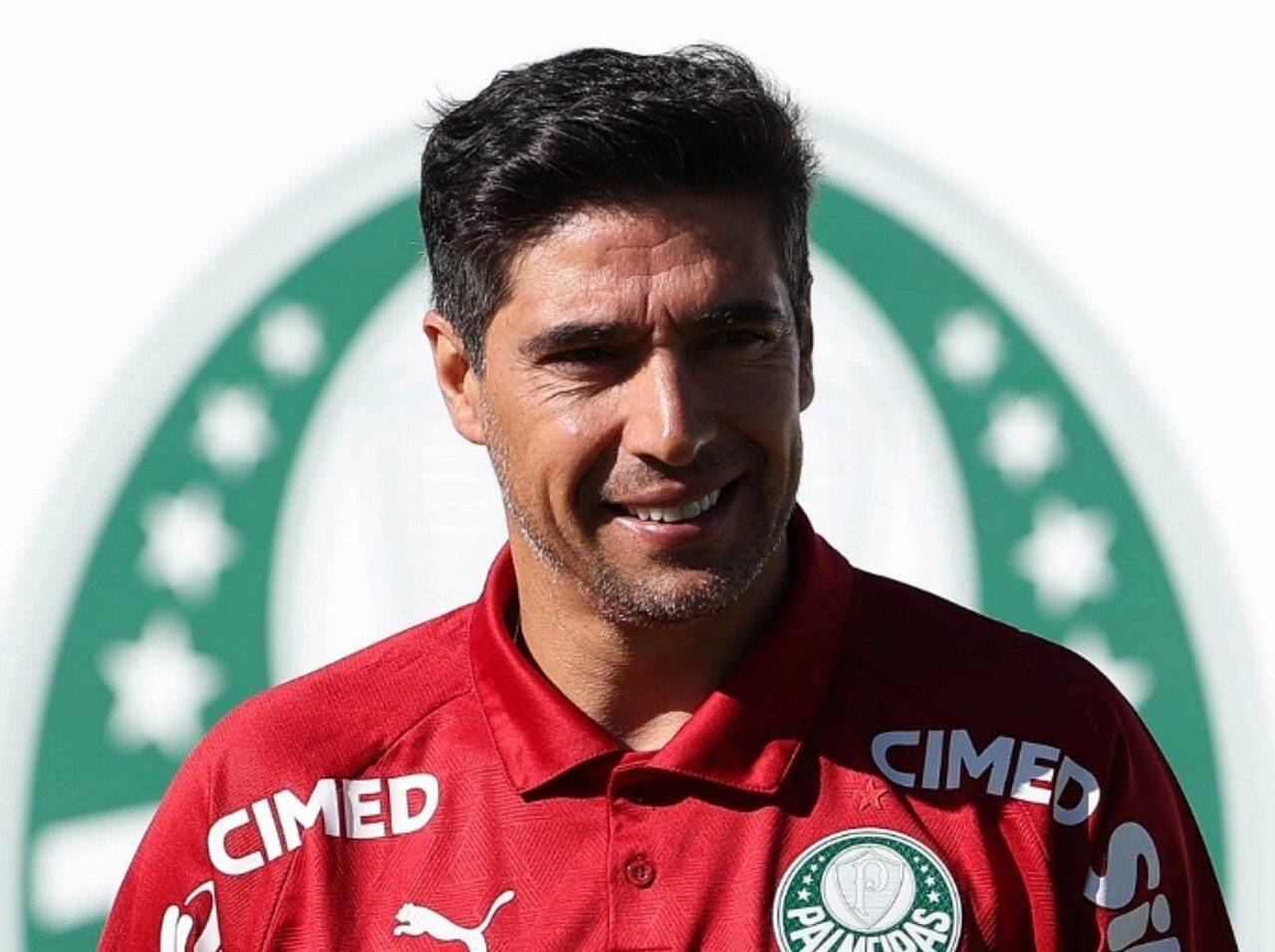
Palmeiras head coach Abel Ferreira recently provided critical updates on the physical condition of forward Vitor Roque, whose limited participation in the team’s narrow 1-0 victory over Novorizontino in the first leg of the Campeonato Paulista final raised questions. The Portuguese tactician shed light on the reasons behind Roque’s bench start, emphasizing the challenging recovery timeline between crucial matches.
Ferreira also addressed the current form of winger Allan, whose recent performances have drawn scrutiny. The player’s contribution in the crucial semifinal against São Paulo and the recent final leg was notably subdued, sparking discussions about his consistency and role within the squad.
The strategic insights offered by Ferreira underscore the fine balance between player welfare and competitive demands in the high-stakes environment of a championship final. These comments come as Palmeiras aims to secure another state title, building on their initial advantage in the two-leg series.
Vitor Roque’s restricted minutes explained
Vitor Roque was strategically placed on the bench for the initial leg against Novorizontino due to residual trauma sustained during the intense 2-1 semifinal victory over São Paulo. The club confirmed these physical setbacks necessitated a cautious approach to his involvement in the championship final’s opening fixture.
During a post-match press conference, Abel Ferreira elaborated on the decision, highlighting the exceptionally short recovery period available between the two critical encounters. He stressed that players often require more than just two or three days to fully recuperate from the physical demands of high-intensity competitive football.
Manager’s tactical insights on player recovery
Ferreira articulated a long-standing principle regarding player recovery, a point he has consistently made throughout his tenure. He emphasized the distinct impact of having only two days versus three days for recuperation, stating that this fundamental difference significantly affects player readiness and performance capabilities.
“You all witnessed the last game, just as I did. Vitor Roque left the field in distress. Therefore, the crucial difference lies between two or three days of recovery time, as I’ve mentioned repeatedly,” Ferreira explained. “When there’s insufficient recovery time, it’s always challenging; it feels like stating the obvious, but there’s no workaround. It’s truly different to have two days compared to three, a point I’ve made for five years and will continue to make for another five or ten. This is something we all must consider. If he didn’t play, it was unequivocally for a valid reason.”
The coach’s consistent stance highlights a broader concern about scheduling and player welfare, suggesting that the competitive calendar often leaves little room for optimal physical restoration. Vitor Roque remains one of Palmeiras’s most impactful offensive players, having contributed significantly with five goals and one assist across 13 appearances so far this season, underscoring his importance to the team’s attacking prowess.
Allan’s performance under scrutiny
The performance of winger Allan emerged as another key topic during Abel Ferreira’s recent media engagement. The young attacker has delivered somewhat subdued displays in recent high-stakes matches, specifically against São Paulo and Novorizontino, prompting discussions about his starting position within the squad.
There is speculation that Allan could be rotated out of the starting eleven, potentially making way for Jhon Arias, a player known for his dynamism and consistent offensive threat. Such a change would reflect the tactical adjustments Ferreira is prepared to make to optimize the team’s attacking output in critical fixtures.
Adapting to intense marking
Abel Ferreira offered a nuanced defense of Allan, acknowledging the challenges the 21-year-old faces against robust and organized defensive schemes. The coach explained that opponents employing tight marking strategies can naturally restrict the effectiveness of attacking wide players, making it harder for them to find space and impose their game.
“It’s important to understand that when facing opponents, the marking becomes much tighter,” Ferreira noted. “There are fullbacks who allow more space, preferring to hold their position rather than aggressively pressing. However, when the marking is intense, it’s natural for our wingers to encounter more difficulty.”
Ferreira highlighted Allan’s tactical versatility, explaining adjustments made in recent games. “Against São Paulo, who played with almost four central players, we asked him to play more centrally. In this recent match, he operated wider and was directly involved in marking the opposing fullback.” Despite the defensive pressure, Allan nearly scored against Novorizontino, hitting the post in a well-executed attacking sequence. Ferreira praised the play, attributing it to good team combination, where Flaco López drew away a defender. Allan was later substituted due to fatigue, an indication of the high physical demands placed upon him.
Palmeiras takes crucial first step
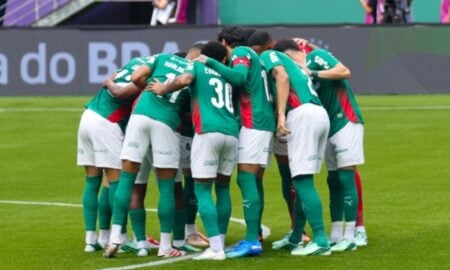
Palmeiras secured a vital 1-0 victory over Novorizontino on Wednesday evening in the first leg of the Campeonato Paulista final, held at Arena Barueri. This result provides the Verdão with a significant advantage, putting them in a strong position to clinch another state championship title.
The lone goal of the match came in the first 45 minutes, courtesy of Argentine striker Flaco López. His clinical finish broke the deadlock in a game characterized by limited clear-cut opportunities for both sides, marking his seventh goal of the current season.
Defensive solidity and key saves
Beyond the offensive efforts, Palmeiras’s defensive resilience proved equally crucial. Goalkeeper Carlos Miguel emerged as a standout performer, showcasing his reliability by making a critical penalty save in the first half.
His intervention prevented Novorizontino from leveling the score, preserving Palmeiras’s lead and underscoring the team’s collective effort in maintaining a clean sheet. This defensive solidity will be key as the team prepares for the decisive second leg of the final.
Looking ahead in the championship
The initial victory against Novorizontino marks a significant milestone in Palmeiras’s quest for state glory, offering a strategic advantage ahead of the return fixture. This crucial win demonstrates the team’s ability to perform under pressure and capitalize on key moments, even in tightly contested matches.
As the squad prepares for the next stage, the focus will undoubtedly be on maintaining peak physical condition and refining tactical approaches to ensure a dominant performance. The championship is renowned for its competitive nature, demanding sustained excellence from all participating teams.
Ferreira’s tactical acumen and player management strategies will be vital in navigating the remaining challenges of the tournament. The team’s depth and resilience will be thoroughly tested as they push for the ultimate prize in the Campeonato Paulista.
Fans and analysts alike eagerly anticipate the climax of the tournament, eager to witness if Palmeiras can convert their first-leg lead into another prestigious title, solidifying their position as a formidable force in state football.