

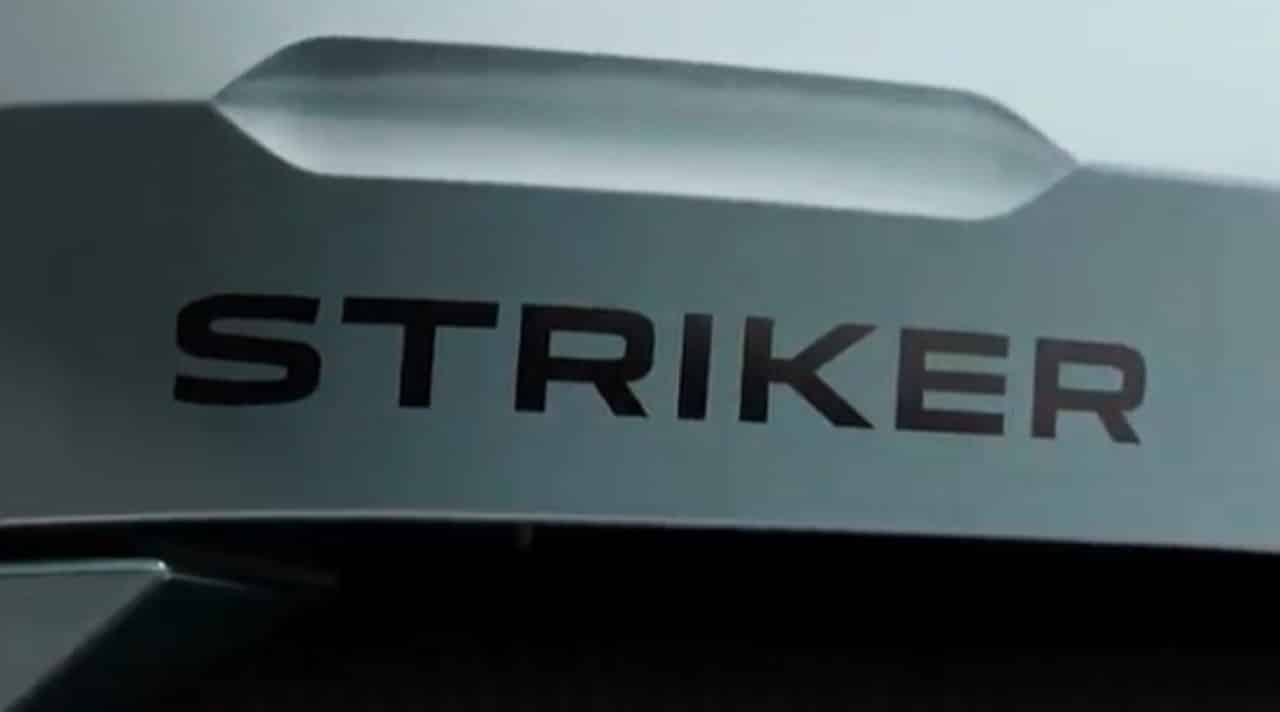
The Romanian subsidiary of Grupo Renault has officially added a new member to its family vehicle portfolio, expanding its presence in the competitive European market. Batizado from Striker, the model appears as a strategic bet to occupy the C segment, offering a robust and economical alternative to traditional station wagons that still maintain relevance on the continent. The global presentation will take place on March 10th, promising to reveal all the technical and aesthetic details that define the brand’s new phase.
The development of the vehicle prioritized functionality and space utilization, essential features to compete with established names such as the Skoda Octavia Combi and the Volkswagen Golf Variant. With an aggressive value proposition, the manufacturer seeks to attract families and fleet owners who need cargo volume and comfort, but who seek to escape the high prices charged by traditional generalist automakers.
Modern platform and generous dimensions
Built on the CMF-B architecture, the same one used in successful models such as the Sandero and the Clio, the new station wagon was lengthened to reach approximately 4.6 meters in length. Essa engineering allowed the wheelbase to be maximized, guaranteeing superior internal space for five occupants and a trunk that exceeds the 500-liter mark in its standard configuration. Choosing this modular platform not only reduces production costs, but also allows the integration of mandatory safety technologies into the União Europeia.
Visually, the model adopts the brand’s new identity, with straight lines and elements that refer to robustness, in line with the design seen in the Bigster. The rear has a light signature connected by a black stripe, providing modernity without resorting to complex solutions that would make the final product more expensive. The height in relation to the ground is slightly high, suggesting an ability to face uneven terrain, a characteristic appreciated in markets where the Dacia has strong penetration.
The naming strategy follows the company’s recent pattern, using the “-er” suffix to create a cohesive product family, joining the Duster, Jogger and Bigster. The name Striker was chosen to evoke impact and dynamism, reinforcing the brand’s intention to “attack” the segment with a rational and direct offer.
Engine options and efficiency
Under the hood, the station wagon will completely dispense with diesel options, focusing on energy efficiency through electrification and alternative fuels. The entry-level version must feature a 1.2-liter three-cylinder turbo engine, associated with a 48V mild hybrid system, delivering around 130 horsepower. Essa configuration aims to balance road performance with low emissions, meeting the strict environmental standards in force.
For those looking for greater savings, there will be a full hybrid (HEV) variant based on a 1.8 engine, capable of operating in electric mode during urban maneuvers and low-speed situations. Além In addition, the brand will maintain the tradition of offering versions compatible with CNG (Gas Natural Veicular) in specific markets, guaranteeing an extremely competitive cost per kilometer driven, vital for the model’s target audience.
Interior focused on the essentials
The cabin of the Striker reflects the philosophy of functional design, prioritizing durable materials and ergonomics over unnecessary luxuries. The dashboard will feature an 8-inch central screen compatible with Android Auto and Apple CarPlay, but will maintain physical controls for climate control and essential functions, a frequent demand from consumers who value practicality. The infotainment system is simplified, focused on connectivity via the user’s smartphone.
The list of standard equipment will include the driving assistance systems required by law, such as automatic emergency braking and lane keeping assistant. However, items considered superfluous, such as electric seat adjustments or a panoramic sunroof, should be discarded or offered only as dealership accessories, keeping the base price attractive.
Market positioning and pricing
The arrival of the Striker represents a direct challenge to manufacturers who have abandoned the affordable station wagon segment in favor of SUVs. Dacia estimates that the model could cost up to 30% less than its direct competitors, positioning itself as the only viable “zero kilometer” option for many consumers who would otherwise turn to the used market. Production will be concentrated in Romênia, taking advantage of the local supply chain to optimize logistics.
Market analysts predict that the model will have strong acceptance not only in Eastern Europe, but also in Western markets such as França and Alemanha, where the search for rationality in car purchases has grown. Sales are expected to begin in the second half of 2026, shortly after the pre-sale phase that will follow the world premiere in March.



