

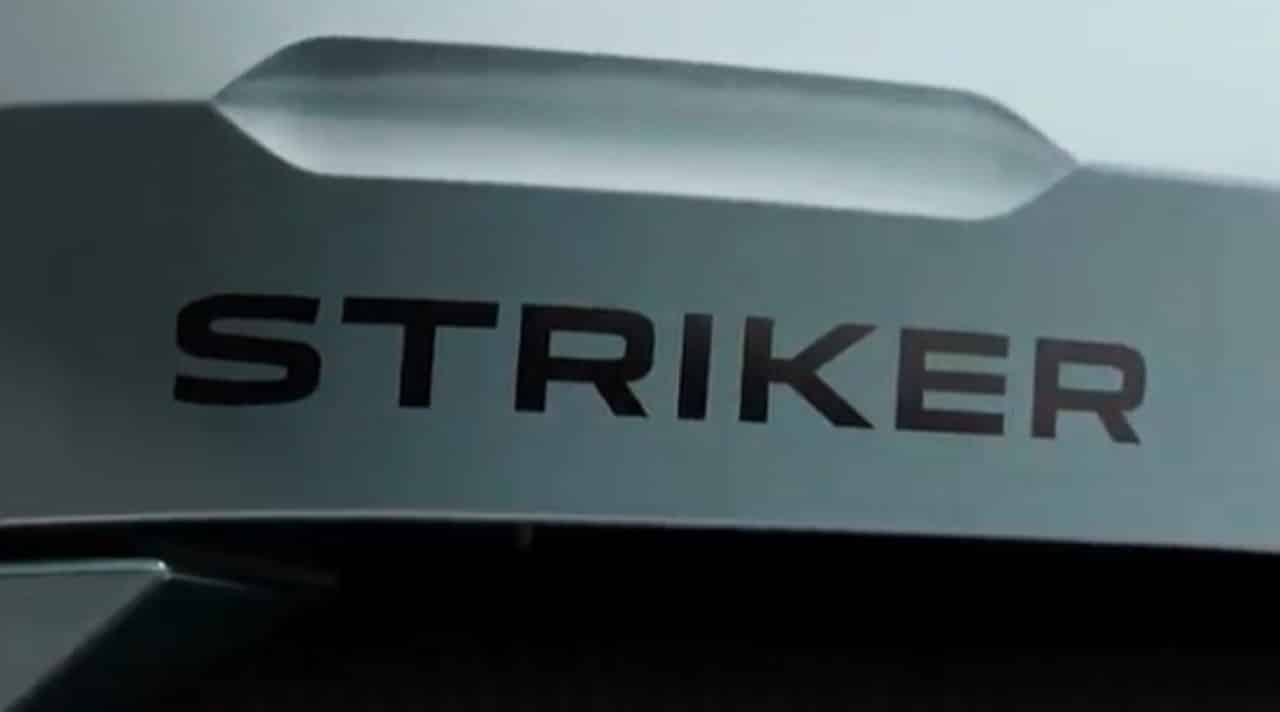
Dacia announced the launch of a new vehicle that promises to shake up the affordable station wagon segment. The model, officially named Striker, has its world premiere scheduled for March 10, 2026, in an event that should reveal all technical and design details. The Essa low-cost station wagon aims to compete directly with consolidated options on the market, such as the Skoda Octavia, offering more competitive prices without giving up space and functionality.
The Romanian manufacturer, known for economical and practical vehicles, positions the Striker as an option for families looking for versatility. With dimensions between 4.5 and 4.6 meters long, the car uses the CMF-B platform, the same as models such as the Dacia Sandero and Renault Clio, ensuring robustness and efficiency. The expectation is that the Striker will reach the European market in 2026, with a focus on markets where demand for affordable family vehicles is high.
The name Striker reflects Dacia’s strategy of aligning its line with terms in -er, such as Duster, Bigster and Jogger, facilitating brand identification. The initial reveal includes images of the trunk lid and rear details, showing angular headlights and contrasting black elements. Esse angular design reinforces the practical image of the vehicle, which must prioritize internal space and load capacity.
Exterior design details
The Striker features straight lines and functional elements that highlight its family vocation. Headlights connected by a black strip at the rear create a modern visual signature, while conventional door handles and classic door mirrors keep things simple. Essa approach avoids aesthetic excesses, prioritizing durability in daily use.
The station wagon body allows for greater luggage volume compared to sedans or hatches, with trunk estimates above 500 liters. The Dacia plans to offer all-wheel drive versions in more equipped options, broadening the appeal for rough roads.
Platform and technical dimensions
The CMF-B base guarantees modularity to the Striker, allowing adaptations for different markets. With an approximate length of 4.6 meters, the model falls into segment C, where it competes with vehicles such as the Skoda Octavia and the Volkswagen Golf Variant. Essa platform also facilitates the integration of driver assistance systems such as automatic emergency braking.
The extended wheelbase provides comfort for five occupants, with adequate leg and head space for long journeys. Testes initials indicate that the Striker will have a slightly elevated ground clearance, approaching light crossovers without compromising stability on highways.
Available engine options
The Striker must have gasoline engines and mild hybrid options to meet European emissions standards. A three-cylinder, 1.2-liter engine with around 130 horsepower appears as the base, combined with a manual or automatic transmission. Versões with CNG can be offered in specific markets, reducing operating costs.
1.8-liter hybrids represent the most efficient option, with estimated consumption of around 20 km/l in a mixed cycle. Esses engines prioritize economy without sacrificing performance in urban acceleration. Dacia is considering including diesel variants in regions with high demand for low-end torque.
The absence of pure electric options at launch reflects the low-cost strategy, but future updates may incorporate greater electrification. Comparado to the Skoda Octavia, the Striker offers similar power, but with a focus on simplified maintenance and affordable parts.
Dacia market strategy
The Dacia seeks to repeat the success of models like the Duster in the B segment, expanding to the C segment with prices up to 30% lower than competitors. The company’s marketing director highlighted that the Striker targets families who prioritize value for money, without superfluous equipment. The Essa approach has already boosted sales at Europa, with annual growth above 10%.
Positioning against the Skoda Octavia involves not only price, but also durability in varying conditions. Protótipos tested on European roads showed resistance to heavy loads, ideal for family or light commercial use. The brand plans initial distribution in countries such as França, Alemanha and Romênia, with expansion to América Latina in 2027.
Competition in the C segment
In the C segment, the Striker faces established rivals such as the Skoda Octavia, which offers Scout versions with 4×4 drive. The Dacia contrasts with starting prices estimated at 20 thousand euros, compared to 27 thousand for the Czech competitor. Essa difference attracts cost-sensitive buyers, especially in emerging economies.
Other competitors, such as the Peugeot 308 SW and Opel Astra Sports Tourer, highlight embedded technology, but the Striker focuses on essentials such as basic connectivity and mandatory security systems. Dacia is betting on high volumes to compensate for lower margins, aiming for 100 thousand units annually.
The station wagon market, although smaller than that of SUVs, maintains demand for versatility. The Striker could revitalize interest in this format, combining crossover space with passenger car handling. Analistas predict that the model will capture a share of buyers migrating from traditional sedans.
Expectations for the launch
The premiere on March 10, 2026, at 10am local European time, is expected to include a virtual and physical presentation. The Dacia released a teaser with details of the rear, generating expectations among automotive enthusiasts. Esse event will reveal a complete interior, with simple panels and resistant materials.
Pre-sales begin shortly after, with deliveries scheduled for the second half of the year. The brand offers extended warranties to retain customers, reinforcing the image of reliability. The Striker is part of the renewal of the Dacia line, which includes updates to the Sandero and Jogger for 2026.
Innovation in name and branding
The name Striker evokes precision and impact, inspired by bowling and football, aligning with the dynamic identity of Dacia. Essa choice unifies the brand nomenclature, facilitating global recognition. The branding emphasizes accessibility, with campaigns highlighting the vehicle in everyday scenarios.
The -er ending reinforces the family of models, creating visual cohesion in dealerships. Dacia recently registered the name, avoiding conflicts with other brands. Essa simple naming strategy contrasts with complex names of rivals, appealing for simplicity.
Interior details and comfort
The interior of the Striker prioritizes functionality, with modular seats that can be folded down for greater load. The center stack includes an 8-inch touchscreen for infotainment, compatible with Android Auto and Apple CarPlay. Materiais resistant plastics reduce costs, but maintain adequate ergonomics.
Luggage space exceeds 600 liters with seats in use, expanding to more than 1,500 liters folded down. Opções trim levels include durable fabrics and plastic inserts, with top versions adding automatic air conditioning. Acoustic comfort benefits from improved insulation in the CMF-B platform.
Compared to the Octavia, the Striker offers fewer luxuries, but makes up for it with cheap maintenance. Testes indicate good noise isolation at cruising speeds, ideal for highways. The Dacia plans optional packages for personalization, such as alloy wheels and parking sensors.
Sustainability and efficiency
The Dacia integrates sustainable elements into the Striker, such as recycled materials in the interior and engines optimized for low emissions. The mild hybrid reduces consumption by up to 15% in urban traffic, complying with União Europeia regulations. Opções of CNG reduces dependence on fossil fuels in compatible markets.
Aerodynamic efficiency, with a coefficient below 0.30, contributes to savings over long distances. The brand is evaluating future plug-in hybrid versions for 2028, in line with zero carbon targets. The Striker represents a step in the energy transition of the Dacia, maintaining accessibility.
Global Sales Outlook
The global expansion of the Striker includes emerging markets, where station wagons gain traction through versatility. Na Europa, Dacia targets 15% market share in the C segment by 2030. Parcerias with Renault facilitate production in efficient factories, reducing logistics costs.
Analysts project initial sales of 50,000 units in 2026, growing with positive feedback. The model benefits from a wide reseller network, with more than 2 thousand points in Europa. Dacia invests in digital marketing to reach young families, highlighting cost-benefit.
Striker can boost exports to Ásia and África, adapting to local conditions. The brand monitors mobility trends, preparing annual updates. Esse launch consolidates Dacia as a leader in affordable vehicles, challenging premium brands in specific niches.
Embedded security technologies
The Striker equips autonomous braking and pedestrian detection systems as standard. Sensores range and fatigue alert improve travel safety. The reinforced structure of the CMF-B absorbs impacts, with expected high scores in Euro NCAP tests.
Compared to rivals, the Dacia offers essentials without expensive extras like optional 360-degree cameras. The integration of ABS and ESP guarantees stability when cornering. The brand prioritizes active prevention, reducing accidents in common urban scenarios.
Customization options
Base versions of the Striker include steel wheels and basic radio, while tops add navigation and connectivity. Cores varieties, such as metallic gray and blue, allow customization. Pacotes off-road include plastic guards and all-terrain tires for Scout-like variants.
The Dacia offers accessories such as roof bars and trailer hitches, expanding its usefulness. Preços of options maintain accessibility, with increments below 1 thousand euros. Essa flexibility attracts urban and rural drivers alike.
Economic impact on production
The production of Striker in Romanian factories generates local jobs, boosting the regional economy. Dacia invests in automation for efficiency, keeping costs low. Fornecedores global guarantees quality components, with a focus on sustainability in the chain.
The model contributes to a positive trade balance, with growing exports. The brand plans a capacity of 200,000 units annually, scaling according to demand. Esse investment reinforces Dacia’s position in the Renault group, diversifying the portfolio.
Comparison with previous models
Unlike the Jogger, the Striker focuses on pure wagon design, without standard seven-seat modularity. Comparado to Bigster, offers more agile handling due to its smaller size. The evolution of the Dacia line reflects customer feedback, prioritizing space and savings.
Suspension upgrades improve comfort over irregularities, surpassing predecessors. The Striker incorporates lessons from the Duster in robustness, adapting for family use. Essa progression maintains brand loyalty from loyal buyers.



