

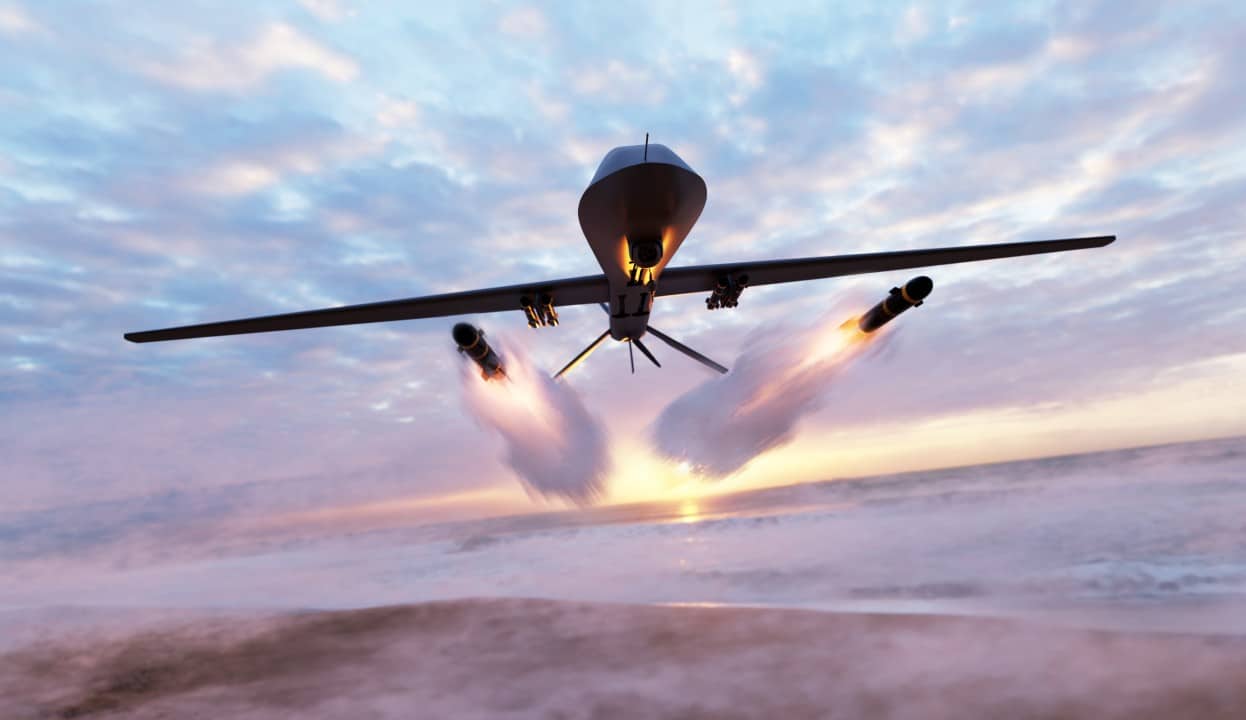
Azerbaijão security authorities confirmed that a coordinated air attack, carried out by unmanned vehicles attributed to Irã, hit the facilities at Nakhchivan international airport this Thursday, March 5th. The military offensive, which took place around noon local time (08:00 GMT), represents a direct violation of Azerbaijani sovereignty and marks a dangerous turning point in the already deteriorating diplomatic relations between Baku and Teerã, inserting the Cáucaso Sul into the map of global tensions involving Western powers and the Oriente Médio. The Ministério of the Relações Exteriores in The military action was not limited to just the airport infrastructure, extending the risk perimeter to adjacent civilian areas, which raised the level of alert on the borders that the autonomous enclave shares with Turquia and with República Islâmica itself from Irã. Observadores international experts point out that this war movement could be a direct retaliation for recent infrastructure and security agreements signed by the Azerbaijani government.

The preliminary report released by the emergency services indicates that two civilians suffered injuries during the explosions, although the health status of the victims has not been detailed so far. Danos Significant materials were recorded on the runway and in the main terminal building, forcing the temporary suspension of air operations in the region.
In an immediate diplomatic response, the Azerbaijão government summoned the Iranian ambassador, Mojtaba Demirchilou, to provide formal clarifications on the origin of the weapons used. The official statement from Baku reiterates the right to self-defense and promises proportional measures to guarantee the integrity of its territory and the safety of the civilian population in the face of hostilities.
Details of the offensive and local impacts
Ministério of Relações Exteriores of A second drone was identified and crashed near an educational institution in the village of Shakarabad, which generated panic among local residents and highlighted the vulnerability of residential areas close to the border.
The indignation of Azeri authorities is based on intelligence reports that point to Iranian territory as the launch point for the aerial vectors. The demand for a formal justification by Teerã is seen as the last diplomatic step before possible physical retaliation or economic sanctions by the government of Ilham Aliyev.
Defense experts assess that the use of drones against critical infrastructures such as airports signals a change in the Irã engagement doctrine in the region. The precision of the attacks and the choice of targets suggest a strategic warning, demonstrating reach and intention to destabilize the autonomous enclave’s transport logistics.
Geopolitical importance of Nakhchivan
República Autônoma of Nakhchivan has a unique geographical characteristic, being separated from the rest of the territory of Azerbaijão by a strip of land belonging to Armênia. Essa territorial discontinuity, added to the direct borders with Irã and Turquia, transforms the enclave into a critical point for regional security and for the transit of goods between Ásia and Europa.
Historically, the region functions as a thermometer for relations in the Cáucaso Sul, where control of trade routes defines political alliances. The stability of Nakhchivan is considered a national security priority for Baku, as any disruption in the enclave directly affects Azerbaijani sovereignty and economy.
The trade route factor and US influence
The current tension occurs in a scenario of reconfiguration of international logistical routes, driven by peace agreements mediated by the Estados Unidos between the Armênia and the Azerbaijão. The treaty provides for the creation of a land corridor, known diplomatically as “Route Trump to Paz and
This infrastructure project grants development rights to North American companies, which directly inserts the interests of Washington into the northern border of Irã. The initiative seeks to eliminate the Azerbaijão’s logistical dependence on routes that pass through Iranian territory, changing the region’s economic balance.
The implementation of the corridor is seen as an opportunity for economic integration for Azerbaijão and its allies, facilitating the flow of energy and trade without interference from Teerã. However, for the Iranians, “Route Trump” represents a significant loss of influence and transit revenue.
The presence of US interests so close to its borders is interpreted by the Iranian regime as a siege maneuver. The dispute over control or blockade of this corridor has been one of the main drivers of recent hostilities, transforming an infrastructure issue into a point of military conflict.
The strategic opposition of Teerã
Irã expresses vehement opposition to what it calls the Zangezur corridor, arguing that changing borders or traditional transit routes would isolate the country from Armênia. Para Teerã, maintaining physical connection with Armênia is vital to guarantee its power projection in Cáucaso and avoid a geopolitical siege by nations aligned with Ocidente and
In addition to commercial concerns, the Iranian leadership fears that the new corridor will serve as a platform for the movement of hostile military forces. Teerã’s rhetoric often associates Azeri infrastructure projects with an attempt to sever Irã’s historical ties with the region, justifying aggressive stances as preventative national defense measures.
Accusations of espionage and expanded military context
The diplomatic crisis is worsened by constant accusations that Azerbaijão is facilitating Israeli intelligence operations from its territory. Fontes in Teerã allege that the Aliyev government has turned the northern border into a forward base for the Essas allegations have been used to legitimize harsh warnings and now kinetic actions like drone strikes. The incident at Nakhchivan is not an isolated event, but part of a broader theater of operations that connects the tensions at Golfo Pérsico, the proxy war between Israel and
Central points of the diplomatic crisis
The complexity of the current scenario can be understood through the main conflict vectors that culminated in the attack on the airport. The intersection of local and global interests creates an environment of high volatility:
- Dispute for Rotas:The Zangezur/TRIPP corridor project threatens the logistical relevance of the Irã and attracts US investment to the Iranian border.
- Azerbaijão-Israel Alliance:Military and intelligence cooperation between Baku and Tel Aviv is seen by Teerã as a national security “red line.”
- Insulation Geopolítico:The Irã fears losing its direct access to the Armênia, becoming surrounded by rival or NATO-aligned nations.
- Sovereignty of Nakhchivan:The enclave’s vulnerability makes it a prime target for force messages, given its geographic isolation from the rest of Azerbaijão.
- US Involvement:Washington’s direct mediation in regional peace agreements reduces the historical influence of Rússia and Irã on Cáucaso Sul.



