


The medium utility vehicle category is undergoing a strategic reorganization with the profound update presented by Fiat for the Titano line. Agora manufactured in the Córdoba industrial complex, at Argentina, the pickup abandons the previous mechanical set to adopt global solutions from Stellantis, aiming to correct initial criticisms and increase its competitiveness against consolidated rivals. The change of production plant, leaving Uruguai, allowed the implementation of new technologies and structural adjustments demanded by regional consumers.
The main focus of the renewal is on replacing the powertrain, which now delivers superior performance and efficiency figures. With these changes, the automaker seeks to position the model not only as a work option, but as a viable alternative for leisure and mixed use, segments where comfort and power are decisive factors for purchase.
Mechanical evolution and performance
The big news under the hood is the introduction of the 2.2 BlueHDi turbodiesel engine. The Este engine, already known in other utility vehicles in the group in the Europa, was calibrated to deliver 200 horsepower at 3,500 rpm. Torque also received a substantial increase, reaching 45.9 kgfm from 1,500 rpm, which guarantees more vigorous starts and safer restarts on roads.
Compared to the previous model, the new package offers a gain of 20 horsepower and more than 5 kgfm of torque. Esses numbers translate directly into the vehicle’s agility, which now records an acceleration from 0 to 100 km/h in 9.9 seconds. The update puts the Titano on technical parity with the entry and intermediate versions of the market leaders, overcoming the strength deficiency that was identified as a weak point in the first units sold in the country.
To accommodate the new engine, the brand’s engineering team carried out structural modifications to the chassis. The engine bay was resized and the fixing points changed, ensuring that the vibration from the diesel engine is properly isolated from the cabin, improving the acoustic experience for the occupants.
New transmission and off-road capability
Engine power management becomes the responsibility of the eight-speed ZF automatic transmission. Este gearbox is considered a reference in the automotive industry for its smooth shifting and intelligent gear management, favoring both fuel economy at cruising speeds and power delivery in low-grip situations.
The new gearbox replaces the previous six-speed system and works in conjunction with a temporary 4×4 drive, equipped with reduced gear and rear differential lock. In practical tests, the new electronic calibration of the set allowed faster responses from the traction system, making it easier to overcome obstacles on rough terrain.
Workability remains a central pillar of the project. The pickup remains robust for carrying cargo and offers a towing capacity of up to 3,500 kg. The trailer assistance system has been updated, integrating with stability controls to prevent dangerous oscillations when the vehicle is towing heavy trailers.
Comfort and suspension recalibration
One of the aspects most worked on by the development team was the dynamic behavior of the suspension. The previous model received frequent criticism regarding excessive body sway on uneven ground, a characteristic known as “jump” of the rear end when the bucket was empty.
To resolve this issue, the suspension received new components and specific adjustments:
- Installation of new springs with greater travel and progressiveness;
- Recalibrated shock absorbers to contain body roll;
- Reinforced stops to absorb severe impacts;
- New fixing bushings to isolate noise and vibrations from the chassis.
The result of these changes is a more stable and predictable ride. On urban and highway routes, the pickup demonstrates greater directional control, providing greater safety to the driver during curves and sudden braking, bringing the vehicle’s behavior closer to that of a large SUV.
Technology, security and prices
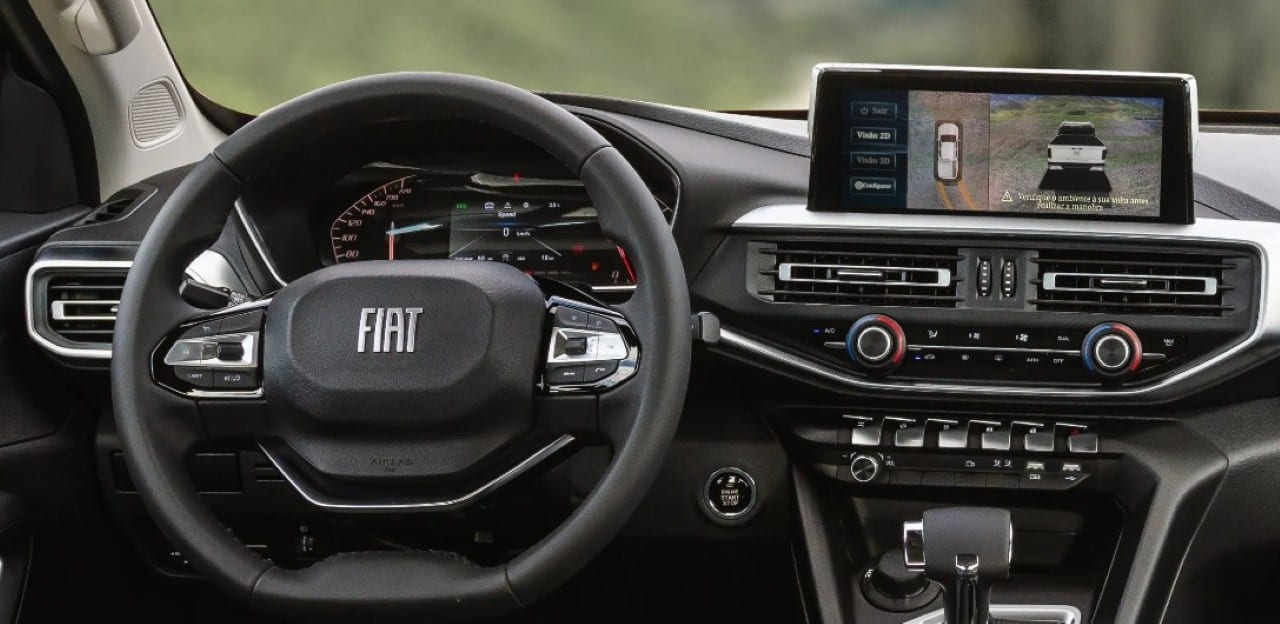
The line update also brought a more complete driver assistance package (ADAS). The most equipped versions now have a lane keeping system, autonomous emergency braking and blind spot monitoring. The 360-degree camera system was maintained and improved with higher resolution sensors, making it easier to maneuver in tight spaces.
No interior, a central multimídia recebeu atualização de software para espelhamento sem fio mais rápido, e o painel de instrumentos ganhou novos grafismos para facilitar a leitura das informações do computador de bordo. The steering, now with electric assistance in all versions, contributes to comfort during parking maneuvers and progressively stiffens at high speeds.
The market repositioning reflects the improvements implemented. Prices for the new range vary between R$233,990 and R$285,990, values that seek to offer aggressive value for money compared to equivalent versions of the Toyota Hilux and Chevrolet S10. The brand’s strategy is clear: to deliver a modern mechanical package and more technology for a price lower than that charged by the leaders in the segment.



