

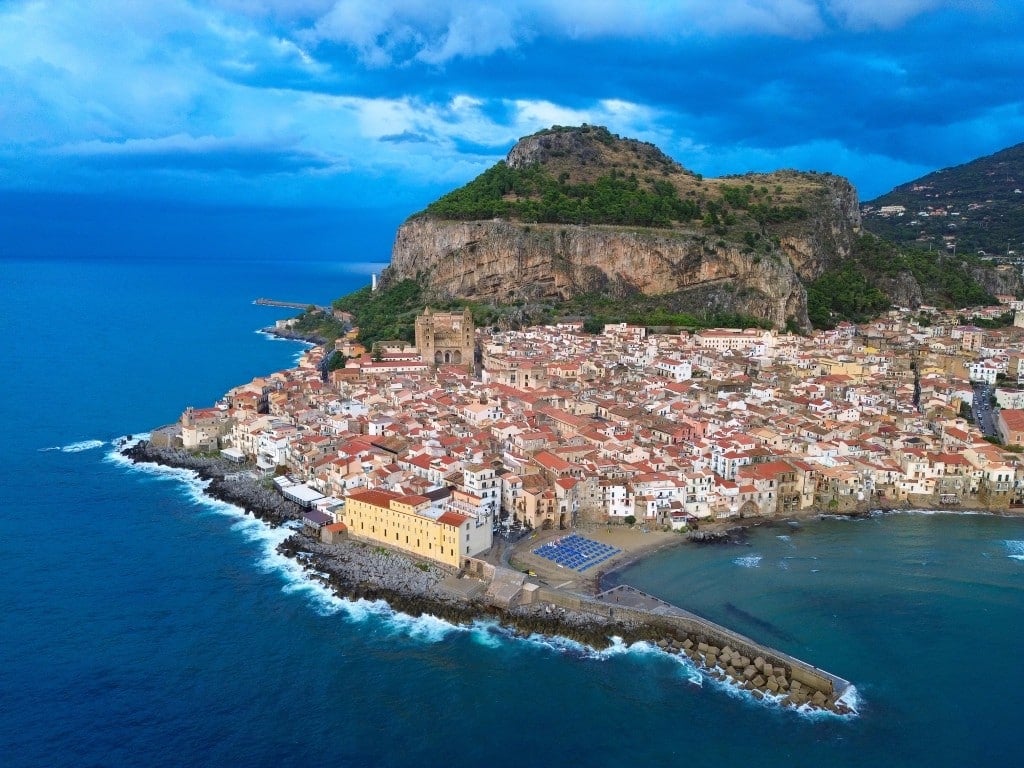
Sicily returns to the center of geopolitical attention in Mediterrâneo. With the crisis between Irã and Ocidente deepening, and drone and missile attacks already hitting military targets in the region, the island inevitably becomes the target of scrutiny. Este territory is a strategic NATO hub and home to crucial military and energy infrastructure.
Sicília stands out as the point where geopolitics manifests itself in daily news. It is the southern outpost of Europa, a vital crossroads of energy routes, military infrastructure and strategic interests, which feel the heat of tension even if the crisis seems distant on a map.
Although analysts consider a direct attack unlikely at this time, the concentration of bases and strategic infrastructure makes the island one of the European territories most susceptible to the effects of an escalation of conflict, as cautious assessments contrast with media warnings.
Nerve center: strategic military bases on the island
The epicenter of Sicília’s military relevance resides in Sigonella, a base that stands as one of the logistical pillars for Marinha of Estados Unidos and for NATO surveillance throughout Mediterrâneo. RQ-4 Global Hawk drones frequently take off from their runways, essential for reconnaissance and intelligence collection missions in Oriente Médio and Golfo Pérsico, monitoring crucial movements and ensuring regional security.
In addition to Sigonella, the island is home to another vital infrastructure: MUOS (Mobile User Objective System) at Niscemi, in the province of Caltanissetta. Este satellite system is responsible for managing global military communications, enabling the coordination of naval operations, drone missions and command systems on an unprecedented scale, connecting allied forces on different continents.
The Sicilian military network is complemented by the Trapani-Birgi base, often less prominent but equally strategic. The airport is home to the 37th Ala of Força Aérea Italiana and serves as one of NATO’s main operational bases in Mediterrâneo, with a crucial role in the air defense of southern Europa and coordinating maritime patrols.
Birgi also serves as a support base for NATO AWACS radar aircraft, which monitor vast areas of airspace and orchestrate long-range military operations. The Italian Ministério of Defesa plans to further strengthen the facility, transforming it into one of the first international training centers for F-35 fighter pilots outside of the Estados Unidos, raising its strategic profile, and to protect these facilities, the air defense system has been reinforced with SAMP/T anti-missile systems, creating a protective umbrella over the island.
Missile and drone capability assessments
The Irã’s missile capabilities have been the subject of increasing concern, with reports indicating a significant increase in its arsenal in recent years. Teerã has ballistic missiles with ranges ranging between 1,500 and 2,000 kilometers, and some more advanced variants can reach around 2,500 kilometers, posing a considerable threat to regional targets.
However, the geographic distance between Irã and Sicília exceeds 3,000 kilometers, which places the island at the extreme limit or even beyond the effective operational range of much of Iran’s ballistic missile arsenal. The most plausible threat to Sicília would actually be posed by long-range drones, although their arrival on the island would require crossing airspace densely monitored and controlled by NATO countries in Mediterrâneo Oriental, which would make such an operation extremely difficult to execute successfully and intercepted by local defense.
Defense dynamics and NATO exercises
The defense of Mediterrâneo Oriental and NATO member countries is robust, with the presence of American ships equipped with the advanced Aegis anti-missile system. Essa protection network includes state-of-the-art radars and Patriot and SAMP/T missile batteries, creating an effective aerial shield against potential threats.
Exercise Dynamic Manta is currently underway at Mediterrâneo, bolstering NATO capabilities in the region. Este is the alliance’s main annual anti-submarine warfare exercise, held between late February and mid-March in the coastal waters of Sicília. The training involves ships, submarines and aircraft from several allied nations, aiming to improve combat tactics against underwater threats and ensure operational readiness in complex scenarios.
To protect strategic installations on Sicília, several military sources indicate that the air defense system has been reinforced. Este reinforcement includes the deployment of SAMP/T anti-missile systems, which establish an additional layer of protection over the island, underlining the importance of Sicília in NATO’s defense strategy.
Direct risk scenarios for the territory
For experts in strategic analysis, the Sicília would only become a direct target in a scenario of open and large-scale confrontation between the Irã and the Estados Unidos or between the Irã and NATO. In such an eventuality, Western military bases on the island, such as Sigonella, the MUOS system on Niscemi and the Trapani-Birgi base – which plays a crucial role in surveillance and air defense in the Mediterrâneo region – would be considered high-priority strategic targets. Contudo, this would be the manifestation of a global conflict of much greater proportions and with profound implications, significantly different from the current phase of regional tension, which, although high, has not yet reached this level of escalation, keeping the risk of direct attack at a limited level.
Vital energy and logistical points
Although the direct military risk appears contained, the vulnerability of Sicília in energy terms is notable and manifests itself more immediately. The island is home to some of the most important petrochemical complexes in Europa, such as the Priolo-Augusta complexes, in the province of Siracusa, and Milazzo, in Messina. Estas facilities are vital for the refining and distribution of fuels throughout the Mediterrâneo, supplying several nations and maintaining the energy supply chain for the continent.
The ISAB complex at Priolo Gargallo and the Sonatrach refinery at Augusta represent crucial hubs, and the port of Unidades of Sexta Frota from the USA can dock at this port for resupply and technical assistance, and on land, there are facilities closely connected to the large energy center of
Supply restructuring and diversification
In a scenario of international crisis, the port of Precisamente For this reason, Augusta is considered by analysts to be critical infrastructure that needs to be protected. Nos In recent years, there has been a diversification of supply sources for the island’s refineries. Após the transfer of ISAB from the Russian group Lukoil to the Cypriot fund Goi Energy, the logistics system was restructured to receive supplies from countries such as Cazaquistão,
Tourism and perceived instability
International tension is not limited to military and energy aspects alone, reverberating significantly in public perception and, consequently, in vital economic sectors. Tourism, which represents one of the pillars of the Sicilian economy, had been showing promising growth, with the number of visitors increasing by almost 12% in 2025, highlighting the island’s attractiveness as a destination and its capacity for recovery.
However, the persistence and deepening of the crisis in the Oriente Médio carries the risk of fueling a climate of uncertainty throughout the Mediterrâneo basin. Essa Perceived instability can, in turn, negatively impact tourist flow and the local economy, as international travelers seek destinations with a greater perception of security and tranquility in a volatile global scenario.



