
Third part of Final Fantasy VII Remake debuts in 2027 with Unreal Engine 5 and total freedom in the airship


Square Enix has officially announced the release window for the final chapter of the Final Fantasy VII recreation project. The long-awaited conclusion of the trilogy is scheduled to hit the market in 2027, a date strategically chosen to coincide with the celebration of the thirtieth anniversary of the launch of the original game on the first PlayStation. The confirmation brings relief and expectation to the fan community that has followed the journey of Cloud Strife and its allies since the beginning of the remake project, consolidating the Japanese developer’s schedule for the coming months.
The announcement details that the development of the third title is already at an advanced stage, having overcome critical production stages. The team responsible highlighted that voice recordings, one of the most time-consuming processes in localizing and role-playing RPGs of this size, are progressing quickly. The stated goal is to deliver a conclusion that not only respects the legacy of the 1997 classic, but also expands the narrative and technical scale beyond what was presented in the first two volumes, Remake and Rebirth.
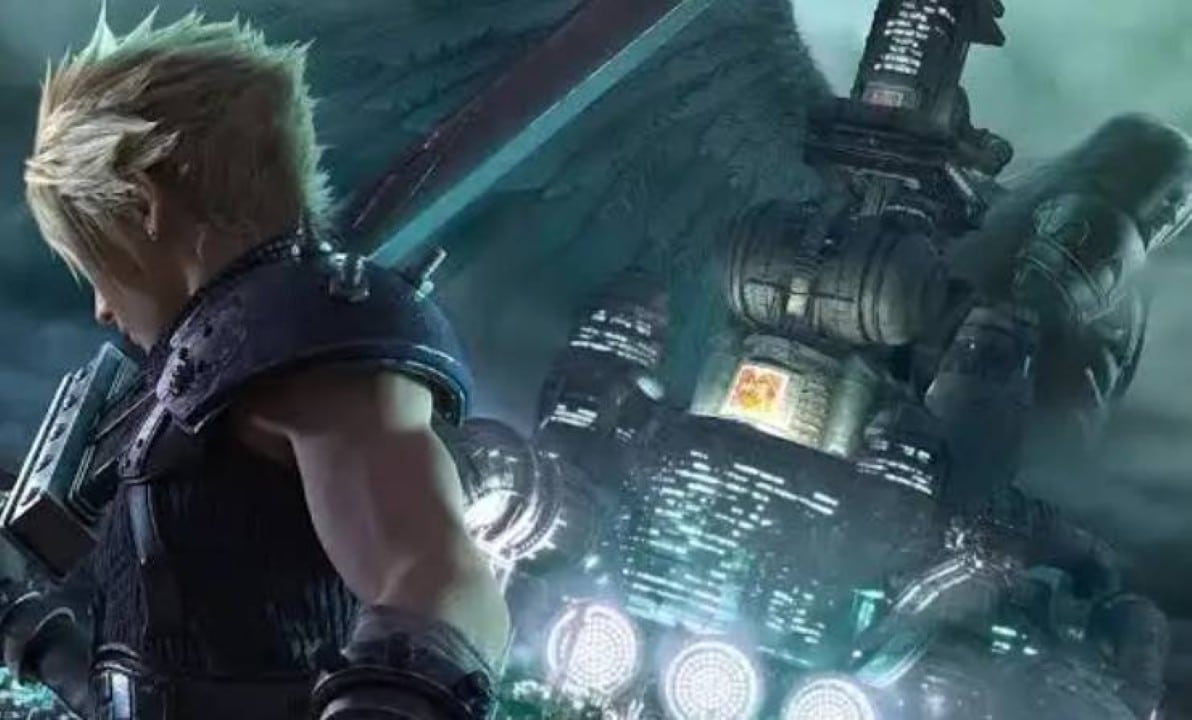
This final stage promises to tie up all the loose ends left by the previous games, offering a definitive outcome to the new timeline established in 2020. The narrative will not be limited to reproducing the final events of the original game; it will seek to integrate elements from the entire expanded universe of the franchise.
Among the main news confirmed for the end of the saga, the following stand out:
– Complete migration of the graphics engine to Unreal Engine 5;
– The implementation of a free flight system with the airship Highwind;
– Conexões direct narratives with the film Advent Children;
– Ajustes dynamics in the combat system to keep the gameplay fresh.
Technical evolution with the Unreal Engine 5
One of the most significant changes for the third part is the technological leap in the development engine. Enquanto the first two games were built on the foundation of Unreal Engine 4, the final chapter is being developed using the Unreal Engine 5.
The decision to migrate to the new generation of the Epic Games graphics engine aims to meet the demands for denser environments and more complex lighting, essential elements for the story’s climax. The technology should provide even faster loading times and more fluid world rendering, eliminating technical bottlenecks that could limit directors’ creative vision for the series’ trademark final battles and cinematic sequences.
The developers emphasize that this update is not just aesthetic, but functional. The Unreal Engine 5’s ability to deal with complex geometries and large scales is fundamental to enable the new exploration mechanics that are being introduced. The game world, which had already expanded considerably in the second chapter, must reach its most robust and integrated version in this conclusion, requiring processing power that the previous engine could have difficulty managing with the same efficiency.
Freedom of exploration and the airship Highwind
The Highwind airship, the franchise’s iconic vehicle, will play a central role in the gameplay of the third title. The production team has confirmed that aerial navigation will not just be a fast mode of transportation or a scripted sequence, but rather a free exploration system. The intention is to capture the sense of discovery that players had on the original game’s world map, translating that experience to modern standards of three-dimensional game design.
Unlike previous approaches where flight could be limited by invisible barriers or disguised loading screens, the promise is of a truly interconnected world. The player will be able to pilot the Highwind through the planet’s skies, choosing where to land and how to approach the different continents and islands. Essa mechanics aim to eliminate the feeling of confinement, offering a global-scale perspective that is vital to the planet-saving narrative.
The removal of invisible barriers and the focus on a more open world design reflect the creators’ desire not to restrict the player’s curiosity. The airship will serve as the key to access secret areas, optional content and end-game challenges, encouraging you to return to previously visited locations from a new perspective. Freedom of movement is treated as an essential pillar for immersion in this final stretch of the adventure.
Narrative integration with the expanded universe
In terms of the plot, Square Enix assured that the game will make a direct connection with the events of the film “Final Fantasy VII: Advent Children”. The cinematographic work, which portrays the world years after the end of the original game, will serve as a reference point for the outcome of the remake trilogy. Isso indicates that the writing of the script is concerned with maintaining coherence with the “Compilation of Final Fantasy VII”, the set of works that expanded the series’ mythology over the last few decades.
This connection suggests that character arcs and consequences of final battles will be shaped to align with, or at least reference, the state of the world seen in the film. Para For long-time fans, this represents a validation of all the content consumed outside of the main games, while for new players, it offers a story with planned continuity and depth.
The combat system will also undergo refinements. While the foundation of action mixed with menu commands (ATB) remains, the team is implementing new synergies and abilities to ensure battles don’t become repetitive after two long games. The evolution of the characters will follow the escalation of the conflict, providing new mechanics that reflect the maturation of the group of protagonists in the face of the final threat.



