

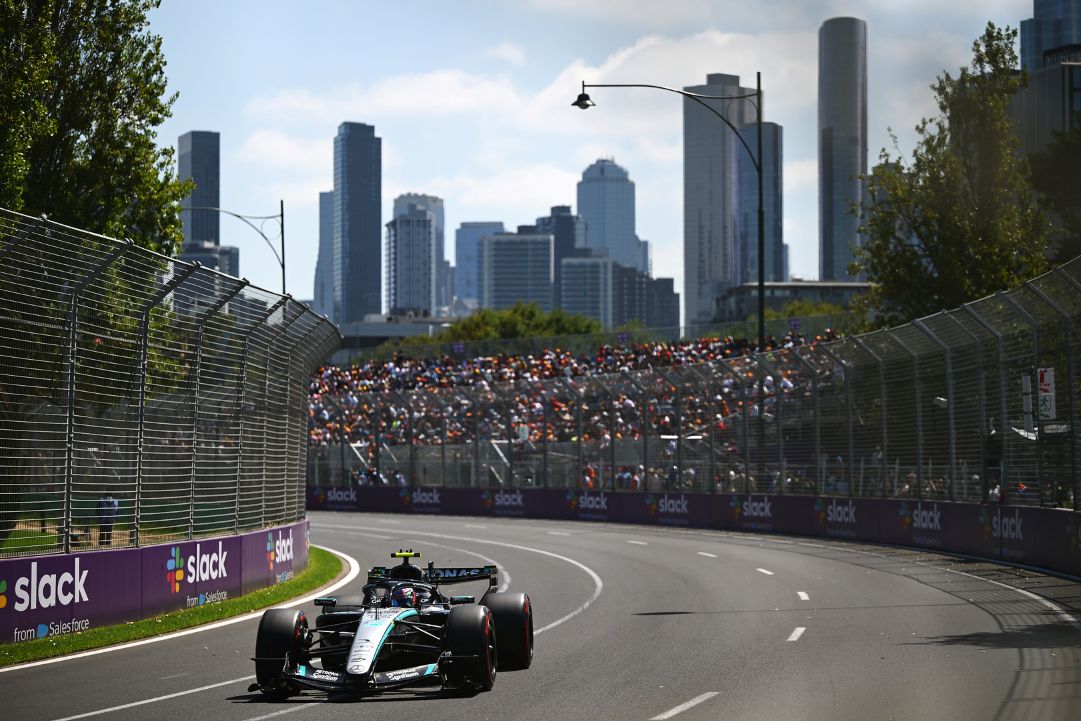
The opening of the Fórmula 1 season at the Albert Park circuit revealed the first real impressions of the balance of forces on the current grid. Charles Leclerc expressed surprise at the performance presented by rival teams in the first track sessions at Austrália. The constant performance of the direct opponents caught the attention of the paddock, especially due to the pace demonstrated with full tanks during the race simulations.
Performance of German cars surprises Italian engineers
Detailed analysis of lap times indicates that the Mercedes managed to maintain much of its potential during low-fuel spins, as well as setting a relentless pace in long-term simulations. Charles Leclerc highlighted that the speed imposed by the opponents in the race simulations was much higher than what the Ferrari engineers had predicted for this start of the championship in Melbourne. The Monegasque driver highlighted that this was the first clear opportunity to observe the true potential of the teams under the new technical guidelines of the top motorsport category. Mesmo with McLaren leading the timesheets in the second session with Oscar Piastri, the Monegasque’s attention remained focused on the aerodynamic and mechanical efficiency presented by the German manufacturer. The stability of the rival car in the most winding sections of the Australian track suggests a refined setup that the Italian team is still seeking to achieve with its new project. The Maranello team is now working intensely behind the scenes to fine-tune the electronics and suspension components ahead of the decisive session that will define the starting grid. Telemetry data points to a significant advantage in corner exit traction, something that became the main focus of engineering meetings throughout the evening.
Aggressive testing and the search for the ideal set-up on the track
In an attempt to extract maximum performance from the current model, Ferrari opted for a high-risk approach during Friday’s second free practice. The team tested extreme configurations on the Leclerc car with the aim of compensating for the perceived difference in speed compared to the championship leaders.
The radical change in configuration resulted in a significant loss of aerodynamic balance in the strongest braking zones. Isso forced the driver to abort fast laps and complete the activity only in fifth place overall on the time table.
The Monegasque finished the session immediately behind his teammate, Lewis Hamilton, who used a slightly different setup. Diante From the negative feedback collected on track, the Italian team plans to return to a more conservative setup for Saturday’s activities.
The main objective of this set-up reversal is to ensure that the single-seater offers the necessary confidence so that the drivers can attack the Albert Park curbs. The garage’s internal focus has shifted to immediately correcting chronic grip problems rather than just monitoring the progress of neighboring garages.
Technical observations recorded by teams in the paddock
During track activities in Melbourne, engineers and strategists recorded crucial points about the behavior of the new cars. Teams have collected essential data that will shape tactics for the remainder of the weekend.
– Mercedes demonstrated notable progress in the transition between the first and second free training sessions of the afternoon.
– The racing pace with medium compound tires and high fuel load was the big difference of the silver cars.
– McLaren maintained its strength in a single lap, recording the fastest lap of the session and confirming its presence in the direct competition for the top positions.
– The Ferrari faced immediate difficulties with aggressive suspension adjustments that did not deliver the simulated results in the wind tunnel.
Impact of new regulations on riding
The transition to the new technical era of the Fórmula 1 brought profound changes to the power units and the implementation of active aerodynamics in single-seaters. Essa structural change explains the large performance fluctuations seen between training sessions as teams further refine the complex engine control software. Adapting to these new variables requires much greater sensitivity on the part of drivers, especially when the car reacts unpredictably in high-speed curves and under strong lateral load.
The complexity of the newly introduced systems requires teams to find a delicate compromise between pure speed on the straights and stability during the sudden braking required by the Melbourne layout. Mercedes seems to have reached this balance point more quickly, justifying the feeling of delayed development reported by competitors. The factories’ ability to react will be tested under real competitive pressure for the first time, setting the tone for the development race that will stretch over the coming months.
Tire strategies and thermal variations
Australian asphalt has unique characteristics that directly affect the wear of the rubber throughout the sessions. The large thermal variations between daytime activities and the beginning of the night require an accurate reading of the behavior of soft and medium compounds.
Teams need to balance the need for immediate mechanical grip to advance through the qualifying stages with preserving tires for the long stints of the race. Thermal management has become the main concern for strategists as overheating of the tire surface in traction zones results in severe loss of lap time.
Internal dynamics and collaboration between pilots
The exchange of information between the boxes at Charles Leclerc and Lewis Hamilton has been fundamental in mapping the deficiencies of the Italian project. The team uses cross-data from both champions to create multiple configuration scenarios, trying to isolate the factors that cause rear instability on corner exits.
Expectations for the formation of the starting grid
The qualification scenario points to an extremely fierce dispute between at least three distinct forces on the grid. The German carmaker emerges as a strong candidate to challenge the single lap speed displayed by McLaren during Friday’s testing.
The Ferrari focuses its efforts on optimizing the power delivery of its hybrid engines to make up for lost time in the circuit’s four full-throttle zones. The margin of error for the drivers is minimal, considering the proximity of the times recorded at the top of the table.
The goal established by the sports management of Maranello is to secure positions in the first two rows of the grid. Largar at the front is vital in Albert Park to avoid heavy traffic and dirty air in the opening laps, factors that severely compromise brake and engine cooling.
Tactical planning for the main race
Winning the opening stage establishes an important psychological advantage for the rest of the world calendar. Superar direct rivals on Australian soil will require impeccable execution of pit stops and meticulous management of fuel consumption.
The recent history of the event at Melbourne indicates a high probability of safety car interventions, adding a layer of tactical uncertainty to teams’ planning. The close walls and high approach speeds turn any small driving error into a factor that can completely change the order of the race.
Final preparations before park closed
Garages have just a few hours to definitively seal the suspension settings and engine mapping before entering parc fermé. The expectations of the local public in the stands revolve around the direct clash between the young talents and the experience of the veterans on the grid.
The efficiency of the energy recovery system will define the overtaking opportunities in the mobile wing activation zones. The aerodynamics department is working urgently to ensure that the cars are not vulnerable to attacks at the end of the main straight.
Continued development throughout the season
Recognition of current difficulties serves as a catalyst to accelerate the production of new parts in European factories. The sport requires constant evolution, and the aerodynamic package presented in the first stage will undergo rapid changes in the following rounds.
The paddock remains on high alert to see if Friday’s trends will translate into concrete results on Sunday. The level of competitiveness demonstrated indicates a battle of technological development that will last until the last races on the calendar.