

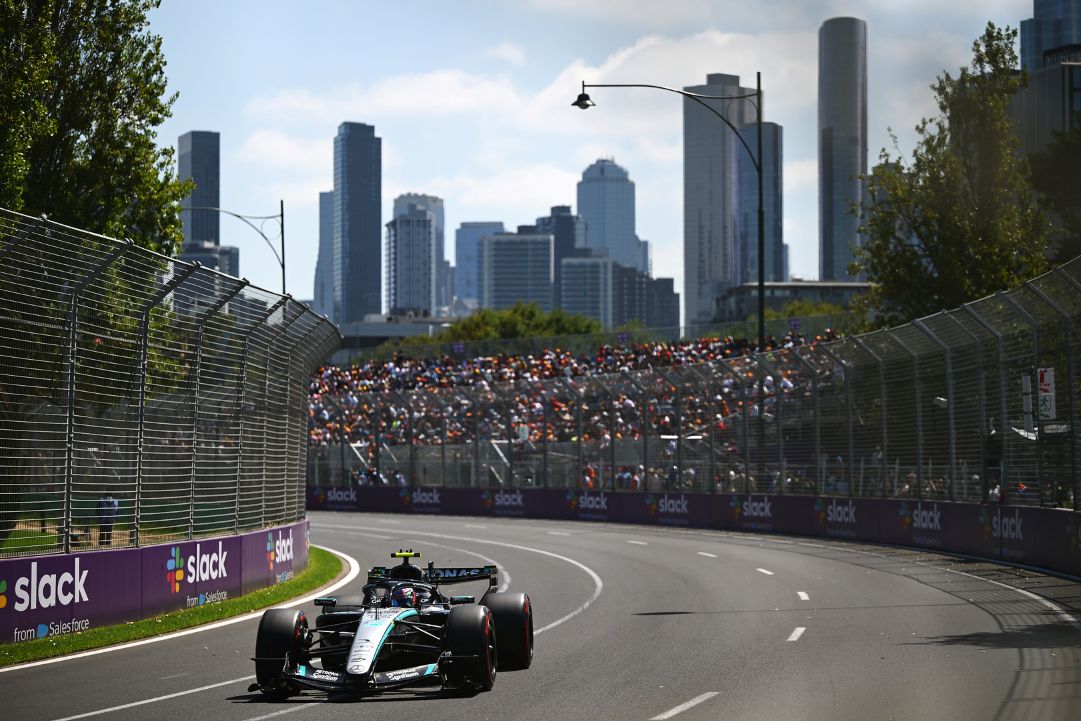
The fight for the top positions on the starting grid of the Grande Prêmio and Austrália presents a scenario of intense technical rivalry between the main teams on the grid. Data collected during the initial track sessions demonstrated a change in the order of forces compared to previous stages of the world championship.
The Monegasque Charles Leclerc publicly evaluated the performance of its single-seater after the end of track activities on Friday. The athlete highlighted that the opposing German team demonstrated superior consistency in race simulations, especially in the high-speed sections of the Australian circuit.
The Italian team’s engineers are now focusing on analyzing telemetry to understand the degradation of rubber compounds. The immediate goal is to find a mechanical setup that allows balancing single-lap speed with the durability needed for Sunday’s long stints.
Aerodynamic analysis and car adjustments
The behavior of single-seaters on the Melbourne circuit requires a complex compromise between aerodynamic drag and the level of vertical aerodynamic pressure. The Maranello team identified that the current model suffers from instability in the rear axle during the strongest braking zones, which compromises drivers’ confidence when entering corners.
To mitigate this effect, mechanics made changes to the angle of the front wings and the ride height of the floor. Essas modifications seek to stabilize the air flow that runs through the lower part of the car, essential for generating ground effect and maintaining speed on the straights.
Impact of Albert Park tracing on performance
The circuit set up around the lake in Melbourne has undergone recent modifications that have significantly increased the average speed of the lap. The removal of old chicanes transformed the intermediate sector into a long full acceleration zone, benefiting designs with high aerodynamic efficiency.
In this context, the Mercedes engine has operated with optimized kinetic and thermal energy recovery parameters. GPS data reveals that the silver cars are able to reach top speed sooner than their Italian rivals, giving them a crucial advantage before braking points.
The four activation zones of the drag reduction system amplify this technical difference between construction companies. The ability to negotiate high-speed corners without losing stability allows drivers to open the rear wing with greater safety and better traction on exits.
Tire strategies for the main race
The official tire supplier has made the softest range of compounds available for the Australian round, which adds an extra layer of complexity to strategic decisions. The abrasive asphalt of the semi-permanent layout accelerates the thermal wear of the rubber, especially on the left front tire.
During the race simulations in the second free practice, it became clear that keeping the tires in the ideal temperature window will be the biggest challenge of the weekend. Charles Leclerc’s car showed early graining in the medium compounds, forcing the driver to reduce the pace to avoid overheating.
On the other hand, their German opponents demonstrated more efficient tire management, completing sequences of laps with consistent times and a low drop in performance. Essa technical characteristic can be decisive in defining the number of stops in the pits during the race.
Strategists work with the probability of safety car interventions, a common factor in the history of the Australian race. The flexibility to adapt stops according to yellow flags will require cars capable of extracting immediate performance from cold tires following restarts.
Continued development throughout the season
The development race at the Europa factories takes place in parallel to the competitions on the tracks, with updates being introduced gradually each weekend. The introduction of new floor packages and side deflectors changes the dynamic behavior of the cars, requiring drivers to constantly readapt their driving styles. The Italian team plans a major aerodynamic upgrade for the next stages in the Europa, but needs to maximize its points with the current equipment to not lose contact with the leaders of the constructors’ championship.
The limitation on the spending ceiling imposed by financial regulations forces teams to be extremely precise when producing new parts. A correlation error between wind tunnel data and actual behavior on the track could jeopardize an entire semester’s budget. Therefore, data collection during free practice in Melbourne serves not only for the current race, but to validate the planned development path for the remainder of the Formula 1 competitive year.
Night work on team simulators
While mechanics disassemble cars in the pits at Albert Park for structural inspections, a contingent of engineers are hard at work at the team’s headquarters at Maranello, using state-of-the-art simulators to test hundreds of mechanical set-up variations. The time zone allows test drivers on the Itália to process the telemetry sent from the Austrália and spend the night virtually on the track, evaluating different levels of suspension stiffness, camber and weight distribution. The objective of this joint operation is to find a configuration that eliminates understeer in low-speed curves without compromising stability in quick changes of direction. The results of these virtual simulations give rise to a technical document that track engineers at Austrália receive in the early hours of the morning, serving as the basis for final adjustments before the third free practice. Essa integration between the track and the factory has become the most important competitive differentiator in the modern era of the sport, where actual track time is severely restricted by current rules.
Expectations for the qualifying session
Defining the starting grid will require perfect laps and maximum use of the vacuum on the main straights. The margin for error on the walls close to the Australian circuit is minimal, and any wheel lock could result in the loss of vital starting positions, considering the historical difficulty of overtaking even in the moving wing activation zones.
Direct dispute in the constructors’ championship
The points accumulated in the first races define the order of the garages and influence the distribution of team resources. The direct fight for the position of second force on the grid affects sponsorship negotiations and the morale of employees involved in the project.
With the cars’ performance in Melbourne proving to be a litmus test for aerodynamic efficiency, this Sunday’s result will serve as an accurate barometer for the teams’ title ambitions throughout the extensive world calendar.