

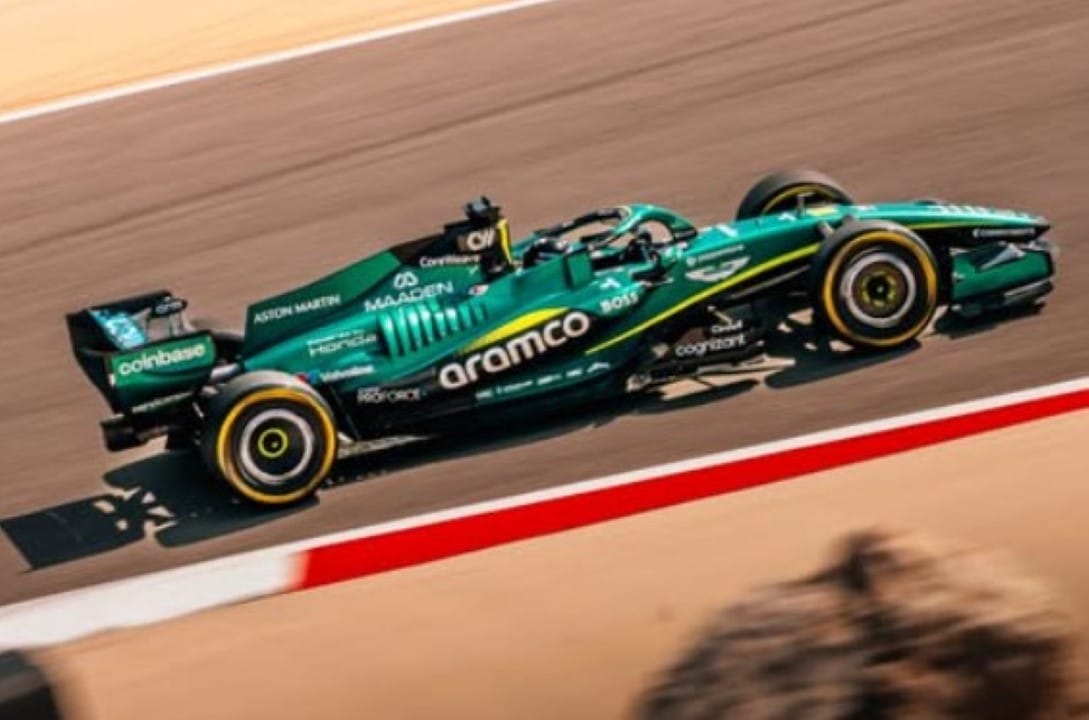
The Aston Martin Honda team faces a critical scenario during the pre-season tests carried out on the Bahrein, where serious vibration problems compromised the performance of the new car. Driver Lance Stroll reported an alarming physical sensation, comparing the experience behind the wheel to a continuous electric shock, highlighting the severity of the mechanical situation faced by the team. The technical failure resulted in immediate structural damage and drastically limited the team’s track time.
Engineers have identified that the source of the problem lies in a destructive resonance between the V6 power unit supplied by Honda and the chassis developed by Aston Martin. The physical phenomenon, which was not detected in the bench simulations, generated a frequency of vibration so intense that vital parts of the vehicle began to loosen or break during the few laps completed. The situation forced the premature interruption of activities to avoid catastrophic failures.
Adrian Newey, the team’s technical lead, highlighted that vibration is being transferred directly to the driver’s hands via the steering column, which raises concerns about repetitive strain injuries and long-term neurological damage if not corrected. The technical team is now racing against time to implement structural solutions before the official opening of the championship, as the integrity of the electronic and aerodynamic components is at risk.
Given the seriousness of the reports and the physical evidence collected in the pits, Aston Martin needed to adopt immediate containment measures. The impact of the vibrations was systemic, affecting multiple areas of the car and requiring a complete review of the engine mounting points and chassis rigidity. Incidents recorded during the testing session include:
– The detachment of rear view mirrors due to excessive oscillation of the fairing at high speed.
– Danos irreversible damage to the hybrid system batteries, caused by constant vibration that exceeded resistance specifications.
– Falhas in sensitive electronic components, which could not withstand the resonance frequency generated by the mechanical assembly.
– Restrição severe mileage, with the car completing just six laps before being recalled for safety diagnostics.
Technical diagnosis and mobilization of Honda
Honda Racing Corporation (HRC) recognized the magnitude of the problem and initiated a task force to mitigate the integration flaws between the engine and chassis. Koji Watanabe, president of HRC, admitted that dynamometer testing failed to replicate the exact track conditions that led to this specific resonance. The disparity between simulations and reality posed a logistical and engineering challenge for the Japanese automaker.
To speed up the fix process, Honda sent five expert engineers directly from Japão to Bahrein, with the aim of working together with the Aston Martin chassis team. Preliminary analysis indicates that the rigidity of the carbon fiber chassis is not dissipating the V6 engine’s kinetic energy adequately, creating a vibratory feedback loop that amplifies in certain rpm ranges.
The ultimate solution will require complex adjustments to the engine mounts and possibly the structural design of the rear of the car. The technical team is evaluating the use of additional damping materials and reprogramming the engine mapping to avoid critical frequencies, although these measures may temporarily compromise the vehicle’s pure performance in favor of reliability.
Impacts on pilot schedule and safety
The safety of Lance Stroll and Fernando Alonso has become the absolute priority, exceeding aerodynamic data collection objectives at this stage. Stroll’s description of the “electric shock” sensation points to a high-frequency vibration that can cause numbness and loss of sensation in the hands, unacceptable conditions for elite-level riding. The medical team monitors the situation to ensure that there are no physical consequences for drivers.
The technical setback puts Aston Martin at a significant disadvantage compared to direct rivals, such as Mercedes and Ferrari, who managed to meet their mileage programs. With the Grande Prêmio to Austrália approaching, the pressure on the technical partnership between the British team and the Japanese manufacturer is immense. The need to redesign critical components in a short space of time tests the limits of the factory’s budget ceiling and operational capacity.
The expectation is that emergency updates will be sent for the next test session, aiming to at least make the car drivable for the start of the season. The success of the Aston Martin in 2026 will now depend on how quickly its engineers can nullify this resonance without the need to build an entirely new chassis, which would be a logistical disaster for the championship.