

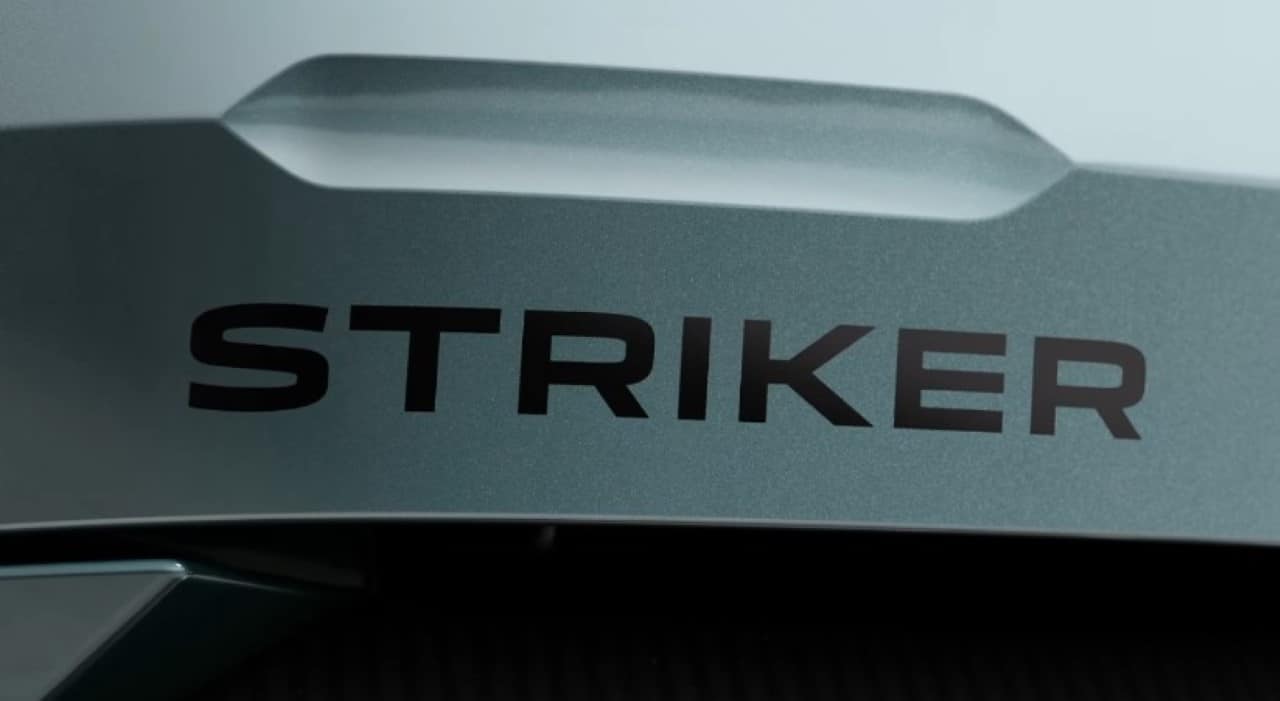
Dacia Striker, hybrid crossover, automotive market, Renault Group, vehicle launch
The global automotive industry follows a significant strategic movement with the official announcement of the latest vehicle aimed at the C segment. The Romanian manufacturer Dacia, member of the Renault Group, confirmed the name of its new family model, called Striker. The vehicle represents an aggressive bet by the automaker to consolidate its presence in a highly competitive category in the European and international market. The global reveal is scheduled for March 10th, during the futuREady strategic event organized by the controlling group. Este new car combines the characteristics of a traditional station wagon with the visual elements and high height of a modern crossover. The project’s central proposal is to offer a high-value-added alternative without giving up the affordable price policy that has established the brand in recent decades. The development of the model required complex adaptations to the assembly line and product engineering. Market analysts’ expectations point to a direct impact on the sales of rival automakers that operate in the same price range and size.
The Striker positioning fills a specific gap in the company’s current portfolio. The model will be located exactly between the adventurous Jogger station wagon and the recently launched Bigster mid-size SUV. Essa strategy aims to capture consumers who are looking for ample space for passengers and luggage without the need to purchase a large sports utility vehicle.
To ensure the efficiency of the project, engineering focused on three fundamental pillars of automotive development. The vehicle’s structural base has been optimized to accommodate different types of propulsion. Confirmed key technical highlights include:
– Utilização of the CMF-B modular architecture.
– Oferta of advanced hybrid engines.
– Foco in aerodynamics to reduce emissions and save fuel.
Design details and visual inspiration
The automaker’s design team adopted a visual approach that refers to robustness and functionality, moving away from purely aesthetic lines with no practical purpose. O diretor de estilo da marca, responsável por projetos anteriores de sucesso, enfatizou a criação de uma identidade forte que remete à energia e à durabilidade dos veículos utilitários da década de 1980. Essa inspiração retrô foi modernizada através de vincos marcantes na carroceria e uma assinatura luminosa em formato de Y, que já se tornou o padrão visual da fabricante. The ground clearance was considerably increased compared to conventional station wagons, ensuring greater ability to overcome urban and rural obstacles. The vehicle’s silhouette conveys a feeling of security and solidity, characteristics highly valued by families who undertake long trips.
The vehicle’s interior was designed under the philosophy of maximizing useful space and durability of finishing materials. The cabin dispenses with superfluous elements, focusing on offering improved ergonomics for the driver and thermal and acoustic comfort for all occupants. The seat fabrics and dashboard plastics were selected for their resistance to daily wear and tear and ease of cleaning. The integration of essential technologies, such as intuitive multimedia centers and easy-to-read digital instrument panels, complements the interior environment. The automaker chose to maintain physical controls for the climate control functions, responding to a recurring request from consumers for greater practicality when driving on highways.
Positioning in the automotive market
The new crossover arrives to compete directly in the market with established models in the segment of family station wagons and extended compact vehicles. Key competitors mapped by engineering include Skoda Octavia Combi, Toyota Corolla Touring Sports, and Volkswagen Golf Variant. The automaker is betting on a significantly lower acquisition cost to attract customers from these European and Asian brands.
With an estimated total length of 4.60 meters, the vehicle offers one of the best ratios between external dimensions and internal volume in its category. The trunk was designed with regular shapes to facilitate the accommodation of bulky objects, baby strollers and sports equipment. The modularity of the rear seats allows different folding configurations, expanding the load capacity according to the user’s needs when transporting long items.
The aggressive pricing strategy is the launch’s main competitive differentiator compared to market rivals. Initial estimates indicate that the price of entry into the European market will be below the 25,000 euros mark. Esse value places the vehicle in a position of isolated advantage, offering the size of a mid-range car for the price charged for entry-level compact models.
Modular architecture and energy efficiency
The basis of the entire project is the CMF-B modular platform, widely used within the Renault Group for vehicles of different proportions. Essa architecture allows for a drastic reduction in development and manufacturing costs, as it shares structural components, suspension systems and embedded electronics. Adopting this platform ensures updated safety standards and improved vehicle dynamics on the roads.
The flexibility of the CMF-B structure is fundamental to the automaker’s gradual electrification strategy. The vehicle was designed from the ground up to receive different levels of electrical assistance without compromising cabin space or trunk capacity. The hybrid systems’ batteries are accommodated under the floor, optimizing the center of gravity and keeping the cargo volume intact for luggage.
The engine catalog will be diversified to meet the requirements of different markets and current environmental legislation. The confirmed options include conventional gasoline engines, versions adapted to Gás Liquefeito of Petróleo (GLP), mild hybrid systems (mild-hybrid) and complete hybrid sets (full-hybrid). Essa variety ensures that the vehicle is viable both in countries with advanced electrical infrastructure and in regions undergoing energy transition.
The technological highlight lies in the full-hybrid system, designed to maximize fuel economy in congested urban environments. Engineering states that this configuration allows the vehicle to operate in all-electric mode up to 80% of the time during city trips. Energy regeneration during braking and deceleration recharges the battery autonomously, eliminating the need for connection to external charging sockets.
Sales and commercial expansion goals
The introduction of the Striker is part of a broader business plan that aims to consolidate the manufacturer as a global powerhouse in volume sales. The internal goal established by the board is to reach the historic mark of one million units sold annually in a short space of time. Segment C is considered the most profitable and voluminous of the Europa, justifying the heavy investments in creating this unprecedented model.
In addition to the European market, the automaker is evaluating the expansion of the crossover’s offering to other strategic regions where the Renault Group has a strong industrial and commercial presence. The vehicle’s suitability for different types of pavement and mechanical robustness are attributes that facilitate its introduction into emerging markets. Distribution logistics and factory production capacity are being restructured to support global demand projected for the coming years.
Expectations for the official presentation
The futuREady event, scheduled for March 10th, will serve as the definitive stage for the reveal of all the technical specifications and equipment packages of the new crossover. The international automotive press and investors await the detailed release of fuel consumption data, pollutant emission levels and the complete list of automotive driving assistance items. The automaker promises to demonstrate how it managed to balance the integration of mandatory safety technologies, such as autonomous emergency braking and lane keeping assistant, without inflating the final cost of the product at dealerships. Durante the presentation, senior executives of the group will detail the series production schedule and the exact dates for the opening of the pre-sales period in the main markets. The expectation is that the first units will begin to be delivered to end customers in the months following the official launch and presentation of the price list. The event will also provide an overview of the brand’s next steps towards the total decarbonization of its passenger fleet, reaffirming its commitment to sustainable mobility and the development of clean engines. The unveiling of this model consolidates an industrial philosophy focused on resource efficiency and precisely meeting the safe transportation needs of passengers.
Driving dynamics and comfort
The engineers paid special attention to the suspension setup to ensure comfort on long journeys with the car fully loaded with passengers and luggage. The calibration of the shock absorbers and springs was adjusted to absorb irregularities in the asphalt without compromising directional stability at high speeds on highways. The sound insulation of the engine compartment and wheel arches received new generation sound absorbing materials, resulting in a quieter and more pleasant cabin for occupants during daily journeys.
Technological integration and connectivity
The vehicle’s electronic architecture is designed to support remote software updates, ensuring that entertainment and safety systems remain modern throughout the automobile’s lifecycle. The multimedia center has wireless mirroring for smartphones, facilitating the use of satellite navigation applications and audio streaming platforms during daily commutes.
Integrated connectivity modules allow owners to monitor car parameters through a dedicated cell phone app provided by the automaker. Informações as fuel level, estimated range, tire pressure and ag



