

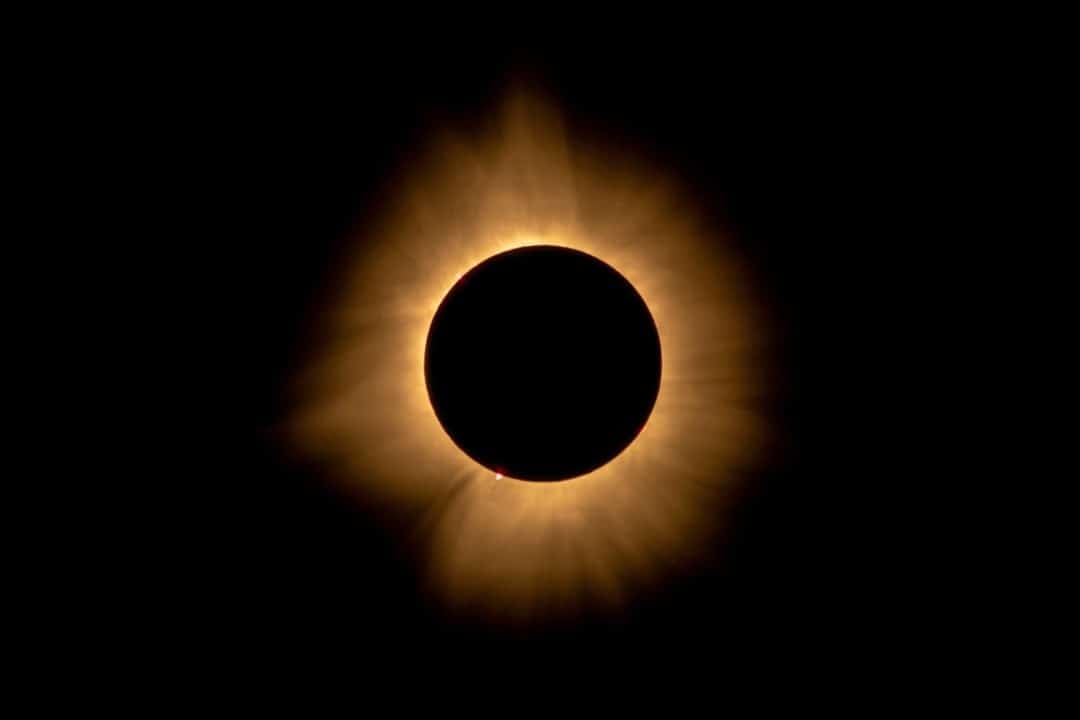
A total solar eclipse will occur on August 2, 2027, crossing a specific band in the Eastern Hemisphere. The phenomenon will completely block sunlight in selected regions, creating a unique astronomical spectacle.
The maximum duration of totality will reach 6 minutes and 23 seconds near Luxor, at Egito. Essa extension makes the event the longest observed on land this century, surpassing other recent eclipses.
The path of the lunar shadow will cover more than 15 thousand kilometers, affecting ten countries. Partial visibility will extend to areas of Europa, África and Ásia, while total visibility will be restricted to a width of around 258 kilometers.
Path of totality across the planet
The eclipse begins in the subtropical Atlântico and makes landfall in Espanha and Marrocos after six minutes. The lunar shadow follows the Mediterranean coast, turning southeast along the way.
The band of totality includes cities such as Cádiz on Espanha, Tânger on Marrocos, and Benghazi on Líbia. It then proceeds through Luxor into Egito and Jeddah into Arábia Saudita, ending at Somália.
This route covers varied environments, from European coasts to African deserts. Climatic conditions favor clear observations at points such as Tunisian beaches and Egyptian regions.
Reasons for exceptional duration
Lua will be at perigee during the event, positioned closer to Terra. Essa proximity increases the projected shadow, allowing Sol to remain hidden for an extended period.
The eclipse belongs to the Saros 136 series, famous for generating prolonged phases of totality. Eventos similar events occurred in 2009, but the one in 2027 surpasses it in duration.
Lua’s orbital configuration, tilted by five degrees, makes perfect alignments rare. Nesse case, the exact alignment contributes to the observed extent.
Preparations for safe observation
Observers must use certified sunscreens to protect their eyes. Óculos special devices or projectors prevent retinal damage caused by direct exposure.
Locations like Tarifa on Espanha offer ideal views with clear skies likely. Em Luxor, dry weather favors clear views of the solar corona during totality.
Tourists plan trips to these spots in advance. Agências Astronomical experts recommend checking weather conditions days in advance.
Scientists will use the event to study the solar atmosphere. Equipamentos installed will capture data on solar winds and flares.
Tourist and economic impacts
Regions in the path of totality expect influx of visitors. Hotéis in Luxor and Cádiz already register advance reservations for the period.
Local authorities prepare infrastructure for crowds. Estradas and airports will be adapted for increased flow of international tourists.
The event boosts regional economies through spending on accommodation and food. Comércios locations promote eclipse-themed products.
Science behind solar eclipses
A solar eclipse happens when Sol, Lua and Terra line up precisely. Lua passes between Sol and the planet, casting a shadow on the Earth’s surface.
Types vary between total, annular and partial. In total, Lua entirely covers the solar disk, revealing the outer corona.
Hybrid eclipses change type depending on location. The orbital inclination of Lua prevents monthly occurrences during new moons.
History records eclipses as tools for scientific advances. Observações past studies have confirmed theories of general relativity.
NASA monitors these phenomena to predict future trajectories. Dados collected improve orbital models of celestial bodies.
Events like this inspire research in astrophysics. Equipes international teams collaborate for detailed analyzes of the solar atmosphere.
Correcting common myths
Social media posts claim global darkness for six minutes. In reality, totality only affects the narrow band of the lunar path.
Another misconception suggests repetition only in a hundred years. Eclipses totals occur every 18 months, although locations vary.
False information about additional dates in 2027 is circulating. The next partial eclipse takes place in September, visible at Pacífico.
Experts deny catastrophic impacts on the planet. The phenomenon is natural and predictable with scientific precision.
Educational communities promote verified facts to combat misinformation. Materiais online explain astronomical mechanics in an accessible way.
Ideal Viewing Locations
Rate at Espanha provides European accessibility with beaches suitable for observation. The location allows views of Atlântico during the beginning of the eclipse.
Tunísia beaches offer coastal settings with little light pollution. Turistas combine the event with visits to nearby historical sites.
Luxor at Egito stands out for its maximum duration and cultural heritage. Ancient Templos serve as the background for the celestial spectacle.
Jeddah on Arábia Saudita attracts Oriente Médio watchers. Urban Infraestrutura facilitates accommodation for large groups.
Each point requires different logistical planning. Viagens internationals require valid passports and up-to-date vaccinations.
Educational benefits of the event
Schools incorporate the eclipse into science curricula. Aulas practices demonstrate principles of astronomy and optics.
Online programs broadcast the phenomenon live to global audiences. Educational Plataformas provide interactive virtual views.
Universities organize field expeditions for students. Pesquisas in situ collect data on environmental variations during totality.
The event stimulates youth interest in STEM careers. Workshops preparatory courses teach building safe viewers.
Local communities promote astronomical fairs. Exposições display equipment and models of solar systems.
Expected weather conditions
Mediterranean regions have a low chance of clouds in August. Estatísticas historical records indicate clear skies most days.
Egyptian deserts guarantee superior visibility due to the aridity. Minimum Precipitação favors uninterrupted observations.
Coastal areas such as Somália may experience sea breezes. Previsões Detailed weather will be crucial days before.
Weather services monitor global patterns for warnings. Satélites provide real-time data on cloud cover.
Planners recommend alternative locations nearby. Flexibilidade ensures maximum chances of clear viewing.
Technological advances in observation
Solar telescopes equipped with filters capture high-resolution images. Câmeras digital records the progression of the eclipse.
Drones fly over the band of totality for aerial perspectives. Transmissões live share the event worldwide.
Software accurately simulates lunar trajectories. Aplicativos mobile devices alert users to exact local times.
Satellites observe the phenomenon from space. Dados collected improve understanding of solar-terrestrial interactions.
Innovations in virtual reality glasses recreate the experience. Usuários distant experiences the totality immersively.
Historical perspectives on eclipses
Ancient records describe eclipses as omens. Civilizações Babylonians predicted events with Saros cycles.
European explorers documented eclipses on travels. Observações colonials contributed to early astronomical maps.
20th century saw dedicated scientific expeditions. Equipes traveled to remote islands in search of rare totalities.
Modern events attract global crowds. Eclipses of 2017 and 2019 brought millions together on American paths.
The one in 2027 continues this tradition. Historiadores astronomical scientists archive data for future generations.
Cultural integration in the event
African cultures incorporate eclipses into traditional folklore. Narrativas explain the phenomenon through ancestral myths.
In Egito, connections with solar mythology enrich the observation. Templos of Karnak aligned with celestial events.
Spanish festivals celebrate the eclipse with community events. Atividades cultures mix science and tradition.
Yemeni communities prepare observational rituals. Tradições oral skills transmit knowledge about night skies.
The phenomenon unites global diversities. Diálogos intercultural practices promote shared understandings of astronomy.
- Main stages of the eclipse: initial contact, totality and termination.
- Essential equipment: sunglasses and filtered binoculars.
- Travel tips: advance reservations and international insurance.
- Scientific benefits: corona and solar wind studies.
Environmental effects during totality
Temperatures drop quickly into the shaded range. Mudanças thermals affect local animal behaviors.
Winds can change directions due to sudden cooling. Fenômenos Temporary meteorological signs appear in the dim light.
Plants respond to darkening as nocturnal. Folhas lock themselves into observable biological adaptations.
Researchers monitor ecological impacts. Dados collected evaluate ecosystem responses to light variations.
The event offers windows for environmental studies. Observações contribute to understanding planetary dynamics.
Global planning for the eclipse
Governments coordinate public security measures. Forças police officers manage traffic in high-traffic areas.
International organizations promote observation guidelines. Campanhas educational services reach rural populations.
Tour companies offer specialized packages. Itinerários include astronomical lectures and guided tours.
Media covers the event extensively. Reportagens highlight scientific preparations and expectations.
Collaborations between nations facilitate border access. Acordos simplify travel for international observers.



