

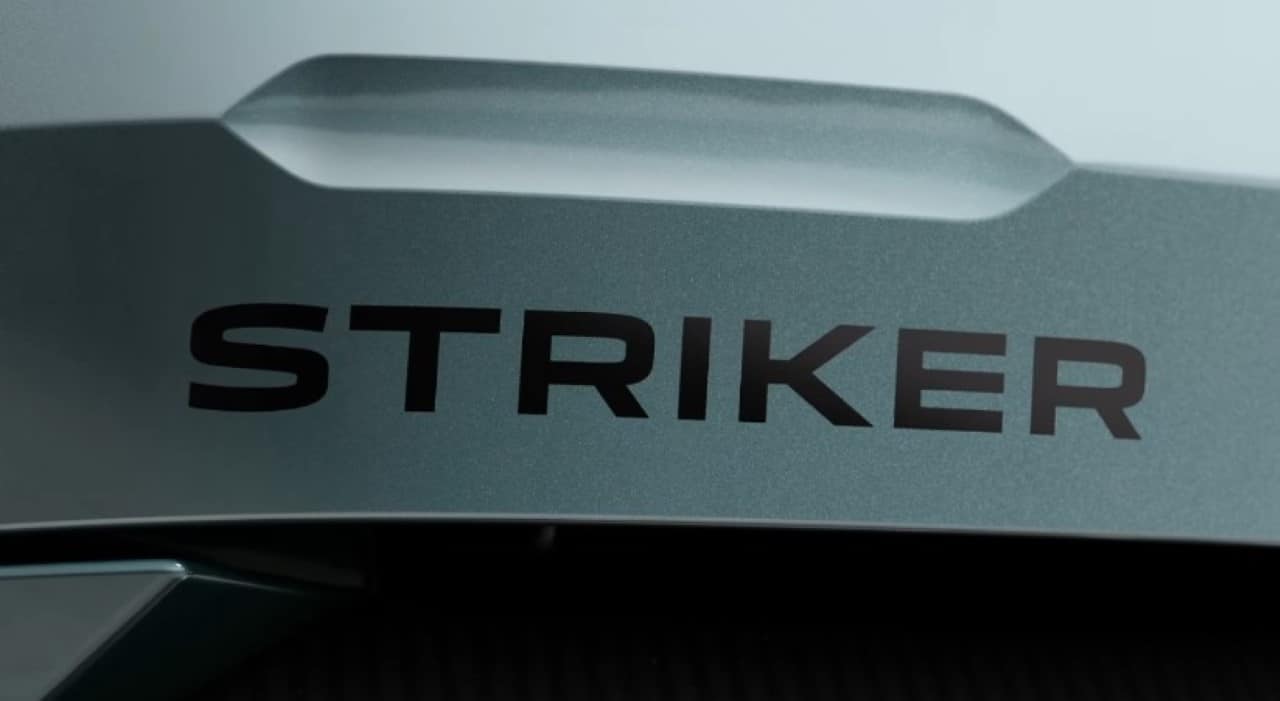
Romanian manufacturer Dacia, belonging to Grupo Renault, has officially confirmed the naming of its next strategic launch aimed at the global automotive market. The unprecedented vehicle, which will be positioned in the competitive C segment, was named Striker and has its global presentation scheduled for March 10th. The model arrives with the complex mission of expanding the automaker’s presence in higher categories, acting as a bridge between utility vehicles and traditional family models that still have strong demand in the Europa.
This new automobile will be strategically positioned just above the familiar Jogger within the brand’s portfolio. Para guarantee economies of scale and productive efficiency, the project shares the renowned modular technical architecture with the company’s recent commercial successes, notably the new generations of the Duster and the recently presented Bigster. The automaker’s central proposal is to offer a product that can combine the unquestionable versatility of a classic station wagon with the visual robustness and high height characteristic of modern crossovers.
Preliminary images and behind-the-scenes information already indicate that the car’s aesthetics will be strictly aligned with the brand’s new corporate visual identity. The design focus is on angular lines, precise geometric cuts and functionality designed for both daily use in urban environments and long trips. The primary objective is to serve large families who require ample internal space and load capacity, without compromising fuel economy and cost-benefit, historical pillars of the manufacturer.
The introduction of this vehicle represents a fundamental step in the restructuring of the company’s catalogue, which seeks to definitively move away from the stigma of a low-cost brand to position itself as an intelligent value alternative. Engineering has dedicated years of research to understand the needs of a consumer who does not want to pay the inflated prices of traditional SUVs, but who also does not want the conservative look of the old station wagons that dominated the streets decades ago.
Expansion strategy in the European automotive market
The decision to invest in segment C does not occur by chance, as this is one of the most profitable and sought-after categories on the European continent. Dacia noticed a gap left by other generalist automakers that have made their products substantially more expensive in recent years. The new model aims to capture exactly the customer orphaned by affordable midsize station wagons.
The chosen name seeks to evoke feelings of precision, strength and dynamism, characteristics that the marketing department considers essential for the new target audience. Além Furthermore, the choice maintains the brand’s strong phonetic tradition of using the ending with the letters “ER” in its larger vehicles, creating a cohesive family alongside models already established in dealerships around the world.
Automotive industry experts point out that the front design must strictly follow the horizontal blocked grille pattern, housing the company’s new, minimalist logo. Essa approach creates an immediate visual unity with the rest of the recently updated range, allowing the consumer to identify the vehicle instantly on the streets, reinforcing the brand’s value in the collective imagination.
Modular architecture and energy efficiency
Built on the advanced CMF-B platform, widely used by several Grupo Renault brands, the new vehicle benefits from a highly flexible architecture. Essa technological base allows not only the drastic reduction of development costs, but also the adoption of several modern mechanical configurations. The automaker’s engineering focused on maintaining front-wheel drive as the absolute standard for the overwhelming majority of versions that will reach stores, ensuring lower weight and greater fuel consumption efficiency.
Despite the focus on front-wheel drive, engineers do not rule out the future introduction of an all-wheel drive variant, designed specifically for mountainous regions and weather situations that require greater grip, such as snow and ice. The engine portfolio was meticulously designed to include traditional gasoline options and LPG-powered variants (Gas Liquefeito of Petróleo), an extremely popular and economical solution in several Europa Oriental and
To meet the increasingly stringent pollutant emissions standards established by União Europeia, the propulsion system will mandatorily include electrified systems. The catalog will feature 48-volt mild hybrid variants, which assist the combustion engine during acceleration, and full hybrid versions, capable of running short sections in 100% electric mode. Essa energy strategy guarantees the maintenance of low cost of ownership, perfectly aligning with the central philosophy of the Romanian manufacturer.
Visual identity and exterior design elements
The promotional material released by the company reveals a striking rear end, characterized by LED taillights with an angular Y-shaped design, a lighting signature that has become the automaker’s new standard. The inscription of the model name appears centrally and in large letters on the trunk lid, dispensing with the traditional logo on the back to give the whole a cleaner and more contemporary look.
The body features generous black injected plastic finishes that surround the entire base of the vehicle, including the wheel arches and bumpers. Esses elements not only have an aesthetic function, but serve to protect the bodywork against small urban impacts and debris on dirt roads, reinforcing the adventurous aura typical of sports utility vehicles that the model tries to emulate.
The launch paintwork, revealed in a light metallic blue tone, suggests a youthful and modern approach, seeking to attract a younger buyer profile. The car’s elongated silhouette confirms the project’s primary intention: to offer a stretched wheelbase that provides greater internal space than the category average, a technical feature that is absolutely essential to compete on equal terms in the demanding mid-size station wagon segment.
The high suspension height in relation to the ground is another competitive differentiator of great importance. Esta calibration promises to attract consumers looking for a car capable of tackling slightly uneven terrain, steep speed bumps and urban ditches without scraping the underside, keeping occupant comfort unchanged even on roads with poor paving.
Internal space and versatility solutions for families
The development of the vehicle’s cabin was guided by the premise of offering extreme durability and daily practicality. The interior design team opted for extensive use of high-resistance recycled materials and easy-to-clean textured plastic surfaces, ideal for transporting children and pets. One of the highlights of the cabin is the integration of the ingenious patented YouClip system. Esta solution consists of several anchor points spread across the dashboard, center console and trunk, allowing the quick and safe attachment of modular accessories, such as smartphone holders, bag hooks, additional cup holders and even small LED flashlights, making it immensely easier to organize personal objects and leisure equipment during long journeys. The luggage compartment was designed to be one of the largest in the entire category, with a square shape and flat floor that optimizes the accommodation of large suitcases, strollers and bulky sports equipment. The intelligent simplicity of the instrument panel, which combines essential digital displays with intuitive physical controls for the air conditioning, aims to keep production costs under strict control. Essa technical decision ensures that the final consumer price remains highly competitive, without any sacrifice in driver ergonomics or in offering the essential connectivity required by the modern driver, such as wireless mirroring for smartphone operating systems.
Commercial positioning and production chain
The launch of this car represents a marketing movement meticulously calculated to capture customers who are looking for financially accessible alternatives, but which do not give up space and technology. The automaker’s main target is to compete directly with historically consolidated models in the fleet and family market, with Skoda Octavia Combi as the main rival to beat in terms of registration volume.
The company’s industrial strategy determined that global production of the new model will be concentrated in manufacturing facilities located at Turquia. Esta is an extremely important logistical decision, as it aims to free up the maximum production capacity of the historic Mioveni factory, at
The automaker’s official schedule stipulates that regular sales at dealerships will officially begin in the European market during the second half of 2026.
The transformation of European automotive design
The European automotive industry is undergoing a profound transition in its body style preferences, with traditional sedan sales steadily declining and the minivan market shrinking. The introduction of a station wagon with crossover characteristics is the technical engineering response to maintaining favorable aerodynamics, which reduces fuel consumption, while delivering the slightly higher driving position that the current public demands at dealerships.
Market dynamics and direct competition
The commercial success of the new vehicle will directly depend on its pricing policy at the time of official launch. By mixing components already amortized from other projects from the French-Japanese alliance, the automaker is able to reduce the development cost by up to a third when compared to a project made from scratch. Essa financial advantage will be passed on to the end consumer, creating an entry barrier that is difficult to overcome for Asian and European brands that try to operate in the same price range, guaranteeing a considerable share of a segment that calls for renewal and practicality in everyday use.



