

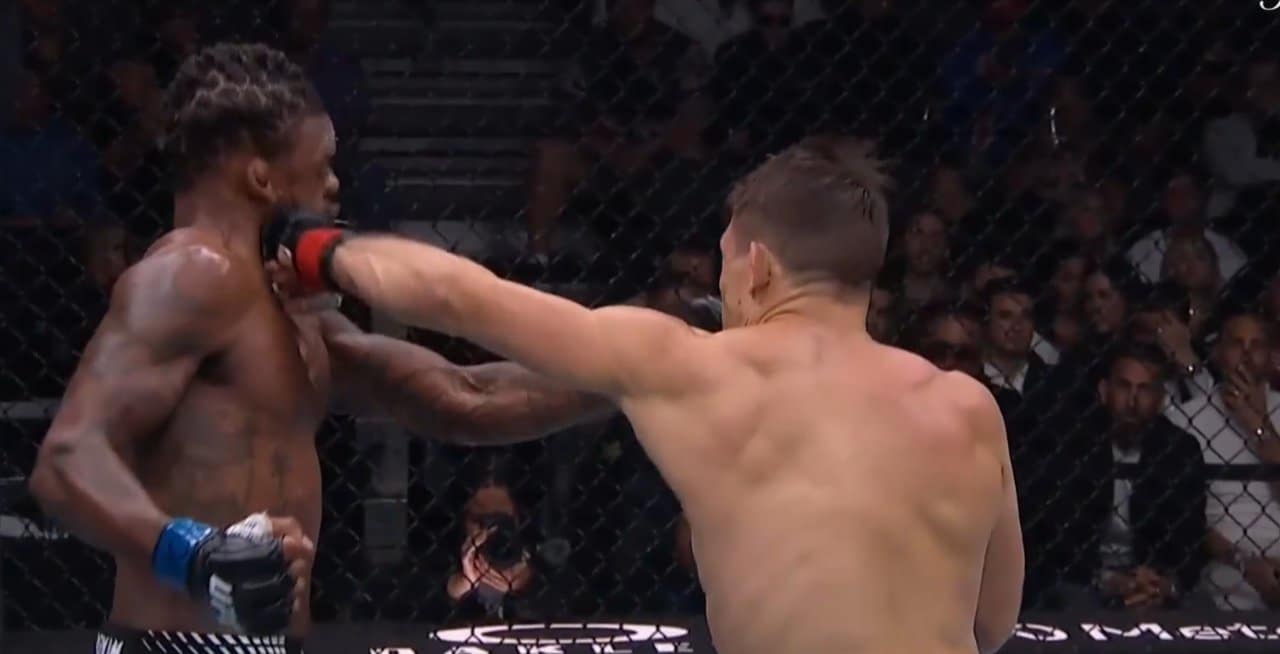
The most famous octagon in the world was the stage for a defining clash for the under-70 kilo category, where precision and power overcame the volume of play. The contest between two respected veterans of mixed martial arts delivered exactly the level of technical complexity expected by experts and enthusiasts of the sport. Durante the event, the dynamics of the fight were clearly defined in the first minutes, highlighting the different strategies adopted by each athlete’s corners. The ability to absorb blows and maintain an offensive posture proved to be the absolute difference in this match. The fast-track outcome not only consolidated the winner on the top shelf of the division, but also raised pertinent questions about reaction time and durability in high-performance sport. The central referee’s interruption occurred at the exact moment when the opponent’s physical integrity could no longer be guaranteed, resulting in an indisputable technical knockout at 1 minute and 53 seconds of the second stage. Este result significantly changes the outlook for future fight marriages for the organization.
The clash brought contrasting characteristics of stand-up combat face to face. The need to win was imperative for both sides, considering the high turnover and the level of demand imposed by the Ultimate Fighting Championship board on its contractors.
The transition from the first to the second round demonstrated a clear tactical adaptation. Adjusting the distance and reading the entry time were essential for creating a positive result, isolating the response attempts and undermining the opponent’s movement base.
Initial dynamics and frank striking in the octagon
The first round of the dispute was characterized by frank and intense exchanges, reflecting the high level of preparation at both training camps. Official statistical data reveals that the winner managed to land 22 significant blows out of a total of 55 attempts made against the opponent. Essa metric establishes a 40% success rate, a number considered highly efficient when it comes to power strikes in the lightweight division. Energy savings combined with the precision of attacks formed the basis of the winning strategy.
On the other side of the cage, the initial tactic involved dictating the pace of the fight through volume. Foram recorded 27 significant strikes connected in 76 attempts, resulting in a success rate of 36%. Embora there was a numerical superiority in the statistics of total touches, the forcefulness did not keep up with the volume. The difference in impact was evident when a knockdown was recorded in the first stage, establishing a territorial and psychological dominance that would dictate the remainder of the confrontation.
Pressure strategy and defense breakdown
The systematic approach used to trap the opponent against the fence required meticulous footwork. Cutting angles prevented lateral escape routes, forcing exchanges of blows at short distances where power stands out.
The attacks were distributed intelligently, ranging between the waist line and the head. Essa variation in levels compromised the opponent’s high guard, opening crucial gaps for the entry of defining crosses and straight shots.
The constant pressure resulted in accelerated physical and mental exhaustion. The obligation to fight backwards considerably consumes any athlete’s cardiovascular reserve, a factor that proved to be decisive for the drop in performance observed in the transition between rounds.
The exact moment of the arbitration interruption
The return for the second round showed a scenario of urgency and definition. Body reading indicated that the moment of completion was close, with attacks being launched with a clear intention of closure.
An overwhelming sequence of punches found the target cleanly, completely destabilizing the opponent’s support base. The inability to defend intelligently became apparent in the eyes of the referee.
The clock was showing exactly 1 minute and 53 seconds when the third man in the octagon decided to intervene. The referee’s quick action preserved the health of the athlete who was no longer able to continue in the fight.
The official declaration of a technical knockout (KO/TKO) echoed around the arena, confirming expectations of a duel resolved quickly. The immediate result was the consecration of preparation work focused on controlled aggression.
Recent history of veterans in the organization
The trajectory built up to this event accredits the winner as one of the most dangerous names in striking today. The accumulation of knockout victories reinforces a reputation for firepower that demands absolute respect from any opponent scheduled by the organization.
For the surpassed athlete, the long journey in the sport includes clashes against the absolute elite of several generations. The experience accumulated over the years is undeniable, but the physical demands imposed by clashes of this magnitude take a heavy toll on competitive durability.
Technical aspects of lightweight today
The 70-kilogram category is widely recognized by experts and event promoters as the deepest and most talented division of global mixed martial arts. The margin for error is virtually non-existent when two ranked or rising athletes cross paths in the cage. Para To remain relevant in this highly competitive ecosystem, a fighter needs to master multiple physical and technical skills, combining defensive wrestling with high-level kickboxing. The fight in question perfectly illustrates this relentless reality of modern sport. The ability to absorb information in the chaos of a fight, adapt to distance and find the exact moment to unleash power strikes sets elite competitors apart from the rest of the squad. The victory achieved under these high-pressure circumstances serves as a testament to technical evolution and professional maturity. The sport demands that power be accompanied by spatial intelligence, proving that brute strength alone is rarely enough to guarantee survival at the top of the professional MMA food chain. The performance recorded in this event will be used as study material by coaches and analysts seeking to understand the nuances of striking applied to MMA.
Direct consequences for the category ranking
The resounding triumph propels the winning athlete into conversations about opponents ranked in the top 15 of the division. Consistency in presentations and the ability to deliver high-level entertainment are valuable bargaining chips in negotiations with event promoters.
The setback suffered imposes a necessary period of technical and physical reevaluation. Planning the next steps will need to consider the mandatory medical recovery time and the strategic choice of an opponent that allows a safe career resumption.
Physical preparation and the role of training camp
The perfect execution of a complex fight plan highlights the exhaustive work carried out behind the scenes during the months of preparation. The cardiovascular endurance demonstrated to keep the power of the punches intact in the second round is a direct reflection of a training camp focused on real combat simulations and specific conditioning for the demands of the octagon.
Next steps in the fighters’ careers
The organization’s calendar of events suggests that the winner could return to action next semester, depending on the absence of serious injuries and the availability of opponents who make sense for their climb to the top of the division.
The period of post-knockout medical suspension will dictate the time the defeated athlete will be away. The immediate focus is on neurological and physical recovery, before any discussion about returning to intensive training is initiated by the coaching team.



