

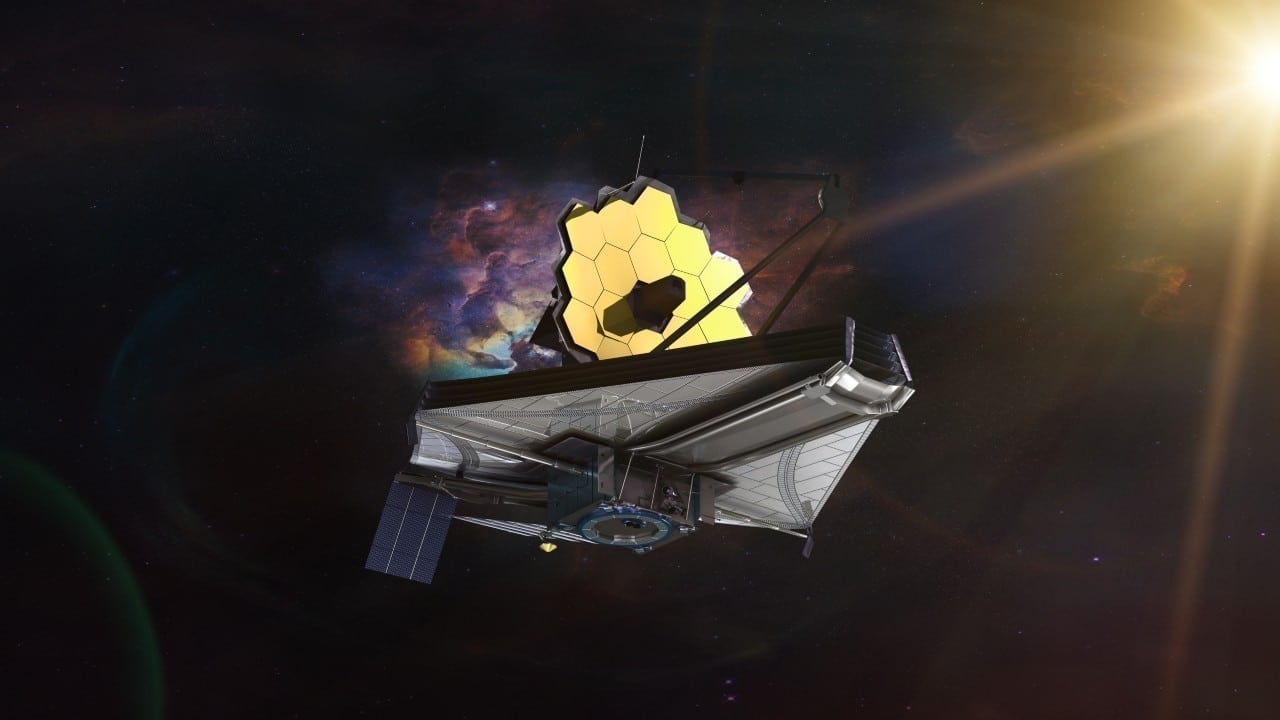
Telescópio Espacial James Webb identified enigmatic objects known as small red dots, or LRDs, which astronomers believe could represent the first stars formed in the universe. Esses objects appear as faint, reddish dots in deep images captured by the instrument. The hypothesis arises from a recently published study, in which researchers analyzed luminous and spectral characteristics compatible with population III stars.
These hypothetical stars would have formed directly from primordial gas composed basically of hydrogen and helium, elements produced shortly after Big Bang. Diferentemente of current stars, which contain heavy metals generated by previous generations, those from population III would be pure and possibly supermassive. Observações and Webb allow us to glimpse remote times, when such stars were more common.
Hypothesis about the little red dots
Astronomers at Universidade, Virgínia and Harvard analyzed data from Webb and concluded that the LRDs exhibit high luminosity for their distance. Eles propose that these objects correspond to individual stars of extreme mass, capable of reaching up to millions of solar masses.
Simulations indicate that stars this massive would be bright enough for detection at great distances. The pure chemical composition would explain the observed red coloration, influenced by the cosmological redshift.
Researchers acknowledge that other explanations exist, such as active galactic nuclei obscured by dust. However, these alternatives face inconsistencies with available data. The primordial stars proposal offers a consistent solution to the enigma.
Characteristics of population III stars
Population III stars emerged in the early stages of the universe, when there were no heavy elements to enrich the interstellar medium. Elas would have been responsible for the initial production of metals that allowed the formation of later generations.
Theoretical models predict that these stars would reach sizes and masses much higher than today’s. Sua short lifespan would result in explosions that would disseminate the first heavy elements throughout the cosmos.
Webb detects these objects thanks to its near-infrared sensitivity, essential for observing light emitted billions of years ago. The images reveal compact structures that defy previous expectations about early star formation.
Implications for black hole formation
The presence of primordial supermassive stars could explain the rapid formation of supermassive black holes observed in young galaxies. Esses massive stars would collapse directly into black holes, accelerating the evolutionary process of the universe.
Previous observations of Webb have indicated surprisingly mature galaxies at ancient times. The hypothesis of LRDs as population III stars complements these findings and suggests efficient mechanisms of cosmic growth.
Future research with detailed spectroscopy should confirm or refute the nature of these objects. Dados of the telescope will allow us to better map the distribution and properties of these candidates.
Challenges in identifying objects
The extreme distance of LRDs makes it difficult to distinguish individual stars from galactic phenomena. The resolution of Webb helps, but spectral analyzes are needed to separate contributions from different sources.
Astronomers continue to debate alternative interpretations of the data. The scientific community evaluates multiple possibilities before accepting any definitive explanation.
The advance reinforces the role of James Webb in the exploration of the primordial universe. Novas observations promise to clarify fundamental questions about the cosmic beginning.
Recent Space Telescope Observations
James Webb has consistently revealed unexpected structures in the distant universe. Seus instruments capture light emitted when the cosmos was just hundreds of millions of years old.
These findings include bright, early-formed galaxies that defy traditional models of cosmic evolution. The red dots add to this list of intriguing discoveries.
The telescope’s ability to penetrate dust and observe extended wavelengths makes it easier to study opaque regions in the remote past. Assim, he continues to push the boundaries of astronomical knowledge.
These investigations highlight how the universe evolved from a simple state to its current complexity. The primordial stars represent a key part in this transition.



