

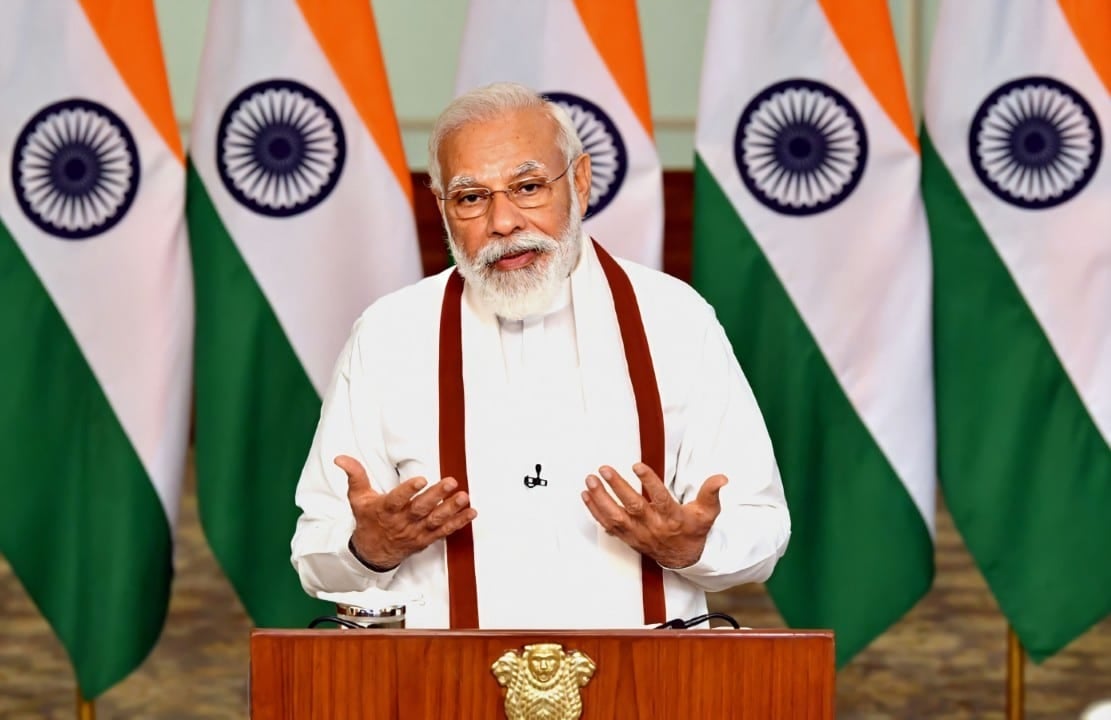
The Índia federal administration announced a comprehensive set of strategic guidelines designed to position the country as a leading technological and industrial power on the global stage. Essas measures include massive investments in digital infrastructure and advanced manufacturing, with clear goals to reduce external dependencies and tap the vast potential of the domestic market. The plan addresses the need to modernize public services through mass digitalization, while at the same time strengthening internal productive capacity to meet the demands of a population that exceeds 1.4 billion inhabitants. Autoridades highlighted that this initiative aims to transform the nation’s economic profile, promoting self-sufficiency in key sectors such as semiconductors and renewable energy.
Experts indicate that the 2026-27 budget reflects a two-pronged strategy for manufacturing, deepening capabilities in technology-intensive areas while maintaining momentum in industries that generate large-scale jobs. Essa approach balances supply security, value addition and competitiveness in exports, aligning with the vision of a strategically indispensable Índia. The government has allocated significant resources for research and development in deep technologies, including artificial intelligence and quantum computing, with the aim of raising the country’s global rankings in critical innovations.
Recent projects, such as the opening of semiconductor facilities in Sanand, exemplify progress in this direction, with international partnerships transferring knowledge and boosting local production. Essas actions not only reduce external vulnerabilities, but also create opportunities for exports in emerging sectors such as green hydrogen and energy storage.
Dual strategy for manufacturing
The 2026-27 federal budget outlines a two-track manufacturing strategy, prioritizing the deepening of capabilities in strategic and technology sectors. Essa policy seeks to balance the development of labor-intensive industries with investments in high technology, ensuring both job creation and global competitiveness. Autoridades emphasized that this approach aims to secure supply and add value, positioning Índia as an essential hub in international value chains.
Investments in semiconductors and manufacturing electronics received prominence, with approvals for factories totaling billions in resources. Esses projects include incentives for production linked to schemes that have already generated more than one million jobs and increased production by hundreds of billions of dollars. Integrating policies like Esquema from Incentivos Ligados to Produção demonstrates a commitment to measurable execution, transforming intentions into concrete results.
Transition to green energy
Índia advances the energy transition with national missions dedicated to green hydrogen and energy storage. The program aims to make the country a global hub for electrolysis production and manufacturing, with targets of five million tons annually by 2030. Specific Incentivos for green hydrogen production and manufacturing facilitate the creation of initial markets and attract international investment.
Partnerships with nations like Singapura and Alemanha integrate Índia into decarbonization supply chains, strengthening exports and international standards. Além In addition, the formal recognition of energy storage as a critical system resource supports the integration of variable renewable energy, reducing curtailment risks and improving grid stability.
Investments in green energy corridors expand transmission infrastructure, connecting renewables-rich regions to demand centers. Essas collective measures accelerate the adoption of clean technologies, aligning economic growth with sustainability goals.
Ambitions in semiconductors and AI
Índia approved multiple semiconductor fabs with investments exceeding one billion dollars, marking a transition to execution-led capacity planning. Esses projects anchor high-value manufacturing and deepen the ecosystem, with budget allocations for research into deep technologies. The country now occupies a position among the top five globally in critical technologies, reinforcing its leadership in innovation.
In the field of artificial intelligence, the government promotes sovereign capabilities through domestic computing infrastructure and localized models. Iniciativas as the IndiaAI Mission allocate resources to indigenous datasets and models adapted to diverse linguistic and socioeconomic contexts. Essa strategy positions Índia as a bridge between developed and emerging economies in the AI ecosystem.
Building public digital infrastructure, including unified payments, exemplifies how coordinated actions between government and the private sector create value on a systemic scale. Essas lessons are applied to accelerate innovations in energy and technology, ensuring progress is inclusive and responsible.
The focus on education for employment and enterprise ensures that skills are connected to economic opportunities, fostering a robust innovation ecosystem.
Reforms to national electricity policy
The 2026 draft Política Nacional of Eletricidade proposes broad reforms in tariffs, renewables and storage to support growth until 2047. and efficiency.
In the nuclear sector, the adoption of advanced technologies such as small modular reactors accelerates clean capacity, with targets of one hundred gigawatts by 2047.
State policies complement national efforts, with states like Gujarat and Rajasthan setting ambitious targets for renewable capacity. Gujarat plans massive investments in solar and wind farms, while Rajasthan targets one hundred and twenty-five gigawatts by 2030, including hybrids and storage.
Andhra Pradesh positions itself as a clean energy hub with a focus on decentralization and digitalization, encouraging exports of renewables and infrastructure for electric vehicles.
Investments in defense and innovation
Índia strengthens its defense industrial base with indigenous productions that support record exports. International Parcerias facilitate capacity transfers and joint research in emerging domains. The private sector contributes significantly, positioning the country as a viable export hub.
In innovation, the focus on high-energy materials and thermobaric ammunition reflects the search for futuristic systems. The global market for these materials is expanding, driving investment in research and development to meet modern defense demands.
These initiatives integrate economics, technology and government to build a future-ready nation. The long-term vision, like Viksit Bharat 2047, roots growth in sustainability and inclusion.
Geopolitical and economic positioning
Índia emerges as a pivotal actor in the new geoeconomic order, with access to markets expanded by trade agreements. Fluxos of foreign capital grows, reflecting confidence in macro stability and policy continuity. Investimentos in manufacturing convert incentives into jobs and incremental production.
The transition from emerging to strategic indispensable is evident in supply chain realignments, with advantages beyond cost, such as digital infrastructure and economic formalization. Esses elements reduce friction and allow rapid capital scalability.
In the global context, Índia acts as a bridge in AI and energy ecosystems, investing in infrastructure for long-term technological leadership. Essa position strengthens partnerships and integrates the country into global narratives of sustainable innovation.



