

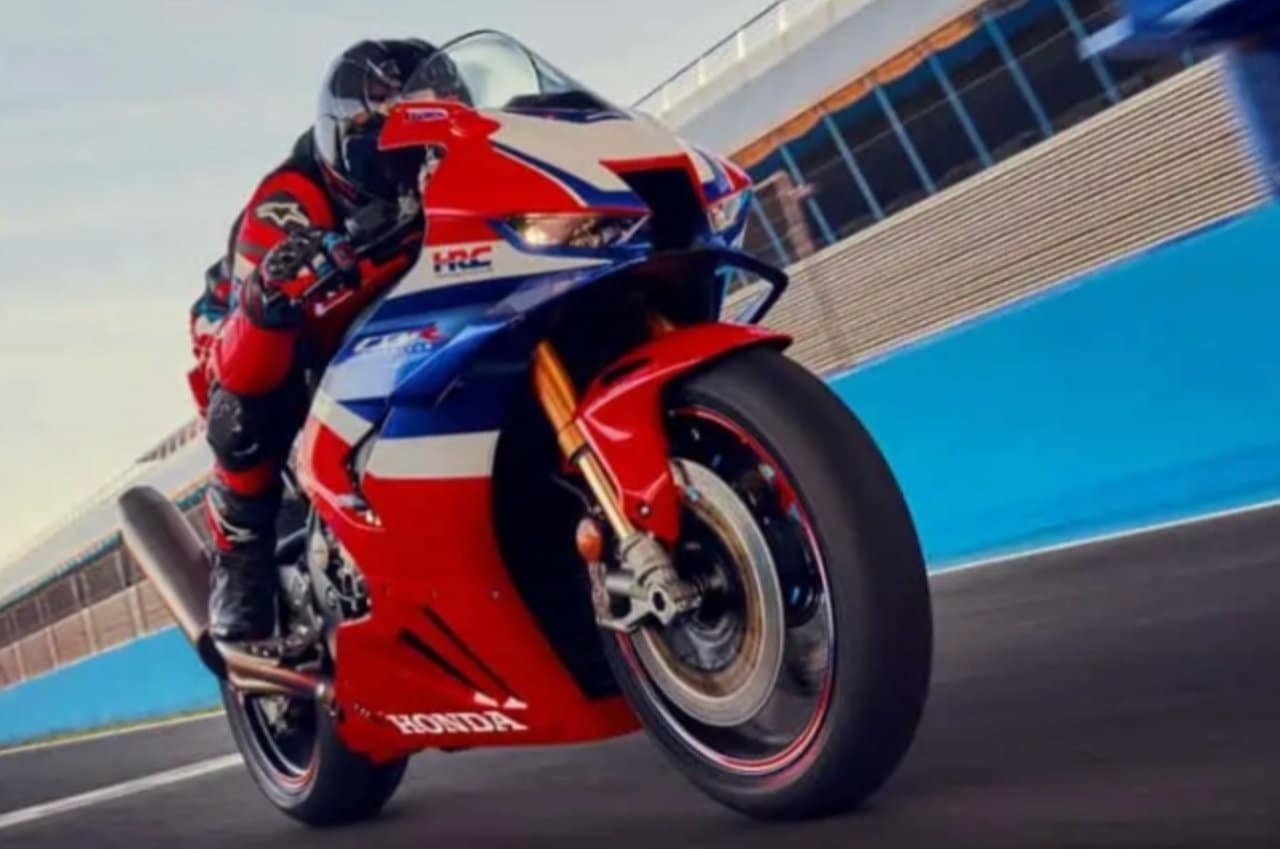
The Brazilian motorcycle market receives a significant upgrade in the high-performance segment with the introduction of a new super sports model. The manufacturer has officially announced the arrival of the updated version of its flagship motorcycle, bringing track capabilities directly to public roads and local circuits.
Developed in conjunction with the brand’s racing division, the machine integrates aerodynamic and mechanical solutions previously restricted to world championship prototypes. The engineering focus was to optimize acceleration, cornering stability and precise electronic control, raising the driving standard to professional levels.
Dealers spread across the country will begin offering the product from March onwards, targeting experienced pilots and track day enthusiasts. The launch redefines the technical parameters available to consumers in the premium two-wheeler sector.
Mechanical engineering and high-performance propellant
At the heart of the motorcycle is an in-line four-cylinder engine with a displacement of 999.9 cubic centimeters, specifically designed to deliver maximum performance at high revs. Power reaches 215 horsepower, accompanied by a torque of 11.4 kgf.m, ensuring quick and vigorous responses in varied acceleration conditions. The internal components underwent rigorous weight reduction processes, using lightweight alloys and low-friction coatings to minimize rotational inertia and maximize the thermal and mechanical efficiency of the propellant.
The transmission system received profound structural adjustments, with emphasis on shortening the gear ratios throughout the entire set. Esta modification allows the engine to rev up more quickly, always remaining in the ideal torque range, which results in considerably faster corner exits. Além In addition, the electronic throttle mechanism has been recalibrated to provide a more direct connection between the pilot’s command and the injection body’s response, eliminating delays and offering millimeter control over power delivery.
Advanced aerodynamics inspired by racetracks
The fairing design incorporates aerodynamic fins directly derived from the RC213V prototype used in the main category of world motorcycling. Estas lateral structures are responsible for generating significant downward force on the front axle during travel at high speeds.
By increasing aerodynamic pressure against the ground, the fins effectively mitigate the tendency of the front wheel to lift during sudden acceleration. Este mechanical effect allows the electronic anti-wheelie system to intervene less frequently, maintaining continuous momentum and power transfer to the asphalt.
The frontal area of the motorcycle has been minimized as much as possible to reduce aerodynamic drag, making it easier to reach higher final speeds on long straights. The intake ducts and air outlets have been carved into wind tunnels to optimize engine cooling flow without compromising air penetration.
The fuel tank, with a capacity of 16.5 liters, has had its shape redesigned to allow the driver to fit more compactly behind the windshield. Este ajuste ergonômico diminui o centro de gravidade do conjunto e melhora o coeficiente aerodinâmico total da dupla formada pela máquina e pelo condutor.
Electronic systems and dynamic management
A sophisticated six-axis Unidade of Medida Inercial acts as the central brain of the motorcycle’s electronics package. Este sensor continuously calculates pitch, yaw and roll rates, feeding the various control modules with accurate real-time data on the vehicle’s dynamic behavior.
The traction control system uses this information to modulate power delivery based on the lean angle, preventing rear wheel slippage without interrupting the trajectory chosen by the driver. Diversos riding modes are available, allowing customization of engine braking, injection maps and safety intervention levels.
The launch control functionality is another feature focused on circuit use, enabling consistent starts by automatically managing engine rotations. The digital instrument cluster provides a clear interface for the user to navigate through all these settings intuitively.
Intelligent suspension and chassis components
The suspension set features the third generation of active electronic system, which provides dynamic damping adjustments during riding. The front fork and rear shock absorber continuously adapt to irregularities in the ground and to the forces applied during braking and acceleration, ensuring ideal contact between the tires and the ground.
The double-spar aluminum chassis has been revised to offer a specific balance between torsional rigidity and lateral flexibility. Esta structural tuning transmits clearer feedback to the rider at moments of maximum lean, increasing confidence and speed on winding sections.
Weight reduction and mass distribution
The efforts of the engineering team resulted in a total curb weight of just 201 kilograms, achieving a very high level of weight-to-power ratio. Mass centralization was a key objective, positioning the heaviest components, such as the engine and exhaust, as close as possible to the motorcycle’s center of gravity.
Static weight distribution was meticulously balanced, with 53% of the mass concentrated on the front wheel and 47% on the rear wheel. Esta configuration promotes neutral steering characteristics and improves front-end grip during heavy braking that extends into corners.
Competitive specification braking system
To safely manage the extreme speeds the 215 horsepower engine is capable of, the braking system utilizes race-spec components, including four-piston radial-mount front calipers. Estas calipers act on large diameter floating discs, providing immense stopping force with minimal loss of efficiency, even under the severe thermal loads generated during intense sessions on race tracks. The cornering-oriented anti-lock braking system, fed by data from the inertial control unit, modulates hydraulic pressure to prevent wheel locking when the bike is tilted, allowing riders to brake later and more aggressively. The master cylinder design ensures a firm, consistent feel at the lever, a crucial factor in the precise modulation required in high-performance riding.
Commercial positioning and availability at dealerships
The suggested price for the Brazilian market was established at R$189,174.00, a value that does not include shipping or insurance expenses. The model will be marketed in its characteristic livery reminiscent of official competitions, reinforcing its sporting heritage and targeting a highly exclusive segment of consumers seeking the pinnacle of technology on two wheels.



