

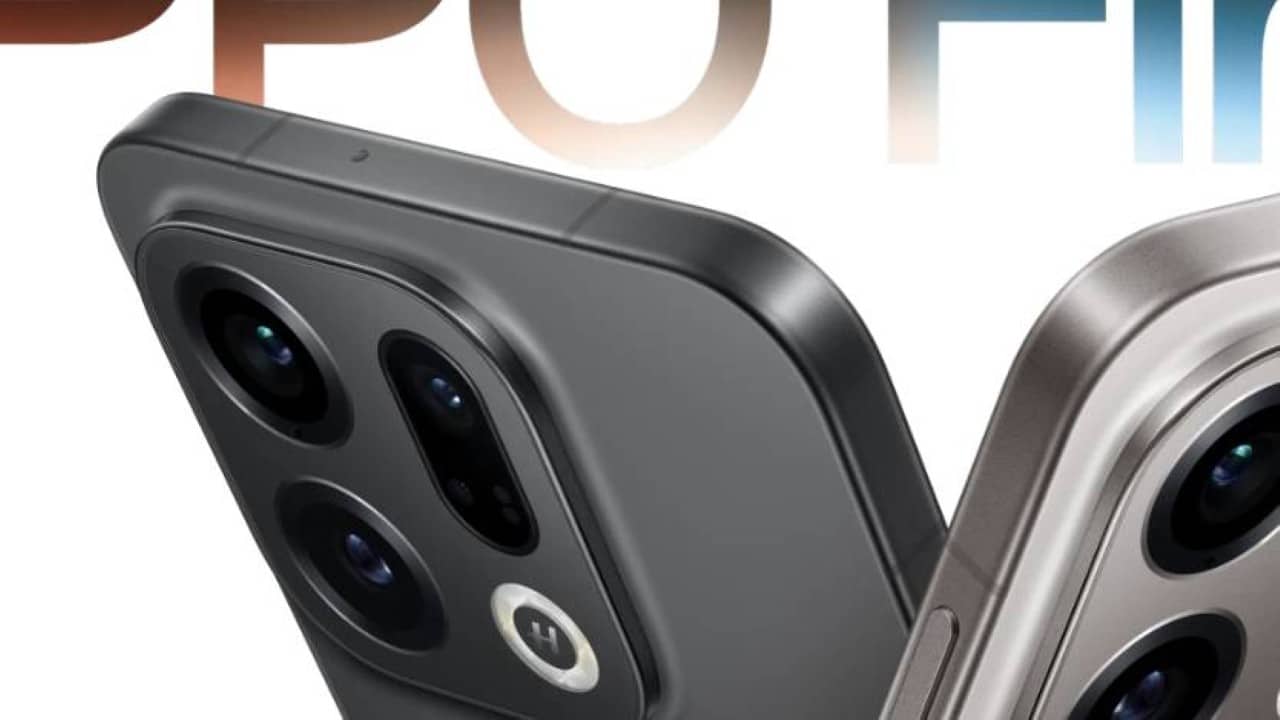
Chinese mobile device maker Oppo officially confirmed the international expansion of its most advanced smartphone lineup during a special event held at Mobile World Congress in Barcelona. The European fair served as the stage for the presentation of the launch guidelines for the brand’s new high-end device, which will compete in the global premium segment.
For the first time in the history of the Find X series, the variant with the highest nomenclature in the portfolio will leave the borders of the Asian market to reach consumers on several continents. The commercial decision breaks with the company’s previous pattern, which used to reserve its most robust photographic technologies exclusively for China’s internal audience.
The logistical move aims to meet a demand from enthusiasts for mobile photography and high performance, positioning the device as a direct rival to the main brands established in the West. The main focus of the device’s introduction campaign is based on combining state-of-the-art processing hardware with an optical suite developed in conjunction with photography industry experts.
Manufacturer’s international distribution strategy
The arrival of the new device on international markets is scheduled to take place during the second quarter of the year, with availability on shelves expected between April and May. Initial distribution will prioritize selected Europa markets, where the brand already has logistics infrastructure and operating agreements established with the main local telecommunications operators.
Company representatives indicated that the release of the device will occur gradually, allowing for software adjustments and specific network certifications for each region. Official prices and exact memory configurations for the global market will be released weeks before pre-sales open, adapting to exchange rate and tax fluctuations in each receiving country.
Photographic partnership with the Swedish manufacturer
The device’s biggest technical difference lies in the rear camera module, which incorporates the latest iteration of the co-engineering partnership with the Hasselblad camera brand. The system was designed to replicate the European company’s signature color science, delivering natural tones and accurate white balance even in unfavorable lighting conditions or high-contrast scenarios.
The optical architecture stands out for the inclusion of two independent periscopic lenses, an engineering solution that allows different levels of optical zoom without loss of quality. Essa hardware configuration minimizes reliance on digital cropping at medium and long focal lengths, preserving the fine details and original texture of images captured by amateur and professional photographers.
Custom Sony sensors equip the main lens, offering an expanded light-gathering area and support for ultra-fast autofocus technologies. The image processing software has also received structural updates, including an improved portrait mode that simulates the background blur of the Swedish partner’s traditional medium format lenses, as well as ultra-high resolution video recording with support for uncompressed file formats.
Screen specifications and mobile processing
The smartphone’s front panel is dominated by a 6.82-inch AMOLED screen, which delivers 2K resolution and enough pixel density to hide any aliasing from the naked eye. The display technology has been calibrated to withstand extreme brightness peaks, ensuring content readability even in direct sunlight outdoors, as well as reproducing the color spectrum with professional-level accuracy.
The fluidity of the interface is guaranteed by a variable refresh rate that reaches up to 120 Hz, dynamically adjusting according to the content displayed to balance performance and energy consumption. Essa seamless transition between lower rates for reading text and maximum rates for browsing and gaming results in a seamless visual experience that is responsive to the user’s touch.
Under the chassis, the device is driven by the Snapdragon 8 Elite processor, silicon developed for mobile platforms that delivers significant leaps in thermal efficiency and calculation capacity. The advanced architecture CPU works together with a high-performance GPU, allowing you to run heavy applications, real-time video editing and games with complex three-dimensional graphics without choking.
To maintain peak performance during long periods of intense use, engineers implemented a vapor chamber liquid cooling system with an enlarged dissipation area. The internal structure has been redesigned to move heat away from critical components and distribute it evenly throughout the casing, avoiding thermal throttling that often reduces processor speed in stressful situations.
Battery life and fast charging
The device is powered by a high-density battery that exceeds conventional market standards, designed to support the demands of the high-resolution screen and state-of-the-art processor during a full day of corporate or multimedia use. The chemical composition of the power cell has been optimized to reduce long-term wear and tear, maintaining maximum charge retention capacity even after hundreds of complete recharge cycles, which extends the life of the equipment in the hands of the end consumer.
The system supports both cable and wireless magnetic induction ultra-fast charging protocols, allowing the user to recover a significant percentage of the battery in just a few minutes while plugged in. Power management is overseen by a dedicated chip that monitors temperature and voltage in real time, stopping current flow if it detects anomalies and adjusting recharge speed based on the owner’s daily habits to maximize operational security.
Artificial intelligence and global connectivity
The integration of artificial intelligence algorithms occurs natively in the operating system, processing most complex tasks directly on the device’s hardware without the need to send sensitive data to cloud servers, which reinforces user privacy. Esses language models and computer vision work in the background to optimize everything from organizing photo galleries to allocating RAM memory for the most used applications, continually learning from daily usage patterns. In terms of connectivity, the smartphone was equipped with a 5G broadband modem that supports a global spectrum of frequencies, ensuring compatibility with telecommunications networks in multiple countries and facilitating international roaming for frequent travelers. The redesigned antenna architecture maintains signal stability even in dense urban areas or indoor environments with a lot of electromagnetic interference. Out-of-the-box software includes support for a wide range of languages and dialects, with simultaneous translation tools integrated into voice calls and messaging applications, eliminating communication barriers in global business environments.
Premium construction materials and design
The smartphone’s external structure uses aerospace-grade metal alloys combined with high-impact and scratch-resistant glass, giving the product a sophisticated tactile finish and durability for everyday use. The design was designed with a focus on ergonomics, featuring slightly curved edges that make it easier to hold the large device, while the rear camera module adopts a symmetrical shape that balances the weight of the device in the user’s hands.
Final software adjustments in the European market
The software engineering teams are finalizing the final adjustments to the user interface to adapt it to the privacy and security requirements of international regulatory bodies, ensuring full compliance with current legislation. Essa polishing step includes removing Asian regional applications and deep integration with the most popular software services and ecosystems in the West.
Negotiations with large retail chains and electronics distributors are at an advanced stage, aiming to ensure a robust presence of the product in physical stores and e-commerce platforms on the first day of sales. The manufacturer plans demonstration campaigns at strategic points of sale so that consumers can test the capabilities of the camera system before making a purchase decision.



