

Fujifilm recently introduced the instax mini The model stands out for its ability to record clips of up to 15 seconds with visual and sound effects inspired by different decades, from 1930 to 2020. The launch took place in January 2026, with gradual availability in global markets, including Estados Unidos and Japão.
The camera’s design harks back to vintage Super 8 camcorders, with a main dial that selects from 10 different era effects. Cada setting applies filters that simulate the aesthetics of low-quality recordings from specific eras, such as heavy grain in the 1930s or softer touches in the 1960s. The 28mm-equivalent lens with f/2 aperture allows for digital zoom and face-detection autofocus. The camera operates in CINE mode for videos and STILL for photos, offering versatility in a single compact device.
Retro design and intuitive controls
The instax mini Evo Cinema features a robust construction with a finish that evokes classic analog cameras. The era dial is at the top, making it easy to quickly switch between effects. A front trigger starts recording when pressed, pauses when released and resumes when pressed again, allowing you to compose clips with multiple scenes.
Users adjust the zoom using a dedicated tactile lever. The camera includes a removable magnetic viewfinder, which reveals a touchscreen LCD screen for viewing and adjustments. Internal Armazenamento holds about 50 photos or 10 clips, expandable via microSD card up to 256 GB.
Recording process and applying effects
Recordings occur at a standard resolution of 600×800 pixels, with an exclusive high quality option in 2020 mode, reaching 1080×1440 pixels. Older Efeitos introduce noise, grain, and distortions that mimic low-quality films, while newer settings preserve greater sharpness. Áudio also receives vintage treatment, with muffled or echoing sound depending on the era selected.
Tests show that clips capture everyday scenes with a nostalgic feel, such as train departures or cityscapes. The camera allows you to pause and resume recordings to create short montages without immediate subsequent editing.
Photo printing with integrated QR code
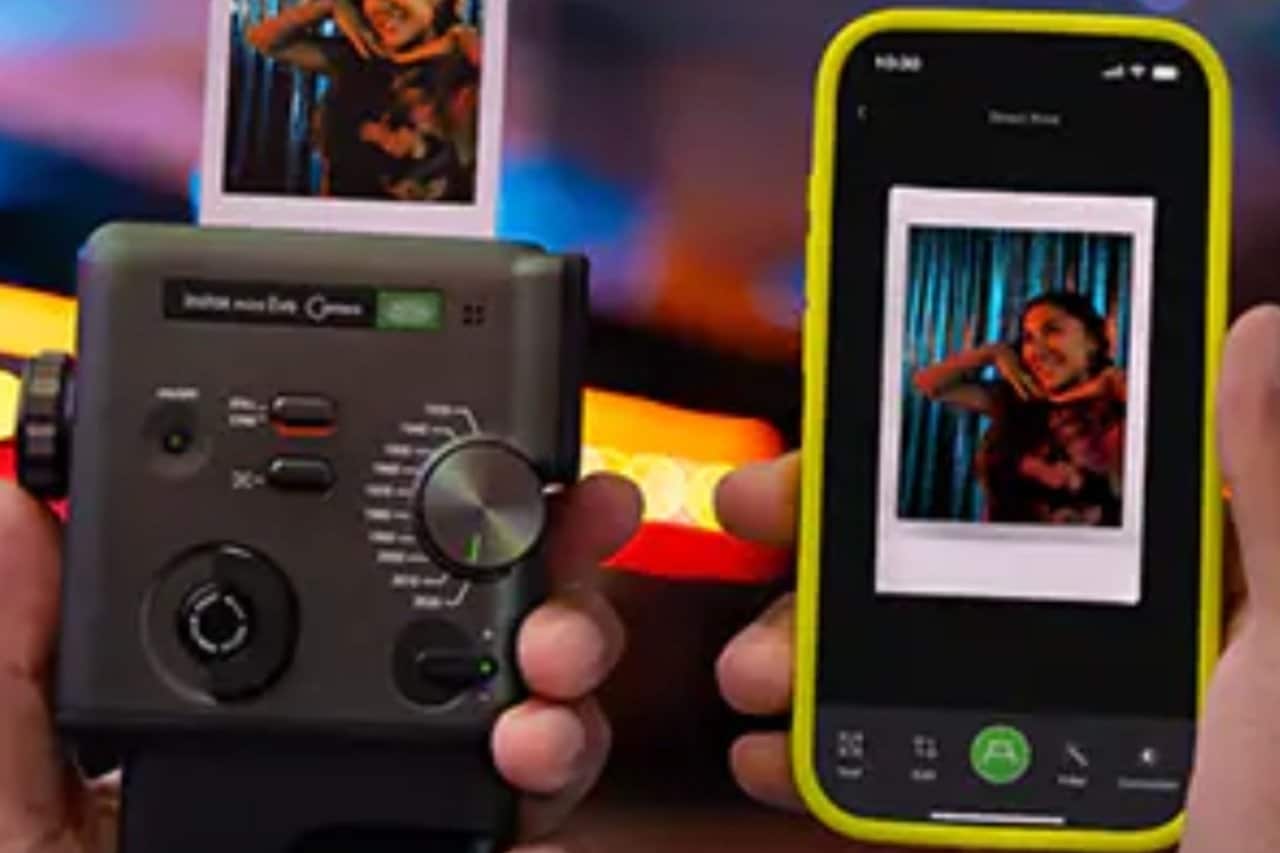
To print, connect the camera to the instax mini Evo app, available for iOS and Android. Selecione the video in the recording list and choose a specific scene for the printed frame. The QR code positioned in the photo directs the clip to be automatically uploaded to a server, with access via scanning.
The instax mini film comes out of the top of the camera after the print lever is activated. The process requires waiting for the image to develop, revealing the static scene next to the functional QR code. Vídeos remain accessible for two years on the server, recommending immediate download for preservation.
Application and editing features
The app makes it easy to transfer videos for editing, allowing you to cut, rearrange clips and add custom intros. Impressões via app sends the video to the server simultaneously, speeding up sharing. Usuários view and select frames directly on the cell phone, avoiding tedious navigation on the camera’s small screen.
Connection Bluetooth ensures fast synchronization. The app also manages photo prints from your smartphone, expanding the use of the instax mini Evo Cinema as a portable printer.
Practical examples and visual results
Recordings in 2020 mode deliver sharp images with a modern look, ideal for current scenes. Configurações from the 1960s applies softness and vintage tones, capturing urban elements with an analog feel. Efeitos from the 1990s highlight billboards and night lights with a contrast characteristic of the time.
Clips composed of multiple takes create short narratives, like sequences of everyday actions. Physical printing with a QR code transforms the video into a tangible object, shareable at events or as a personal souvenir.
Storage and technical limitations
Limited internal memory requires frequent management or use of microSD card to expand capacity. Resoluções of video prioritize retro aesthetics instead of high definition, adapting to the creative concept of the product. Bateria supports moderate use, with recharging via USB-C.
The camera weighs enough to feel premium but remains portable. Autotimer of 2 or 10 seconds facilitates self-portraits or inclusion of the user in scenes.
The instax mini Evo Cinema offers an innovative approach to capturing and sharing moments, uniting short video, nostalgic filters and instant printing in a single device. The model serves creators who seek differentiated content, with an emphasis on tactile and visual experiences.



