

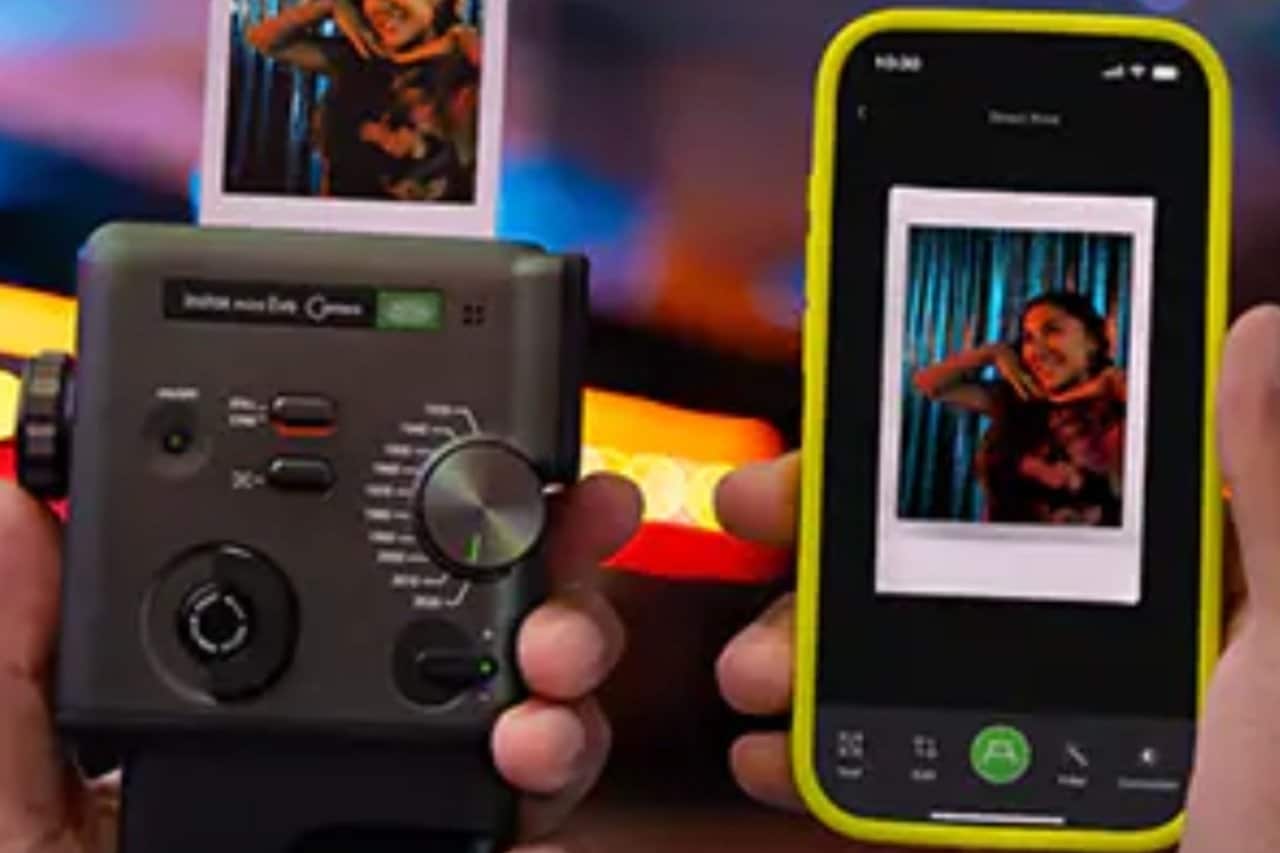
The Japanese manufacturer of photographic equipment officially announced the arrival of new equipment that combines the nostalgia of analog photography with the practicality of the digital format. The hybrid device allows users to capture both still images and short audiovisual clips, offering a new dynamic for recording everyday moments.
The model’s main innovation is the ability to print a specific frame from the recorded material, adding an interactive layer to the photographic paper. The system generates a scannable code that, when read by a smartphone, reproduces the original clip with audio and visual effects applied during capture.
The official schedule establishes that the product will be available on shelves from January 2026. The launch will take place simultaneously in several strategic markets, including Japão and Estados Unidos, aiming to meet the growing demand for creative capture devices.
Retro design and temporal filter selectors
The visual aspect of the equipment was heavily inspired by the classic Super 8 camcorders, bringing an aesthetic appeal that harks back to past decades. The physical construction incorporates a main selector on the top, specifically designed to switch between the different capture modes and filters integrated into the machine’s operating system.
Engineers developed ten distinct image profiles that simulate visual characteristics from different eras, spanning a historical period from the 1930s to the 2020s.
Among the main technical characteristics of the lenses and operating modes, the following points stand out:
- Lens with focal length equivalent to 28mm, suitable for open framing and ambient recordings.
- Aperture of f/2.0, which guarantees good light entry even in scenes with reduced lighting.
- Support for digital zoom and exposure compensation control directly on the device body.
- Dedicated CINE modes for motion capture and STILL for traditional photography.
Switching between capture formats is fluid, requiring only the adjustment of a physical button for the sensor to adapt its frame rate and resolution. The integrated LCD display on the back acts as the main reference monitor, displaying in real time the aesthetic modifications selected by the user before final registration.
File recording and storage mechanisms
The audiovisual recording process has been simplified to ensure agility during daily use. The trigger button works in two ways: the user can hold it down to record continuously or press it once to start and once to pause, allowing multiple cuts to be joined into a single final file of up to fifteen seconds.
To archive material, the device has a limited internal memory, capable of holding around fifty photographs or ten short clips. Capacity expansion occurs through a slot for memory cards in microSD format, supporting media of up to 256 GB, which solves space limitations for longer productions.
Image quality and noise simulation
The technical quality of the generated files varies according to the temporal filter selected in the main selector, creating a direct correspondence between visual aesthetics and image fidelity. In the default configuration, which simulates older eras, the sensor captures the material at a resolution of 600×800 pixels, intentionally adding visual artifacts such as intense grain, digital dust and scratches to the virtual film. Quando the operator selects the profile corresponding to the 2020s, the system deactivates nostalgic interference and increases the resolution to 1080×1440 pixels, delivering a sharper and more contemporary result. Internal processing also affects audio capture, as the built-in microphone applies decade-specific equalizations. In classic profiles, the ambient sound is mixed with mechanical noises that imitate the operation of old projectors or the characteristic hiss of magnetic tapes, providing a complete sensorial immersion that goes beyond the simple application of color filters.
Wireless connectivity and dedicated app
Communication between the camera and mobile devices is carried out via a low energy consumption Bluetooth connection. Este protocol ensures that pairing with smartphones is maintained stably, allowing rapid data transfer without excessively draining the charge of both devices.
The manufacturer provides an official application, compatible with the iOS and Android operating systems, which acts as an editing and management center. Através this platform, users can transfer recorded videos, perform precise cuts in the timeline and rearrange the order of captured clips.
The software also offers complementary audiovisual customization tools. You can add background music tracks, insert standardized intro screens and apply closing signs, transforming raw recordings into small cinematic projects ready for sharing on social networks.
Digital reading printing system
The feature that distinguishes the equipment on the market is its printing mechanism associated with optical reading technology. Após When editing is finished in the application or directly in the camera, the user chooses a specific frame of the video to be transferred to the instant photographic paper. The printing system built into the top of the device reveals the physical image, which has a two-dimensional barcode unique to that media file printed in one of its corners.
When a person uses the camera on a regular smartphone to read this printed code, they are redirected to a cloud server where the full video is hosted. Viewing occurs immediately in the cell phone’s browser, without the need to install third-party software by the person receiving the photo. The files remain stored and accessible on the company’s servers for a period of two years, requiring users to download them permanently if they wish to save the original clip permanently on their personal devices.
Additional technical specifications and usability
The device’s power supply is based on an internal rechargeable battery, eliminating the need for disposable batteries. Charging is carried out via a USB-C port, a current standard in the electronics industry, which makes it easy to recharge using common cell phone chargers or external batteries when traveling.
The body of the machine was designed with a focus on ergonomics, featuring textures that improve hand grip. The balanced weight and compact dimensions allow the equipment to be easily transported in backpacks or small bags, favoring use on trips and social events without causing physical discomfort to the operator.
To aid in capturing self-portraits and group photos, the operating system includes a built-in timer function. The feature can be configured for delays of two or ten seconds, ensuring enough time for the operator to position themselves in front of the lens after pressing the main shutter button located at the top.
The internal menu navigation interface has been simplified to suit both experienced and beginner photographers. The icons displayed on the LCD screen are self-explanatory, and the control ring around the lens allows for quick zoom and focus adjustments without needing to access complex submenus during ongoing recording.
Tool for content producers
The development of this model aims to bridge a gap between traditional analogue photography and the contemporary demand for dynamic content. The ability to deliver a physical object that contains hidden digital media transforms the interaction with the product, creating a tactile experience that smartphone photo galleries cannot replicate on glass screens.
Event professionals, content creators and retro aesthetic enthusiasts find the equipment to be a unique tool to engage their audience. The combination of mechanical elements and software processing reflects a trend in the technology market to rescue old formats, adapting them to current connectivity requirements in a practical way.
Arrival on the international market
Commercial distribution of the equipment will begin in the first days of 2026, with stocks initially directed to the main electronics retail chains and stores specializing in photography. The manufacturer plans a gradual expansion to other regions throughout the first half of the year, consolidating its presence in the entry-level hybrid camera segment and ensuring technical support on a global scale.



