

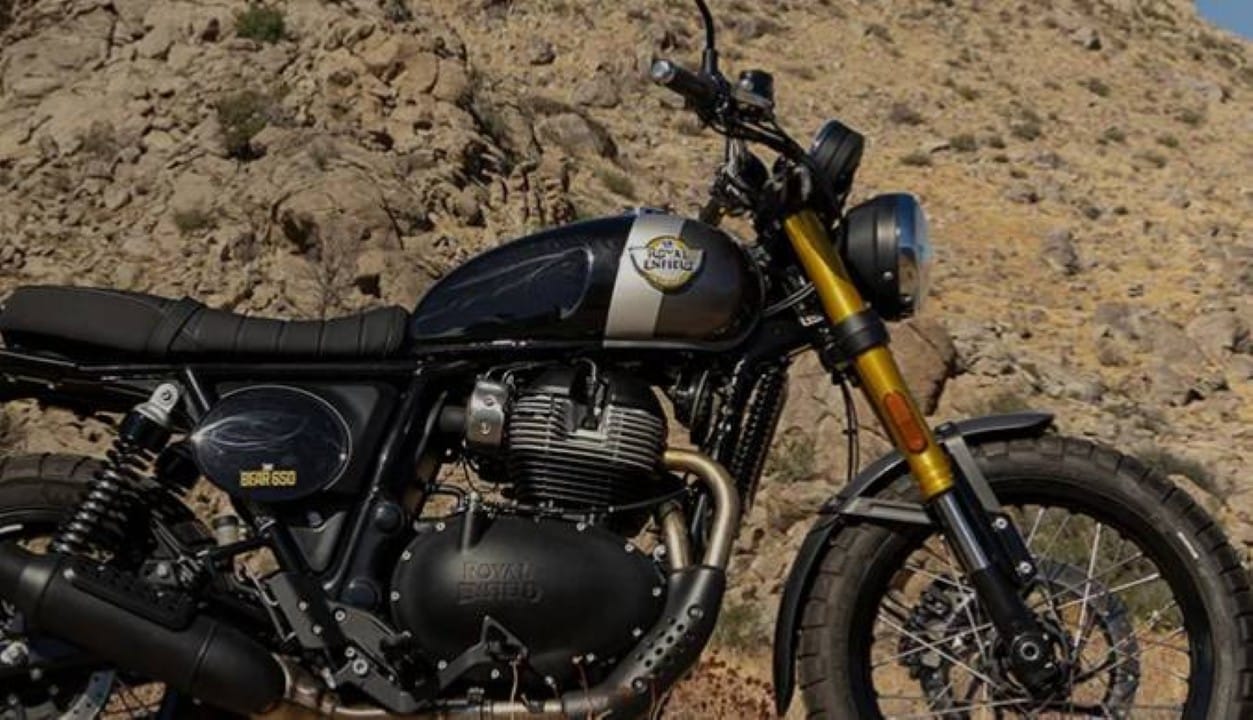
Motorcycle manufacturer Royal Enfield has officially announced the arrival of a new model on the national market, expanding its portfolio in the medium-displacement segment. The novelty goes by the name of Bear 650, a scrambler-style motorcycle that uses the brand’s well-known 648-cylinder platform, but with structural and aesthetic modifications aimed at mixed use between asphalt and dirt.
The initial batch made available to the public has 400 units, offered upon prior reservation at authorized dealerships. The suggested value for this first sales phase was set at R$33,990, positioning the vehicle competitively within its operating category and seeking to attract new consumer profiles.
Para guarantee the reservation, interested parties must follow a specific protocol established by the manufacturer for organizing the initial demand:
– Cadastro on the manufacturer’s official platform.
– Pagamento of a signal to ensure unity.
– Escolha from the dealership to physically collect the vehicle.
– Confirmação of direct factory billing.
The official forecast indicates that the motorcycles will begin to be delivered to the first buyers from March onwards, when the model will also become part of the stores’ physical displays for the general public to visit and carry out practical tests.
Market strategy and positioning of the automaker
The introduction of the Bear 650 represents a direct move by the automaker to capture a portion of consumers looking for versatile vehicles, capable of navigating urban traffic and unpaved roads. The scrambler style has gained traction in the global market, and offering a model with this proposal aims to diversify the options for brand enthusiasts.
Limiting the first batch to 400 units creates an environment of temporary exclusivity, a tactic frequently used in the automotive sector to organize the supply chain and measure the initial acceptance of a product. Após Once this initial quota is exhausted, the manufacturer plans to establish a continuous import and distribution flow throughout the national territory.
Concessionaires already operate with the reservation system activated, advising customers on delivery times and billing conditions. The service network underwent specific training to detail the technical differences between this new launch and previous models that share the same basic engine.
The logistics schedule foresees that the regular supply of physical stores occurs gradually, following the organic demand generated after the pre-sale period. The automaker organizes distribution to cover all regions of the country simultaneously, ensuring that the technical assistance network is prepared to receive the new fleet.
Technical specifications of the twin-cylinder engine
The mechanical assembly that drives the motorcycle is based on a parallel two-cylinder engine, with 648 cubic centimeters of volumetric capacity, equipped with a mixed air and oil cooling system. The manufacturer’s engineers remapped the electronic injection system to alter the power delivery, prioritizing torque at low and medium speeds, an essential feature for mixed-purpose vehicles. The declared maximum power reaches 47 horsepower at 7,150 revolutions per minute, while the maximum torque has been raised to 5.7 kgfm, available at 5,150 revolutions, representing a substantial increase in relation to other models in the same structural family.
The transmission has a six-speed gearbox, integrated with an assisted and slipper clutch. Esse mechanism reduces the effort required to operate the left lever during gear changes and prevents the rear wheel from locking during sudden speed reductions, increasing driver safety in situations of sudden braking or when traveling on surfaces with low grip. The exhaust system was also redesigned, adopting a two-in-one format, which directly contributes to reducing the total weight of the unit, alters the sound emission and optimizes the torque curve of the twin-cylinder engine in intermediate acceleration regimes.
Improved suspension and chassis system
Para To cope with the demands of off-road use, the tubular chassis structure received specific structural reinforcements at points of greatest stress. The main cycling change is found in the front suspension set, which now adopts inverted forks supplied by the Japanese brand Showa, with 43 millimeter diameter tubes and extended damping travel to absorb impacts more efficiently.
At the rear, the double damping system has also been recalibrated, offering greater travel compared to the manufacturer’s strictly urban motorcycles. Essa configuration aims to maintain directional stability at high speeds on asphalt, without compromising the ability to negotiate obstacles on dirt roads, ditches and uneven terrain with geometric safety.
The spoked wheels are shod with mixed-use tires, ensuring the necessary traction on different types of surfaces. The braking system consists of discs on both wheels, managed by a dual-channel ABS system, and to favor off-road riding, the electronics allow the ABS to be deactivated exclusively on the rear wheel, giving the rider the ability to lock the wheel on purpose to facilitate directional maneuvers on dirt roads.
Design inspired by historic desert competitions
The project’s visual identity directly refers to the endurance competitions held in the deserts of Califórnia during the 1960s, with emphasis on the famous Big Bear Run race, which served as a direct inspiration for the model’s baptism. The design incorporates a teardrop-shaped fuel tank with a capacity to store 13.7 liters, straight lines on the seat and exposed components that reinforce the rustic and functional aspect of the motorcycle. The sides feature oval plates that recall the ‘number plates’ of classic racing motorcycles, while the rounded front headlight maintains the manufacturer’s traditional aesthetic heritage. The raised mudguard and the absence of superfluous plastic fairings highlight the minimalist proposal, leaving the two-cylinder engine and the side exhaust system in full evidence. The paintwork and graphics applied to the bodywork use color palettes that purposely contrast with the darkened finish of the engine block and tubular chassis, creating a striking visual identity that physically differentiates the model from other road options available in the manufacturer’s current catalog.
Embedded technology and instrument panel
The instrument panel abandons the conventional dual analogue displays in favor of a single circular digital screen, which concentrates all the vital information on the machine’s operation. The display shows data such as speed, engine speed, fuel level, gear engaged and odometers, presented with a high level of contrast for easy quick reading in direct sunlight during daytime driving.
The system integrates the Tripper browser natively, allowing pairing with smartphones via the Bluetooth connection in a simplified way. Através from a dedicated application, the rider can project turn-by-turn routes directly on the main dashboard screen, eliminating the need to attach a cell phone to the handlebars, while a strategically positioned USB port ensures uninterrupted power supply to mobile devices during logistical journeys.
Ergonomics and adaptation to different terrains
The height of the seat in relation to the ground was set at 830 millimeters, a geometric measurement that accommodates riders of different heights and provides a privileged view of the traffic ahead. The riding position was designed to keep the torso upright, with arms relaxed and legs slightly bent, reducing muscle fatigue during prolonged trips and continuous road travel.
The wide handlebars and central positioning of the pedals facilitate the fluid transition from sitting to standing, a fundamental maneuver for technical riding on rough terrain. Essa adaptive ergonomics ensures that the driver maintains absolute control of the motorcycle both in low-speed maneuvers in the urban environment and when overcoming natural obstacles on light trails and local roads.
Essential Components Pack
The factory configuration includes items developed to maximize the durability of mechanical components exposed to the external environment. The motorcycle leaves the assembly line equipped with a lower crankcase protector, reinforced seat covering to withstand continuous abrasion and footpegs with metal claws that prevent boots from slipping in rainy or muddy conditions, ensuring the physical integrity of the structure and the firmness necessary for driving in harsh environments.



