

The global two-wheeler industry undergoes rigorous technological transformations and adaptations to new environmental standards with each decade of operation. Mesmo Given this scenario of accelerated modernization and strict government requirements, specific engineering projects manage to span generations, keeping their assembly lines active uninterruptedly in several factories around the world. The structural adaptation capacity defines the survival of these machines in the competitive contemporary automotive sector.
The secret to this industrial longevity lies in the technical ability of automakers to preserve the original visual identity and mechanical geometry, while implementing gradual road safety and energy efficiency upgrades. Engenheiros automotive companies focus intensely on maintaining the ergonomic and aesthetic essence that established these vehicles in the past, ensuring that the industrial design is not lost with the introduction of new manufacturing materials and modern stamping processes.
Drivers of different age groups and experience levels seek out these vehicles for their familiarity in driving and mechanical reliability that has been widely proven over decades of practical tests on streets and highways. Manufacturers quickly understood that the introduction of modern electronic systems, such as high-precision anti-lock brakes and multipoint electronic fuel injection, does not need to distort the initial design. Essa engineering strategy allows the classic silhouette of the chassis to remain perfectly recognizable at first glance, regardless of the year of manufacture of the unit.
A detailed historical survey of the automotive sector shows that five specific projects stand out worldwide for their exceptional resilience in production lines, resisting severe economic crises, drastic changes in consumer behavior and global conflicts that have paralyzed other industries. Esses vehicles represent true milestones in precision mechanical engineering, as they prove indisputably that a well-executed design in its original conception has sufficient structural flexibility to accommodate engines with greater volumetric capacity and resized suspensions without losing commercial appeal. The mandatory transition from old carburettor systems to today’s complex digital fuel systems perfectly exemplifies how assembly tradition goes hand in hand with contemporary gas emissions control requirements.
Royal Enfield Bullet’s century-old trajectory in the automotive sector
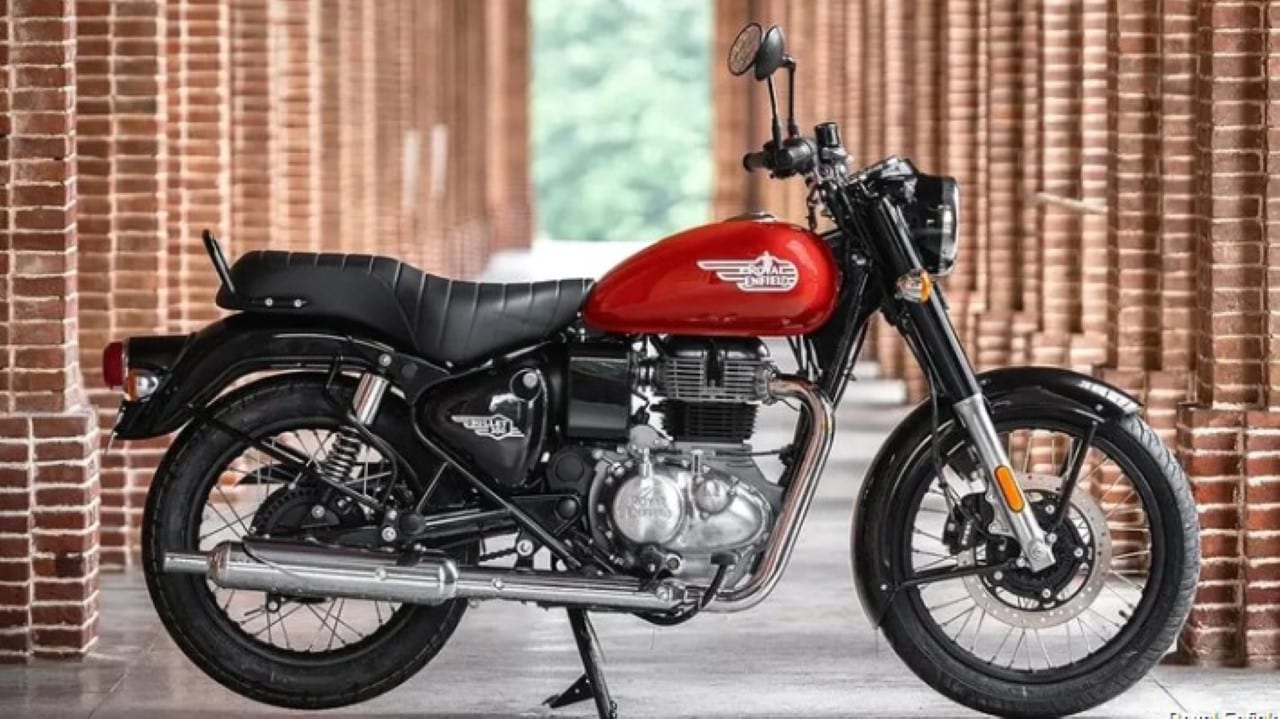
The Royal Enfield Bullet project had its beginnings documented in 1932, at the Inglaterra industrial facilities, presenting engine options that underwent rapid and constant technical updates. Quatro years after the official launch, the 500 cc variant received a bronze cylinder head, a mechanical change aimed specifically at delivering superior performance on paved roads and dirt roads.
The post-world conflict period brought significant structural innovations to the vehicle’s chassis and chassis. In 1948, the manufacturer introduced an unprecedented oscillating rear suspension system for the range, followed by the strategic launch of a 350 cc configuration on the European market in 1949, targeting a wider audience.
The design’s mechanical performance gained international notoriety following consecutive victories in high-level endurance competitions, specifically the rigorous 1952 and 1957 editions of the Scottish Daily Test Tournament. Esse proven track record of extreme durability caught the attention of Asian military forces, who were looking for robust vehicles for constant border patrolling in rough terrain.
Massive government demand resulted in a strategic corporate partnership with Madras Motors during the 1950s, gradually moving the main manufacturing hub to Indian territory. Current assembly lines deliver units equipped with hydraulic disc brakes, recalibrated suspensions for modern asphalt and unitary construction engines that strictly meet the emission standards in force on the international market.
Commercial and technical expansion of the Honda Super Cub project
The development of the Honda Super Cub arrived on the market in 1958 with the clear proposal of offering highly accessible urban mobility, characterized by a low-profile chassis and a wide front shield built for aerodynamic leg protection. The intelligent geometry of the frame allowed drivers of different heights and weights to operate the vehicle with extreme ease in daily traffic.
The marketing strategy implemented in 1963 focused on demystifying the aggressive image often associated with motorcyclists at the time, exponentially expanding the acceptance of the product on a global scale. Official factory records indicate that the brand reached the impressive milestone of five million units assembled in 1967, an industrial volume that doubled just seven years later, consolidating its dominance in the segment.
The manufacturing rate reached the historic level of three million copies per year in the early 1980s, requiring the expansion of operations to sixteen factories distributed around the world. The contemporary design, exemplified by the C125 version, features advanced lighting in light-emitting diodes, an anti-lock braking system and an efficient 124-cylinder engine, being actively marketed and with a high sales volume in more than one hundred and sixty countries.
Establishment of the tourism segment by Harley-Davidson FL
The introduction of the Harley-Davidson FL The project defined the definitive aesthetic and functional parameters for the large road tourism segment, incorporating high-capacity rigid side cargo compartments and components with extensive chrome finishing. The initial units left the assembly line equipped with robust V-shaped two-cylinder engines, an air cooling system and four-speed mechanical transmission boxes, forming a set specifically designed to cross interstate highways with maximum directional stability.
The volumetric evolution of the engine marked the following decades of production, increasing to 1337 cc in the 1970s and reaching 1449 cc in the 1990s, always accompanied by updated five-speed transmissions to optimize consumption at cruising speed. The North American automaker’s current engineering equips the recent versions with the advanced Milwaukee-Eight 107 block, integrating modern comfort and safety technologies, such as electronic cruise control, high-definition audio multimedia centers and electronically assisted braking systems, keeping intact the imposing silhouette that has characterized the line since its original conception.
Mechanical continuity of the Harley-Davidson Sportster line
The launch of the Harley-Davidson Sportster in 1957 saw the sale of approximately two thousand units in its annual debut cycle, demonstrating strong immediate acceptance. The engineering of the time adopted modern hydraulic shock absorbers in the rear section and introduced the Ironhead propellant, replacing the old side valves with a more efficient head system that remained in continuous production line for almost three decades of operation.
The most significant technological transition for the model occurred in 1986 with the adoption of the Evo block, specifically focused on reducing annoying vibrations and increasing the thermal reliability of the powertrain. The technical specifications of the units currently manufactured include precise sequential electronic fuel injection systems and digital management of riding modes, delivering power in excess of one hundred horsepower without losing the narrow and compact format of the original chassis.
Preservation of the boxer architecture in the BMW R-Series
The German manufacturer’s motorcycle division began the prestigious R series in 1923 with the launch of the R 32 model, establishing a unique mechanical configuration that would become the brand’s definitive and unmistakable signature: the horizontally opposed cylinder engine coupled to a cardan shaft final transmission system. Essa peculiar architecture quickly proved its superior thermal efficiency and dynamic stability, leading subsequent versions, such as the R 37 and R 16, to win important trophies in international speed competitions during the 1930s. The continued maturation of the design in the 1960s and 1970s resulted in the formal creation of the segment focused on sports tourism, offering the market vehicles capable of maintaining high cruising speeds with absolute comfort for the occupants. The engineering department has promoted constant structural updates over the years, replacing old frames with more rigid metal alloys and adopting telescopic forks with high directional performance. The current stage of this technological evolution materializes in premium models that use 1,300-cylinder engines with mixed liquid cooling and complex variable valve timing systems, generating more than one hundred and forty gross horsepower while rigorously preserving the classic visual layout of the cylinders exposed on the side.
Technical criteria for evaluating industrial longevity
The rigorous methodology for classifying the historical permanence of these vehicles on the market requires documentary proof of uninterrupted assembly or with minimal pauses throughout the decades analyzed. Projetos automobiles that only kept their commercial name for marketing reasons, but completely changed their category of use, base cylinder capacity or original structural proposal, are not included in the official records of historical continuity of the two-wheeled sector.



