
USA: Vieira discusses with Rubio a measure that could classify PCC and CV as terrorists By Jeronimo Santos
7 min read
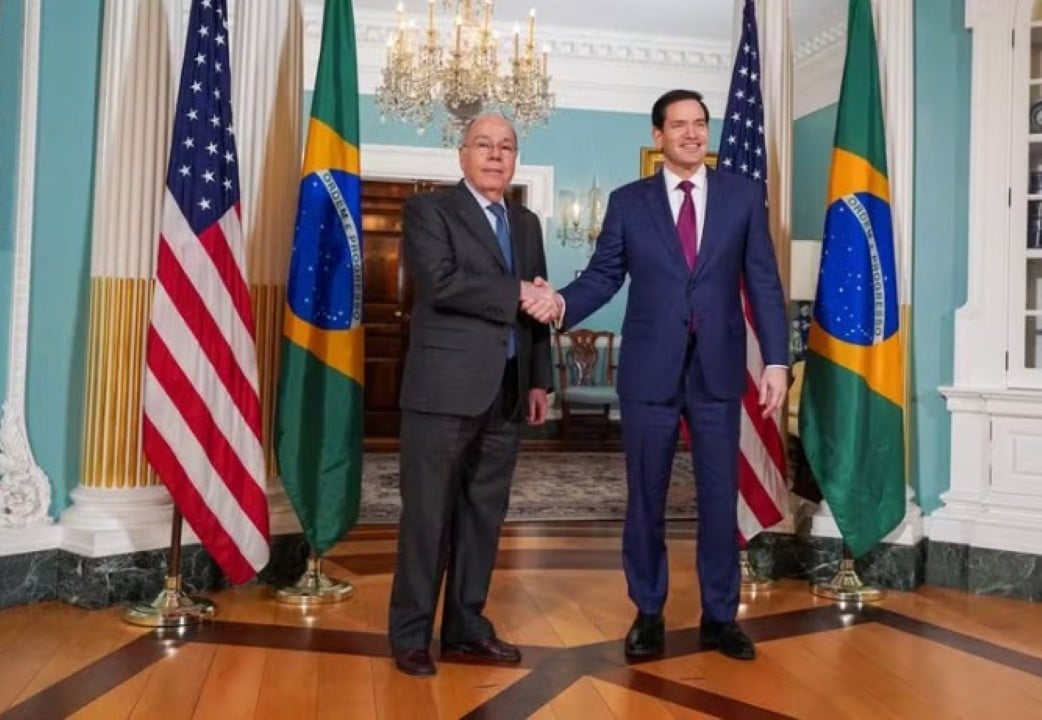 |
The minister of Relações Exteriores, Mauro Vieira, held a telephone conversation with the secretary of Estado of the Estados Unidos, The main agenda involved scheduling an official visit by President Luiz Inácio Lula from Silva to Casa Branca, but also included concerns about the possible classification of Brazilian criminal factions as foreign terrorist organizations.
Government sources indicate that Vieira expressed the Brazilian position against the inclusion of Primeiro Comando of Capital (PCC) and Comando Vermelho (CV) in the list of Organizações Terroristas Estrangeiras maintained by the American Departamento of Estado. Essa measure, defended by sectors of the government Trump, could authorize financial sanctions and more direct actions against these groups, impacting bilateral relations.
The discussion comes at a time of tension in relations between Brasil and Estados Unidos, especially following recent US actions against cartels in América Latina. Diplomatas Brazilians argue that such a classification could complicate joint efforts to combat organized crime, prioritizing collaborative rather than unilateral approaches.
Concerns about national sovereignty
The Brazilian government sees the possible designation as a risk to the country’s sovereignty. Autoridades state that American legislation allows interventions in foreign territories against groups listed as terrorist, which could justify operations without prior consultation with Brasil. Essa perspective generates internal debates about how to balance international cooperation with the protection of national interests.
Diplomats highlight that similar actions have already taken place in other countries in the region, such as in Venezuela, where previous classifications facilitated military measures. In the Brazilian case, the focus would be on combating drug trafficking, but with potential repercussions for regional stability. Dialogue with Rubio seeks to mitigate these risks through diplomatic negotiations.
American ratings history
The Estados Unidos have expanded the use of terrorist designations to combat transnational organized crime since the beginning of Donald Trump’s second term in January 2025. Grupos as well as Cartel of Sinaloa and Tren of
This strategy gained strength after operations in Caribe and América Central, where American forces acted against criminal structures linked to drug trafficking. In the Brazilian context, the PCC and CV are seen as threats due to their expansion into international markets, including drug routes to Europa and the USA.
US law requires three criteria for designation: being a foreign organization, engaging in terrorist activities or having the capacity to do so, and posing a threat to US national security. Cumpridos these, the consequences include bans on material support and international financial isolation.
The debate about applying this tool to Brazilian factions dates back to 2025, when proposals in the American Congresso mentioned the PCC and the CV in discussions about immigration and border security. Relatórios indicate that these organizations control territories in several Brazilian cities and maintain connections with groups in other countries.
Economic and financial consequences
Inclusion on the terrorist list could freeze assets linked to the PCC and the CV in global financial institutions. Bancos Americans and allies would have to block suspicious transactions, impacting remittance flows and indirect investments in Brasil.
International finance experts point out that similar sanctions have already affected regional economies, reducing access to credit and increasing operational costs for legitimate companies. No Brasil, sectors such as agribusiness and foreign trade could face greater scrutiny in transactions with international partners.
Bilateral relations in focus
The conversation between Vieira and Rubio reflects efforts to maintain open channels between Brasília and Washington, despite differences on issues such as trade and the environment. Lula’s visit, initially scheduled for March 2026, depends on schedule adjustments, but serves as an opportunity to deepen discussions on shared security.
Authorities from both countries have been holding regular meetings since 2025, addressing partnerships in intelligence and police training. However, Brazilian resistance to classification as terrorist emphasizes the preference for bilateral agreements that respect national jurisdictions.
American diplomats argue that the designation would make it easier to combat criminal networks that threaten US citizens, with statistics showing an increase in the flow of synthetic drugs originating in América from Sul. Dados of Departamento of Justiça indicate that the PCC controls around 80% of Brasil cocaine exports, with branches in European ports.
The Trump government, in turn, prioritizes unilateral actions in its foreign policy, as seen in the capture of Nicolás Maduro in January 2026. The Essa approach contrasts with Brazil’s emphasis on multilateralism, creating points of friction in negotiations.
Expansion of factions and international responses
The PCC emerged in 1993 as a response to prison conditions in São Paulo and expanded to 22 Brazilian states, controlling prisons and trafficking routes. Sua hierarchical structure includes alliances with Colombian and Mexican cartels, allowing operations in more than 10 countries.
The Comando Vermelho, founded in the Rio of Janeiro in the 1970s, dominates favelas and borders, focusing on weapons and drugs. Relatórios of the UN estimate that these factions generate billions of dollars annually, financing urban violence that results in thousands of deaths per year in Brasil.
International responses include joint operations by Interpol and the DEA, which dismantled networks in 2025, seizing tons of narcotics. However, classification as a terrorist could intensify these actions, allowing the use of American military resources.
Studies from think tanks like Council on Foreign Relations highlight that similar designations have reduced funding for groups at Colômbia by up to 40% in recent years. Aplicado to Brasil, this could change criminal dynamics, but also generate retaliatory reactions in controlled territories.
Impacts on Brazilian public security
In Brasil, the federal government has invested in programs such as Pronasci to strengthen state police against organized crime. In 2025, resources were allocated for border surveillance technology, resulting in the arrests of CCP leaders.
Concern about foreign interventions leads to an emphasis on sovereignty, with Ministério of Justiça promoting legislative reforms to classify factions as criminal organizations, without the terrorist label. Isso allows for internal sanctions without opening precedents for external actions.
Proposed alternative cooperation
Vieira proposed alternatives to the designation during the conversation, such as real-time intelligence sharing agreements. Esses mechanisms already exist in bilateral treaties signed in 2024, but could be expanded to include joint financial monitoring.
Rubio, known for his strong stance against drug trafficking, listened to Brazilian concerns but emphasized the need for decisive action against transnational threats. Fontes indicate that new rounds of dialogue are scheduled for the coming weeks.
Broader regional context
América Latina has faced a wave of American classifications since 2025, with eight groups designated as terrorists, including Mara Salvatrucha and Cartel of Jalisco Nueva Generación. Essas actions aim to cut funding and isolate criminal networks.
In Brasil, the internal debate in Congresso on similar bills gains relevance, with proposals to classify factions as domestic terrorists. In 2025, a bill advanced in Câmara, but faces opposition on constitutional grounds.
Reports from Organização from Estados Americanos show that drug trafficking affects 70% of countries in the region, with Brasil as a logistics hub due to its ports. Regional Estratégias, like União of Nações Sul-Americanas, promote cooperation, but come up against political differences.
The case of Venezuela serves as a precedent: the designation of Cartel from Soles in 2025 preceded the operation that captured Maduro, trying him in Nova York for narcoterrorism. Isso reinforces Brazilian fears of similar escalation.
Perspectives for the visit of Lula
The trip from Lula to Washington, with no confirmed date yet, could include discussions on bilateral trade, with a focus on Brazilian agricultural exports. In 2025, trade exchange between the two countries reached US$ 100 billion, with a surplus for Brasil.
Security would be a parallel topic, with proposals for joint training of police forces. The Brazilian president defends approaches that prioritize social development to reduce crime, contrasting with the American emphasis on repression.
Details about American criteria
For a designation, the Departamento of Estado consults the Tesouro and the Justiça, evaluating economic and security impacts. In the case of the PCC, evidence includes coordinated attacks in 2006, which crippled São Paulo, and recent expansions to Amazônia.
CV is notorious for armed clashes in Rio, with police statistics recording more than 5,000 related deaths by 2025. Esses facts support American arguments of threat to regional security.
Consequences include deportations of members and denial of visas, affecting criminal migrations. Dados of US immigration shows an increase in Brazilians involved in criminal networks since 2024.
Brazilian combat strategies
Brasil has intensified federal operations, such as Carbono Oculto in 2025, which revealed links between factions and legitimate economic sectors. Prisões and financial seizures totaled millions, demonstrating internal responsiveness.
Partnerships with União Europeia are also growing, with agreements to track containers at ports. In 2026, the implementation of AI technologies for border monitoring is expected.
Debates in the American Congresso
Proposals in the US Congresso, like those in 2025, aim to ratify designations, with bipartisan support to combat illegal immigration. Relatórios indicate that 20% of drugs in the USA pass through Brazilian routes.
Opponents argue that the terrorist label could complicate diplomatic negotiations, preferring targeted economic sanctions.
Advances in shared intelligence
Brazil and the USA have maintained working groups since 2010, with annual exchanges of data on trafficking. By 2025, these collaborations had resulted in 50 joint operations, seizing 200 tons of drugs.
Resistance to the designation seeks to preserve these waterways without military escalation.











