

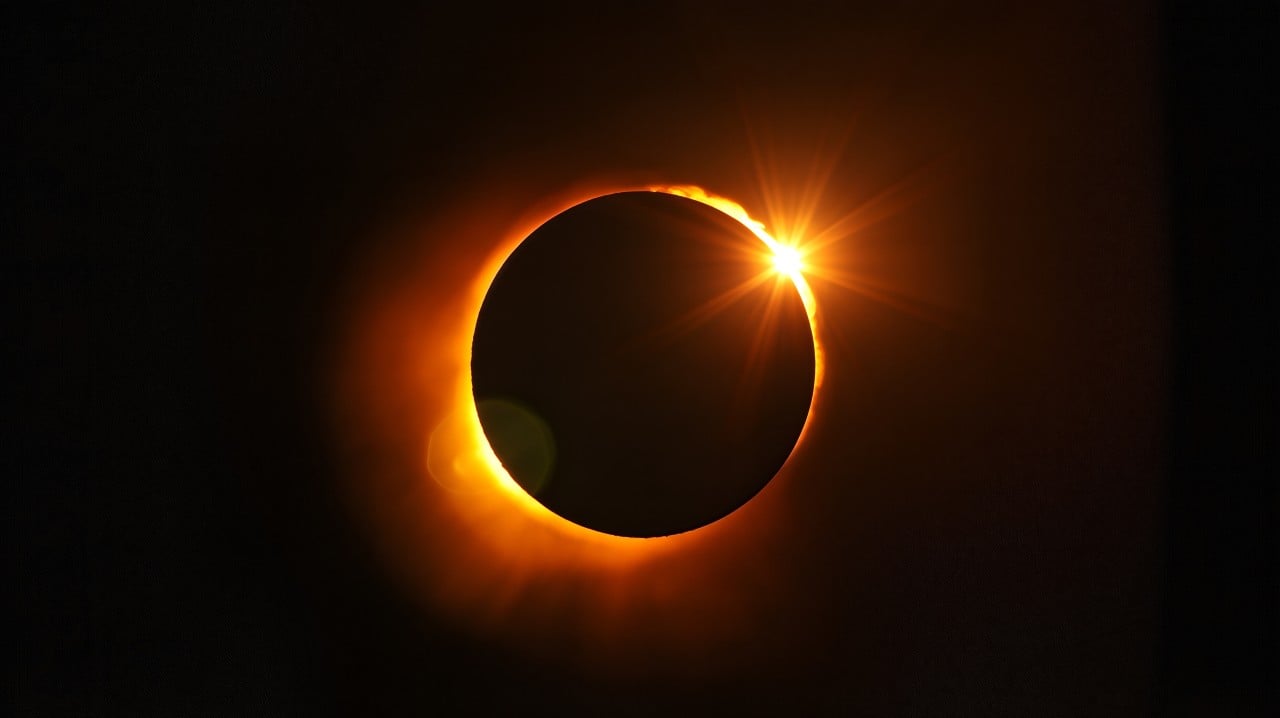
A total solar eclipse, scheduled for August 2, 2027, promises to be one of the most spectacular and long-lasting astronomical events of this century. The moon is predicted to completely obscure the sun for an extended period, plunging some regions of the planet into daytime twilight for up to 6 minutes and 22 seconds. Esta duration represents the longest ever recorded on dry land in the 21st century, according to astronomers’ estimates.
This unique celestial alignment will have its most impactful phase, known as totality, restricted to a specific geographic range of the globe. Contudo, in several other areas of Europa, África and Ásia, the phenomenon will be visible in partial form, providing a celestial spectacle, although without the drama of complete occlusion. Expectations among astronomy aficionados and the general public are high, given the unusual nature of the occurrence.
Although the idea of total darkness in broad daylight may generate curiosity, the reality of a total eclipse is closer to a deep and sudden sunset. The Earth’s atmosphere, by scattering the remaining sunlight, ensures that the horizon remains visible, differentiating it from the complete darkness of the night. Este detail is crucial to understanding the experience that awaits observers in areas of totality.
The rare phenomenon of 2027
The astronomical event of August 2, 2027 stands out not only for its magnitude, but also for its rarity. The forecast of 6 minutes and 22 seconds of darkness is a milestone for observing total solar eclipses, surpassing most similar events that have occurred in recent decades. Essa exceptionality places the 2027 eclipse in a prominent position in the annals of modern astronomy.
Preparation for this cosmic spectacle is already beginning to mobilize scientific and enthusiast communities around the world. Expedições are being planned and in-depth studies on the trajectory and climatic conditions in the regions of totality are being conducted. The opportunity to observe an eclipse of such longevity is unique, offering valuable data for solar and lunar research.
Global visibility range
The moon’s shadow will cross an extensive strip of the planet, covering more than 15 thousand kilometers on the Earth’s surface, with an approximate width of 258 kilometers. Esta trajectory is known as the band of totality, where the solar disk will be completely hidden. The forecast is that this band will geographically involve several countries, covering multiple continents in its passage.
The ten countries that will be in the direct path of totality include:
The total extent of the phenomenon, considering all affected areas, will reach approximately 2.5 million square kilometers. Isso demonstrates the vast scope of the lunar shadow, even though complete darkness is only perceived in the narrow band of totality.
Record duration and celestial alignment
The explanation for the particularly long duration of this eclipse is intrinsically linked to the moon’s orbital mechanics. At the moment of alignment between the sun, the moon and the earth, the natural satellite will be at its perigee, which is the point of its orbit closest to the planet. Essa proximity makes the moon appear slightly larger in the sky, casting a wider and longer shadow on the earth.
In addition to the lunar position, the 2027 eclipse is part of the Saros 136 series, a cycle known for generating eclipses with extended periods of totality. The Saros cycles are time intervals, lasting about 18 years and 11 days, after which the geometric configurations of the sun, earth and moon are repeated in an almost identical way, resulting in eclipses of similar characteristics. Esta recurrence allows astronomers to accurately predict future events and their particularities.
Astronomers point out that a total solar eclipse lasting longer than predicted for the 2027 event should only be observed again in the year 2114. The combination of the lunar perigee and the Saros 136 cycle creates the ideal conditions for this prolonged daytime darkness. The rarity of an event of this magnitude underscores the importance of careful preparation and observation.
Strategic points for observers
Some specific locations along the band of totality are considered especially promising for eclipse viewing. The choice of these points is based on factors such as shadow projection, observation angle and historically favorable weather conditions. The city of Tarifa, in the south of Espanha, is one such location. Conhecida, due to its winds and generally clear sky, offers an excellent perspective for the phenomenon.
Coastal regions of Tunísia also stand out as ideal destinations for birders. The combination of open landscapes and favored geographic position promises an unobstructed view of the sky during totality. The city of
The logistics to reach these locations and observation infrastructures are being considered by tourism agencies and groups specializing in astronomy. Muitos plan trips and events to maximize the visitor experience, ensuring not only the best viewing, but also access to information and safe sungazing equipment. Safety is paramount, and guides on how to observe the eclipse without risk will be widely circulated.
Twilight during the day
Contrary to the expectation of complete night-like darkness, the totality phase of a solar eclipse is more like a sudden twilight. Durante these minutes when the sun is completely covered by the moon, the ambient luminosity decreases drastically, creating a unique and slightly ethereal atmosphere. Esse effect occurs because sunlight is still scattered by the Earth’s atmosphere, indirectly illuminating the environment.
The view of the horizon, therefore, remains present, with the colors of the sky taking on tones reminiscent of dawn or dusk. Este phenomenon is a fascinating reminder of how the interaction between sunlight, the moon and Earth’s atmosphere shapes our perception of the sky. The visual experience is different from any typical sunset or sunrise, as the light transition is much faster and more dramatic, creating a moment of contemplation and wonder.
Myths and truths about the event
With such significant astronomical events approaching, it is common for incorrect information and myths to appear on social media. One of the erroneous statements that have circulated recently indicates that the entire planet will be in darkness during the 2027 eclipse, which does not correspond to the scientific reality of the phenomenon. Total darkness will only be noticeable to those within the narrow band of totality. Nas other regions, the event will be observed as a partial eclipse, with sunlight only diminished.
Another falsehood widely reported online suggests that there will be no other eclipses in 2027. However, according to astronomers’ calculations and projections, an additional partial solar eclipse is predicted for September 21 of the same year. Este second event will be visible primarily in vast areas of the Pacífico ocean, reinforcing that celestial phenomena are more frequent and varied than some superficial information may suggest. Verification of reliable sources is essential to discern the accuracy of information.
The mechanics of a solar eclipse
A solar eclipse occurs when the moon positions itself directly between the earth and the sun, temporarily blocking sunlight and casting its shadow over the planet. Este precise alignment does not occur in all new moon phases due to the inclination of the lunar orbit in relation to the Earth’s orbit. The specific conditions for a total, partial, or annular eclipse depend on the exact geometry of the position of the three celestial bodies at a given time.



