

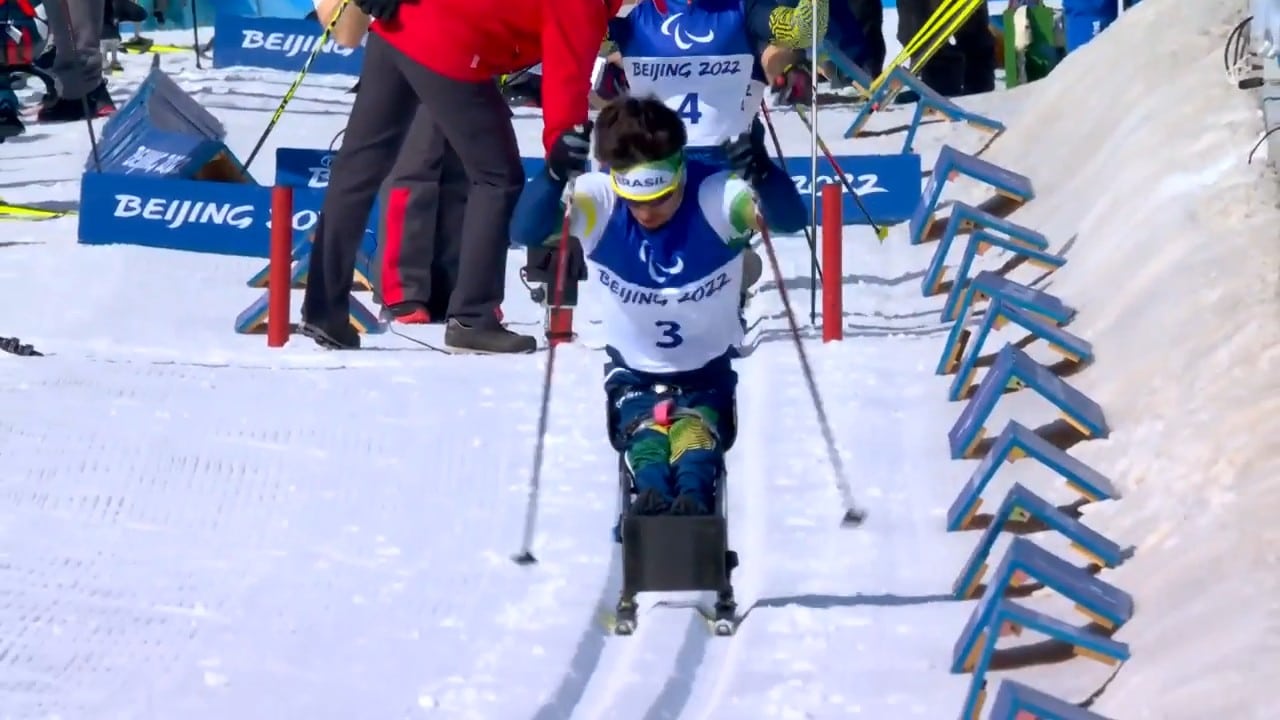
Cristian Ribera makes history by winning the first Brasil medal in the Paralimpíadas of Itália. The achievement marks a turning point for the Brazilian delegation, which had never reached the podium in winter editions of the competition.
The athlete demonstrated technical mastery since the qualifying stages, where he recorded the best time among all competitors in the sitting category. Nas semi-finals, Ribera maintained consistency and advanced to the decision with a time of 2min28s7, confirming the favoritism built throughout the last world season. The race strategy was essential to withstand the pressure from foreign opponents throughout the technical course on the Italian snow.
Brazilian success on the day of competitions in Milão-Cortina included the following highlights:
- Cristian Ribera won the silver medal with a time of 2min29s6 in the grand final.
- Aline Rocha finished 5th in the sitting sprint, setting the best female mark in the country.
- The Chinese Liu Zixu took the gold medal after crossing the finish line in 2min28s9.
- Kazakh Yerbol Khamitov completed the men’s podium, securing the bronze medal.
Cristian Ribera’s trajectory towards the Olympic podium
The Rondônia native arrived at Jogos of Milão-Cortina with the status of current sprint world champion and confirmed expectations with a solid performance. Durante the final, Ribera led part of the way and faced a tight dispute against the Ukrainian Pavlo Bal and the Chinese Liu Zixu. Mesmo with the strong acceleration of Zixu in the final meters, the Brazilian maintained second position to ensure the historic result for Brasil.
The preparation for this Paralympic cycle was intense and included winning Globo of Cristal in the last season of Copa of Mundo. Cristian, who was born with arthrogryposis, began his journey in the sport at the age of four and underwent 21 surgeries before finding himself on the snow slopes. Sua dedication to cross-country skiing began at the age of 13, transforming the young man into one of the main names in the sport on the current international scene.
Aline Rocha sets a new female record for the country
Aline Rocha also shone on the tracks of The 35-year-old athlete already had the best results of a Brazilian in Jogos of Inverno and now raises the bar for future generations. Sua participation was marked by a constant recovery in the elimination heats, guaranteeing a place in the final with the second best time in the semifinal.
In the medal dispute, Aline faced world elite competitors, such as the American Oksana Masters, who took gold. The Brazilian came to occupy third position during part of the descent, but ended up being overtaken in the final stretch by athletes from China and Alemanha. The final fifth place represents a significant improvement in relation to the seventh place obtained in Pequim 2022, consolidating Aline as one of the global references in sitting skiing.
Technical details of the qualifying tests in Tesero
The men’s qualifiers featured the participation of two other Brazilians, Guilherme Rocha and Robelson Lula, who sought a place in the semifinals. Guilherme ended its participation in 18th place, while Robelson finished in 20th place, both outside the classification zone for the next phase. Ribera’s performance in the qualifiers was exceptional, finishing more than a second ahead of Canadian Collin Cameron, one of the favorites for the title.
In the women’s field, Brasil was also represented by Elena Sena in the sitting sprint qualifiers, finishing in 16th position overall. Elena was just over seven seconds short of the time needed to advance among the top 12 that would compete in the category’s semifinals. Já in the standing sprint, Wellington from Silva competed intensely, but ended their journey in 19th place with a time of 2min48s29, demonstrating the growth of the Brazilian base on snow.
Personal overcoming and beginning in adapted sport
Cristian Ribera’s story is marked by health challenges from the first months of Rondônia’s life. Após the diagnosis of arthrogryposis, his family sought treatment in Jundiaí, in the interior of São Paulo, where the young man began several sports practices. Ele tried swimming, athletics and capoeira before joining Confederação Brasileira’s Desportos initiation project at Neve at the age of 13.
The transition to cross-country skiing revealed a natural talent for endurance and speed events in low temperatures. At just 15 years old, he already represented the Brasil in PyeongChang 2018, becoming the youngest athlete in that edition of the Jogos. The silver medal won at Itália crowns a decade of technical investments and physical overcoming, transforming childhood dreams into reality on the Paralympic podium.
Upcoming commitments of the Brazilian delegation at Itália
The competition calendar for Brazilian medalists remains intense in the next few days of the event in Milão-Cortina. Cristian Ribera returns to compete this Wednesday, March 11th, at 6:10 am at Brasília time, in the 10km sitting race. Aline Rocha will also participate in the same distance in the women’s race, seeking to maintain the competitive pace presented in the sprint to try to achieve another significant result for the delegation.
The athletes still have commitments in the 4×2.5 km mixed relay, scheduled for next Saturday, March 14th. At the end of the activities, on Sunday, both will compete in the long-distance 20km sitting race, closing Brazil’s participation in the Jogos and Inverno. The atmosphere at Vila Olímpica is celebratory, but the focus remains total on the search for new records and competitive times in the remaining races on the official schedule.
Understand the categories of Paralympic cross-country skiing
The modality is divided into three large groups according to the physical functionality of the competitors participating in the events. Atletas with physical disabilities who can compete upright are classified as “standing”, using equipment similar to conventional skiing. Já those with lower limb disabilities compete in the “sitting” category, using the sit-ski, which is a seat fixed on two parallel skis.
There is also a category for athletes with visual impairment, called “vision impaired”, where the competitor is accompanied by a specialized guide. The guide skis in front of the athlete, using sound communication to guide curves, slopes and track conditions throughout the route. Brasil has representatives in several of these categories, demonstrating the versatility and growth of the winter sports program coordinated by Comitê Paralímpico Brasileiro.
The silver of Ribera in 2026 represents not only an individual achievement, but the success of long-term planning that involves international exchanges and training in snow simulators at Brasil. The visibility generated by this podium should drive new investments and attract young talent to winter sports, which traditionally face climate barriers in the country. The impact of this achievement will be felt in the next generations of Paralympic athletes who now have a podium reference in high-level competitions on snow.



