
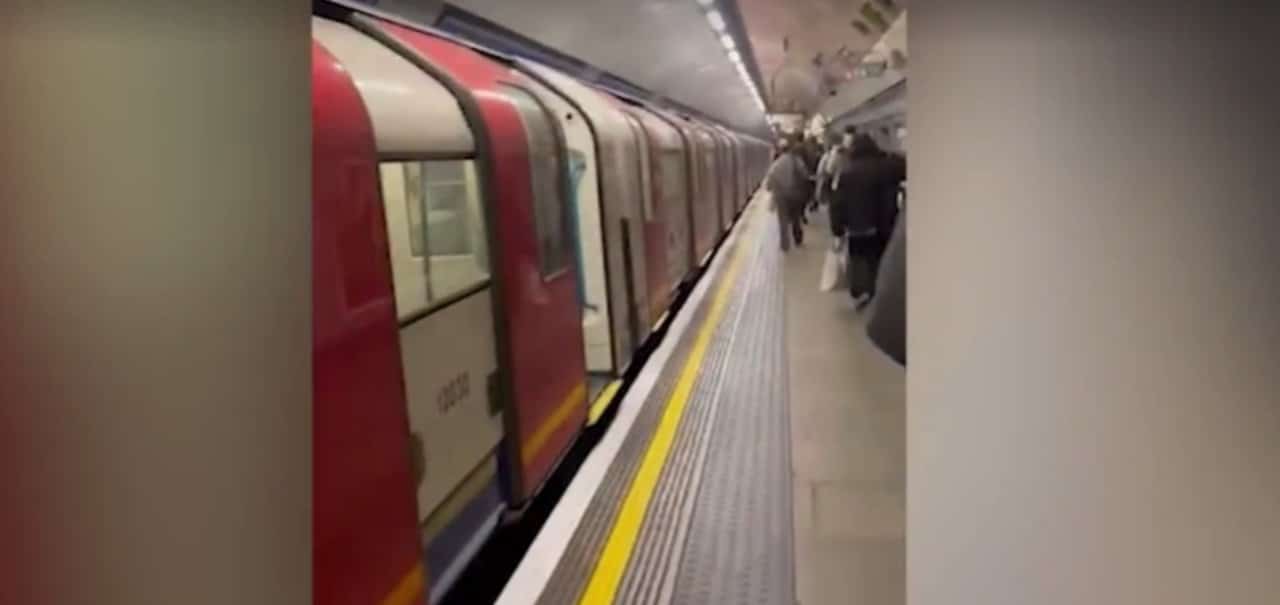
A serious disruption to service on the Victoria metro line Londres caused significant disruption to thousands of passengers this week, following an emergency incident at Euston station. The stoppage of trains left users trapped for more than an hour inside tunnels and trains, requiring a complex evacuation operation.
The central incident, involving a person on the tracks at station Euston, led to the immediate suspension of service between stations Victoria and Highbury & Islington. Emergency teams were quickly called to provide assistance at the scene, while the rest of the line operated with considerable delays and unexpected interruptions.
The situation generated a scenario of great concern, with videos circulating that showed passengers being carefully guided through the driver’s cabin to a second train, and later disembarking on the Euston platforms. Este type of evacuation, although planned for emergencies, highlights the intensity of the incident and the need for strict safety protocols in London public transport.
Outage details and emergency response
The interruption on line Victoria was triggered by an incident with a passenger on the tracks, an event that mobilizes not only metro teams, but also emergency services such as police and paramedics. The prompt response was primarily aimed at ensuring the safety of the person involved and all passengers on board the affected trains.
Passengers trapped in the tunnel, in particular, faced moments of uncertainty and discomfort, with the ventilation and lighting of the trains operating in emergency mode. Communication from Transport for London (TfL) was crucial in guiding people through procedures and progress, although the slowness of the evacuation led to frustration.
The Euston station, one of the main transport routes in the English capital, was temporarily impacted by the operation. Apesar of the incident, the station remained open for most services, managing the flow of people and reorganizing routes in accordance with the restrictions imposed by the interruption of the Victoria line. Coordination between the various bodies was essential to minimize chaos.
Affected services and transport alternatives
With the Victoria line partially suspended, the impact extended across the entire Londres transport network. Passageiros who depend on this route for daily travel, especially in the city center, were forced to look for alternatives. TfL quickly implemented measures to make it easier to use other modes of transport.
Line Victoria tickets were accepted on buses from Londres, as well as other metro lines and rail services, such as Overground, Greater Anglia, Essa integration of the transport system is vital in times of crisis, allowing the city to continue to function, even under pressure.
In addition to the Victoria line, other areas of Londres also recorded disturbances. Serviços railways between London Blackfriars and London St Pancras International suffered delays and changes due to a previous operational incident, which, although distinct, contributed to a day of great complexity in the capital’s traffic. Nearby urban roads, such as Upper Thames Street and Southwark Bridge Road, experienced considerable slowdowns.
Impact on mental health and available support
Incidents involving people on the tracks often signal sensitive mental health issues, and the Londres transport network approaches these events sensitively. Disruption is not just about logistics, but also a human emergency that requires empathy and support resources.
Organizations like Samaritanos offer confidential support 24 hours a day, providing a vital point of contact for individuals in crisis. The mention of these helplines in TfL communications and in the news reflects an awareness that public transport, on its vast scale, is a platform for diverse human realities, including vulnerabilities.
Additional challenges in London’s transport system
The incident on the Victoria line was not the only challenge faced by the Londres transportation system. In parallel, the city dealt with disruptions to train services between Londres Euston and Glasgow, which for the second day in a row were affected by a major fire in the Scottish city. Essa occurrence, although distant, directly impacts one of the main terminals of Londres.
Disruptions to long-distance routes add a layer of complexity to the capital’s already overburdened transport infrastructure, requiring intercity passengers to also seek alternative routes and face prolonged delays. System resilience is tested when multiple failures occur simultaneously, whether due to internal emergencies or external events.
Additionally, other parts of the city recorded small obstacles, such as the annual closure of IFS Cloud Cable Car for maintenance and public service works on the A243 Leatherhead Road, which installed temporary signage. Embora smaller events add to the general panorama of a busy and challenging day for urban mobility.
The city’s resilience and the importance of communication
London, as one of the largest and most complex cities in the world, demonstrates remarkable resilience in the face of disruptions to its transport system. The coordinated response capacity between different agencies and the adaptation of passengers are crucial elements for overcoming crises such as the one observed on the Victoria line.
Effective communication, through station notices, transport apps and social media, plays a key role in managing expectations and guiding travelers. The agility in providing updated information on alternative routes and the estimated time for services to normalize is essential to minimize the negative impact on millions of daily users.
The safety of passengers and the general public remains the top priority in any incident. The complexity of a tunnel evacuation, the mental health implications and the interconnectedness of the Londres transport system highlight the continued need for investment in infrastructure, training and technology to ensure the city continues to be a model of efficiency and safety in its public transport.



