

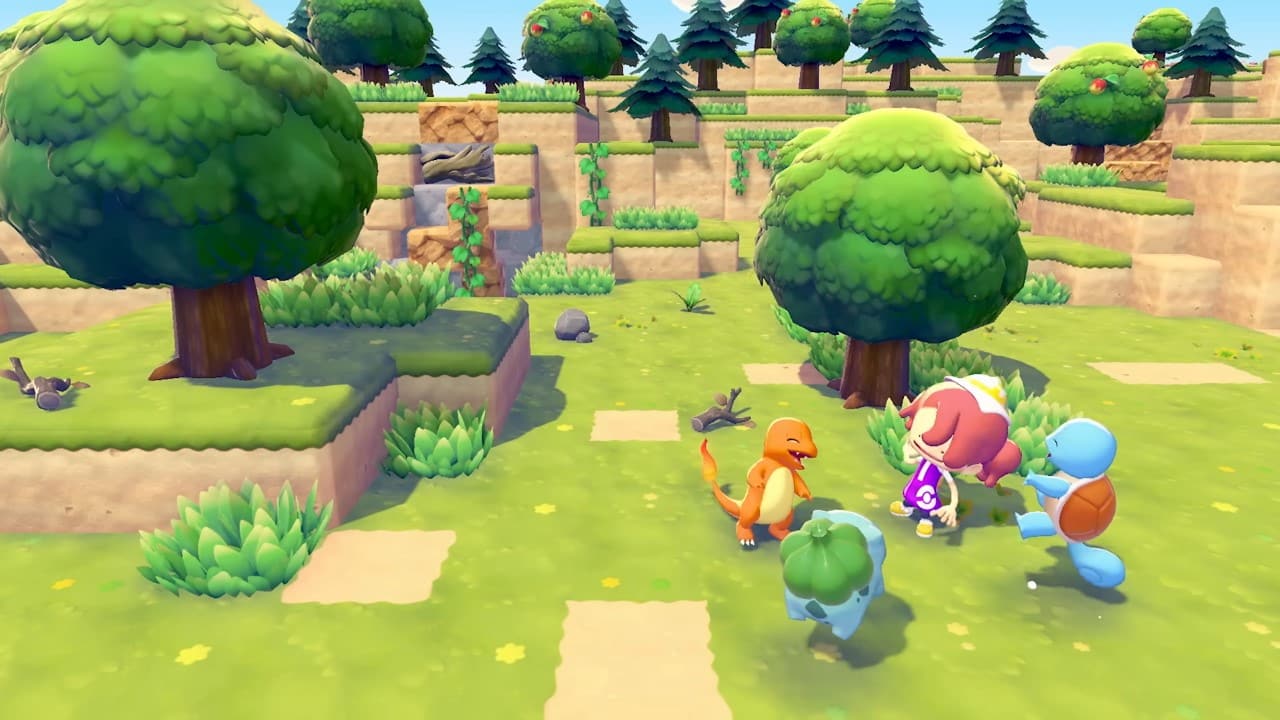
The electronic games industry receives an addition of weight with the official announcement of an unprecedented project developed jointly by Nintendo and Game Freak. The title, focused on management and life simulation, moves away from traditional turn-based combat mechanics to offer an experience centered on construction and peaceful coexistence. The global launch is scheduled for March 5th, exclusively for the Japanese company’s new generation platform, the recently announced console that promises to elevate the technical capabilities of the digital entertainment market.
The main plot places the player at the center of a narrative of environmental recovery and urban development. The initial premise transports the protagonist to an inhospitable and abandoned region, where the local fauna and flora have suffered degradation over time.
The central mission is to revitalize this geographic space, transforming arid lands into vibrant and habitable ecosystems. The restoration process is guided by a character known to fans of the franchise, Professor Tangrowth, who acts as the main ecological mentor during the initial phases of the reconstruction journey.
Innovation in territorial exploration mechanics
The main technical and gameplay innovation lies in the protagonist’s ability to interact with the world through direct transformation mechanics. The system allows the avatar to take on the form and capabilities of specific creatures with which it has established a bond of trust. The functionality eliminates the need for traditional simulation game tools, such as axes or pickaxes, integrating the biological abilities of pocket monsters directly into the work routine and exploration of the map.
The practical application of this mechanic radically changes navigation and the collection of natural resources. By taking the form of an aquatic creature, such as an Lapras, the player acquires the ability to cross rivers and oceans, reach isolated islands and collect submerged materials. Da In the same way, the transformation into a flying species, such as an Dragonite, guarantees access to mountainous areas and high plateaus, vertically expanding the range of territorial exploration and facilitating the mapping of the region.
Environmental restoration and coexistence dynamics
The game’s ecological system presents a level of complexity unprecedented for the franchise, requiring an understanding of each species’ habitat preferences. The introduction of specific flora, the creation of bodies of water and the maintenance of dense forest areas are determining factors in attracting rare creatures.
A well-balanced environment increases the diversity of local fauna and unlocks unique interactions between different species that come to live together in the same space. The campaign’s progression directly depends on the ability to understand the needs of the environment and use resources sustainably.
Revitalizar the soil, planting seeds and purifying water sources are daily activities that replace gym battles. The transition from a devastated land to a prosperous village occurs gradually and requires long-term planning on the part of the user.
Conforme the region’s vitality returns, the ecosystem reacts dynamically, attracting diverse species that begin to inhabit the surroundings spontaneously. Natural repopulation acts as the main indicator of success within the main campaign.
Network integration and collaborative economy
Connectivity acts as a fundamental pillar of the new experience, offering robust interaction options both on local networks and over the internet. The multiplayer system allows visitors to explore their friends’ villages, actively participating in the process of building and maintaining the ecosystem.
The internal economy is driven by the exchange of resources and exclusive items between connected users. Como each village develops in a unique way, influenced by the owner’s choices and local climatic conditions, certain materials may be abundant in one region and scarce in another.
Direct trade becomes a valuable tool for speeding up progression and obtaining rare decorations that would not be available otherwise. The new console’s dedicated server structure ensures a fluid transition between single-player mode and cooperative sessions, without prolonged loading screens.
Advanced customization and urban planning
The level of customization offered reaches an unprecedented level, ranging from the appearance of the protagonist to the complete urban planning of the inhabited region. The player has total control over the topography, having tools to modify the course of rivers, elevate the terrain and lay out dirt or stone roads. The construction catalog encompasses hundreds of furniture options, architectural structures and decorative elements, allowing the creation of environments that range from rustic camps in the middle of the forest to highly organized urban centers. Obtaining new construction projects is linked to exploration, fulfilling tasks for residents and advancing ecological restoration. The internal financial system is based on the sale of crops, refined materials and artisanal objects, creating an economic cycle in which investments in the village’s infrastructure generate returns that finance even more ambitious and detailed expansions.
Meteorological cycles and fauna behavior
Immersion is deepened by a dynamic time passage system and weather changes that directly affect gameplay. The day and night cycle changes the routine of the inhabitants and determines which species will be active on the map, requiring adaptation in exploration times.
Climate patterns, which include intense rain, storms and sunny days, have a functional impact on the ecosystem. Natural precipitation automatically irrigates agricultural areas, while the creatures’ artificial intelligence reacts to these changes, seeking shelter during storms or grouping together near water sources on hot days.
Character migration and service offering
Success in environmental restoration directly reflects the demographics of the administered region. As the land becomes fertile and safe, non-playable characters begin to migrate to the area, taking up residence and offering new business services.
The arrival of these new residents introduces side quests, exclusive lines of dialogue and the possibility of establishing fixed trade routes. Gerenciar the satisfaction of these inhabitants requires the construction of adequate infrastructure, such as housing, squares and community centers.
Positioning in the entertainment market
The launch of this title represents a strategic move to diversify the initial catalog of the new hardware platform. By focusing on a genre of peaceful simulation and resource management, the developer seeks to attract a broad audience that values self-paced experiences, setting a new standard for simulation games in today’s market.



