

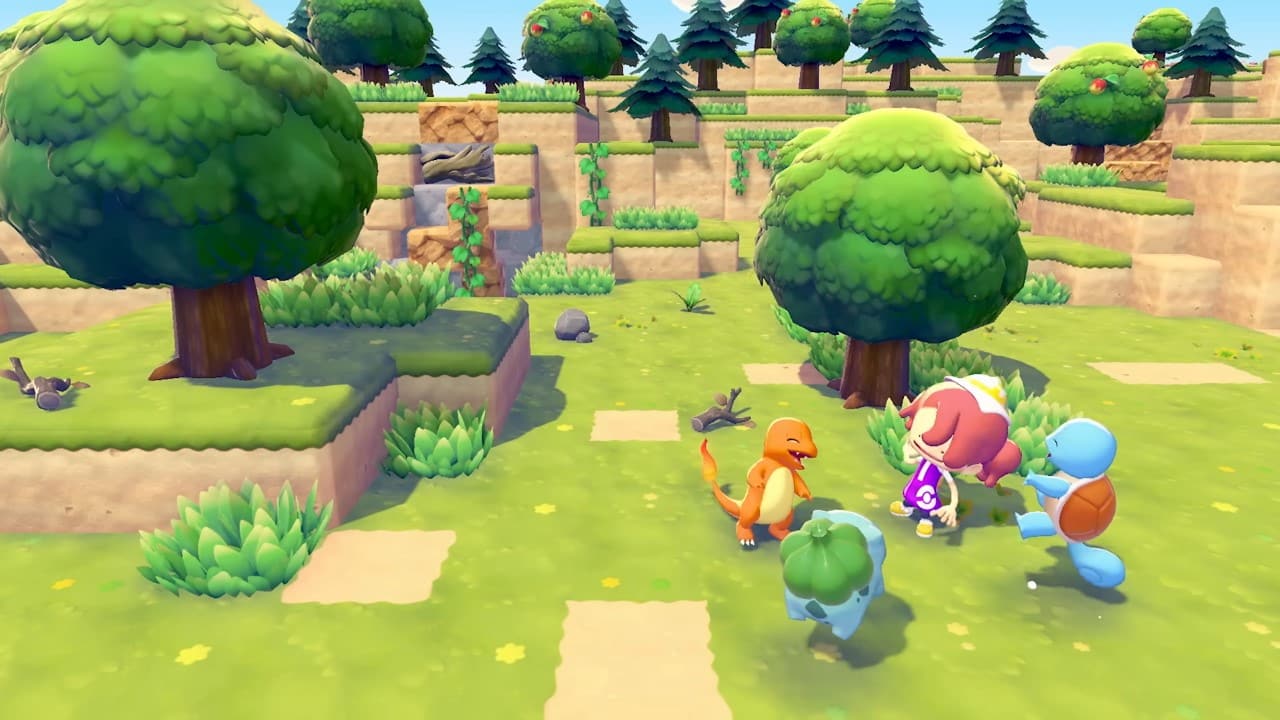
The electronic games industry receives an addition of weight with the official announcement of an unprecedented project developed jointly by Nintendo and Game Freak. The new title, focused on management and life simulation, moves away from traditional turn-based combat mechanics to offer an experience focused on construction and peaceful coexistence. The global launch is scheduled for March 5th, exclusively for the Japanese company’s new generation platform, the recently announced console that promises to elevate the technical capabilities of the digital entertainment market.
The main plot places the player at the center of a narrative of environmental recovery and urban development. The initial premise transports the protagonist to an inhospitable and abandoned region, where the local fauna and flora have suffered degradation over time. The central mission is to revitalize this space, transforming arid lands into vibrant and habitable ecosystems. The restoration process is guided by a character familiar to fans of the franchise, Professor Tangrowth, who acts as the main ecological mentor during the first steps of the reconstruction journey.
Unlike classic journeys focused on capturing and training for competitions, the new proposal emphasizes the harmonious coexistence between humans and creatures. Campaign progression directly depends on the player’s ability to understand the needs of the environment and use natural resources sustainably. Revitalizing the soil, planting seeds and purifying water sources are daily activities that replace clashes in gyms, creating a contemplative and strategic game rhythm.
The transition from a devastated land to a prosperous village occurs gradually, requiring long-term planning. Conforme the region’s vitality returns, the ecosystem reacts dynamically, attracting different species that begin to inhabit the surroundings spontaneously. Esse natural repopulation is the main indicator of success within the campaign, directly reflecting the design choices and priorities established by the player during territory management.
Innovation in transformation and exploration mechanics
The main technical and gameplay innovation lies in the protagonist’s ability to interact with the world through direct transformation mechanics. The system allows the avatar to take on the form and abilities of specific creatures with which it has established a bond of trust. Essa functionality eliminates the need for traditional simulation game tools such as axes or pickaxes, integrating the biological abilities of pocket monsters directly into the work and exploration routine.
The practical application of this mechanic fundamentally changes map navigation and resource collection. By taking the form of an aquatic creature, such as an Lapras, the player gains the ability to traverse rivers and oceans, reaching isolated islands and collecting submerged materials. Da Likewise, transformation into a flying species, such as an Dragonite, grants access to mountainous areas and high plateaus, vertically expanding the scope of territorial exploration.
The use of elemental skills is also present in manipulating the environment and in agriculture. Espécies with an affinity for the water element can irrigate large plantations efficiently, while fire-type creatures help clean up debris and prepare the soil for new construction. Essa synergy between daily tasks and the unique characteristics of each species creates a cycle of mutual dependence, where the expansion of the village requires the discovery and collaboration of new wild inhabitants.
Environmental restoration and ecosystem dynamics
The game’s ecology system presents a level of complexity unprecedented for the franchise, requiring the player to understand the habitat preferences of each species. The introduction of specific flora, the creation of bodies of water and the maintenance of dense forest areas are determining factors in attracting rare creatures. A well-balanced environment not only increases the diversity of local fauna, but also unlocks unique interactions between different species that come to live in the same space, generating spontaneous events that enrich observation.
Success in environmental restoration has a direct impact on the region’s demographics. As the land becomes fertile and safe, non-playable characters begin to migrate to the area, taking up residence and offering new services. The arrival of these new residents introduces side quests, exclusive lines of dialogue and the possibility of establishing trade routes. Managing the satisfaction of these inhabitants becomes an additional layer of gameplay, requiring the construction of adequate infrastructure, such as housing, squares and community centers.
Multiplayer integration and collaborative economy
Connectivity is a fundamental pillar of the new experience, offering robust interaction options both on local networks and over the internet. The multiplayer system allows visitors to explore their friends’ villages, actively participating in the process of building and maintaining the ecosystem. Essa cooperative approach reduces the time needed to erect large structures and facilitates harvesting on extensive plantations, encouraging teamwork.
The game’s economy is driven by the exchange of resources and exclusive items between players. Como each village develops in a unique way, influenced by the owner’s choices and local climatic conditions, certain materials may be abundant in one region and scarce in another. Direct trade becomes a valuable tool for speeding up progression and obtaining rare decorations that would not be available otherwise.
In addition to exchanging items, visiting other villages offers the opportunity to encounter species that do not inhabit the visiting player’s ecosystem. The diversity of biomes created by the global community ensures that continuous exploration of new territories is always rewarding. The integrated communication system facilitates the coordination of tasks and the organization of community events within the virtual environment.
The new console’s dedicated server structure ensures a fluid transition between single-player mode and cooperative sessions. The absence of prolonged loading screens when connecting to other villages maintains immersion and encourages frequent interactions. The network architecture was designed to support multiple simultaneous visitors without compromising the stability of the simulated ecosystem.
Advanced customization and village development
The level of customization offered reaches an unprecedented level, ranging from the appearance of the protagonist to the complete urban planning of the region. The player has total control over the topography, being able to modify the course of rivers, elevate land and lay out dirt or stone roads. The construction catalog includes hundreds of furniture options, architectural structures and decorative elements, allowing the creation of environments that range from rustic campsites in the middle of the forest to highly organized urban centers. Obtaining new construction projects is linked to exploration, fulfilling tasks for residents and advancing ecological restoration. The internal financial system is based on the sale of crops, refined materials and artisanal items, creating an economic cycle where investment in the village’s infrastructure generates returns that finance even more ambitious expansions.
Climatic cycles and fauna behavior
Immersion is deepened by a dynamic time passage system and weather changes that directly affect gameplay. The day and night cycle changes the routine of the inhabitants and determines which species will be active across the map. Criaturas of nocturnal habits emerge only after sunset, requiring the player to adapt their exploration schedules to catalog all the available fauna.
Climate patterns, which include intense rain, storms and sunny days, have a functional impact on the ecosystem. Natural precipitation automatically irrigates agricultural areas, saving the player time, while certain rare species only appear during specific weather conditions. The creatures’ artificial intelligence reacts to these changes, seeking shelter during storms or grouping together near water sources on intensely hot days.
Positioning in the console market
The launch of this title represents a strategic move to diversify the initial catalog of the new hardware platform. By focusing on a genre of peaceful simulation and resource management, the company seeks to attract a broad audience, which values user-paced experiences. The combination of powerful intellectual property with accessible and deep game mechanics sets a new standard for simulation titles in today’s market.



