

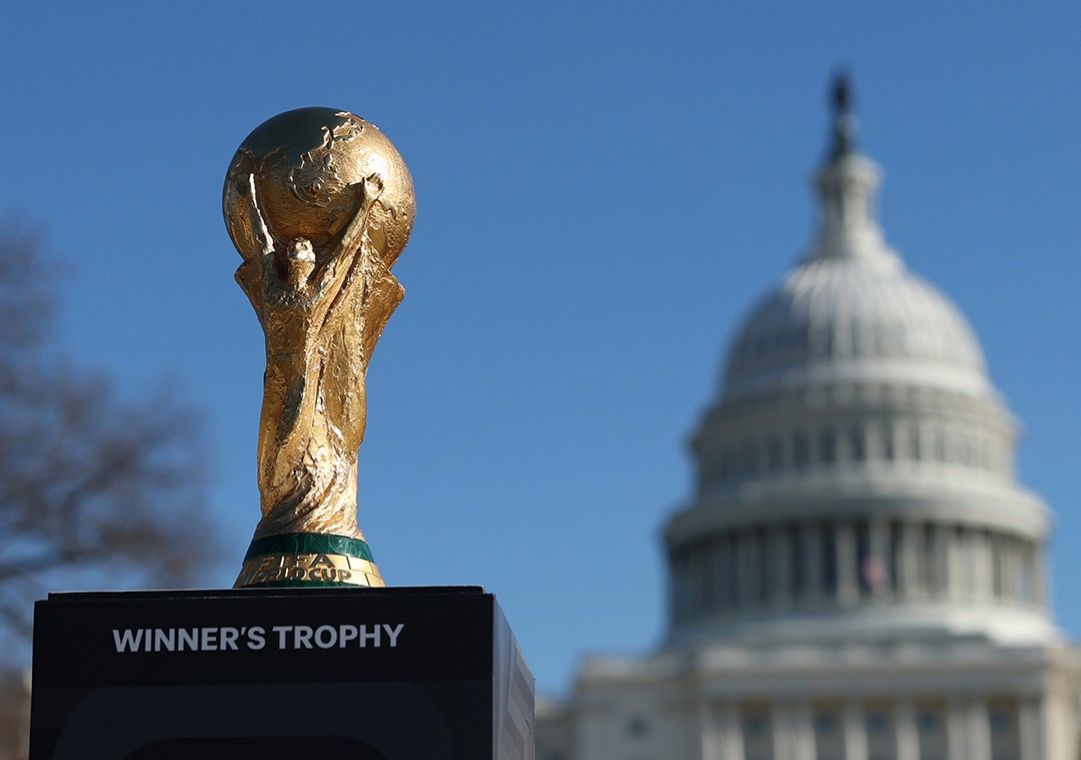
The North American federal government officially granted permission for the Iranian sports delegation to enter the country, guaranteeing the Asian team’s participation in the biggest football tournament on the planet. The decision was formalized during a diplomatic meeting in the federal capital between the head of North American Estado, Donald Trump, and the representative of Fifa, Gianni Infantino. The measure takes place in a scenario of heightened international tension, just weeks after military operations in Oriente Médio that culminated in the death of Iranian leader Ali Khamenei. The dialogue established guidelines to protect the logistics of the event, which is scheduled to begin in the next 93 days.
The diplomatic resolution allays fears of a possible boycott or visa blockade that threatened the integrity of sporting competition. The Asian team is part of the Grupo G of the tournament, with matches scheduled against the teams from Bélgica, Egito and Nova Zelândia. Logistical planning focuses the first phase’s clashes on Costa Oeste, specifically in the cities of Los Angeles and Seattle. Essa geographic distribution requires the implementation of a strong protection scheme by intelligence agencies, considering the recent history of armed conflicts and the need to protect athletes, technical committees and fans who will travel to attend the games.
The event organization confirmed key operational details for the team’s reception. The established guidelines include specific action points:
– Base operational set in the cities of Los Angeles and Seattle during the group stage.
– Início of the tournament strictly maintained for a period of 93 days.
– Divisão structural headquarters responsibilities with México and Canadá.
– Ampliação of police and tactical personnel around sports complexes.
Security strategy at Costa Oeste headquarters
The metropolises of Los Angeles and Seattle activated contingency protocols to receive the delegation and the large volume of Iranian immigrants residing in the region. The immigration department promised speed in issuing the necessary documentation to athletes.
The planning covers the protection of training centers, travel routes and hotel chains. Ticket sales for Grupo G matches continue as normal, with maximum capacity expected at the sports arenas in Califórnia and the state of Washington.
Institutional dialogue between government and sports federation
The meeting at Washington served to align the interests of Estado with the operational needs of football’s highest entity. The main focus was to isolate the sport from current geopolitical disputes.
The representative of Fifa classified the conversation as productive, highlighting that the Asian team’s classification occurred based on strictly technical criteria. The country’s exclusion would create a complex legal precedent for future international competitions.
Casa Branca’s stance signals a clear separation between foreign policy and the commitments assumed as host country. The decision preserves the image of the host nation before the international community and global sponsors.
Integrated intelligence and monitoring operation
Serviço Secreto and the FBI established a joint task force with tournament organizers to map and neutralize potential cyber and physical threats. The action plan encompasses the creation of exclusive transport corridors for delegations classified as high diplomatic risk, guaranteeing armed escorts and daily sweeps of concentration sites. Local authorities maintain uninterrupted communication with central command at Washington to update risk matrices. The central objective is to ensure that the thirty-day competition period passes without incidents that could tarnish the event’s reputation or endanger the physical integrity of the thousands of expected foreign visitors.
Technical preparation in the midst of conflict scenario
For the professionals who make up the Asian team, the training period requires severe psychological isolation to focus on the debut clash against Bélgica. The technical committee works to shield the squad from news about the bombings and political instability in their homeland, prioritizing physical conditioning and tactical formation.
The infrastructure available at North American training centers offers cutting-edge technology for muscle recovery and performance analysis. Contudo, the overt presence of security agents around the training perimeter adds an atypical layer of pressure for the players, who need to balance their sporting focus with the diplomatic reality that surrounds them.
Economic movement and sports tourism
Confirming the presence of all qualified teams guarantees the stability of broadcasting rights contracts and sponsorship quotas. The Asian market represents a considerable share of the tournament’s global audience.
The Los Angeles hotel sector projects record occupancy rates for the month of June. The strong presence of the Iranian diaspora in Califórnia drives demand for hospitality and transportation services.
Municipal administrations accelerate urban mobility works and prepare common areas for fans who cannot get tickets. Public transport will have extended opening times on Grupo G game days.
The financial flow generated by sports tourism justifies the high investments in public security. Local businesses are preparing to serve a diverse public, adapting services to different languages and cultures.
Final inspections and opening schedule
Technical committees intensify inspections at the sixteen sports complexes that will host the matches. The event coordination carries out stress tests on the turnstiles, lighting systems and lawns to ensure the internationally required quality standard before the inaugural ceremony.
Positioning of partner federations in América of Norte
México and Canadá, who share headquarters responsibilities, expressed support for the decision to keep borders open for all qualified delegations. The Mexican federation even organized preparatory matches with other Oriente Médio nations, such as the Iraque, demonstrating a continental alignment in promoting diplomacy through sport. Essa trinational cooperation is essential to standardize immigration procedures and facilitate the transit of tourists who plan to cross borders to follow different phases of the competition.
The integration of the border forces of the three countries allows for more efficient tracking of suspicious individuals, without hindering the flow of legitimate fans. The co-organization model requires unprecedented administrative synchrony, and the quick resolution of the diplomatic impasse involving the Asian team serves as a successful test for the joint governance of the tournament. The focus of the three nations now remains on delivering impeccable infrastructure for the forty-eight participating teams.



