

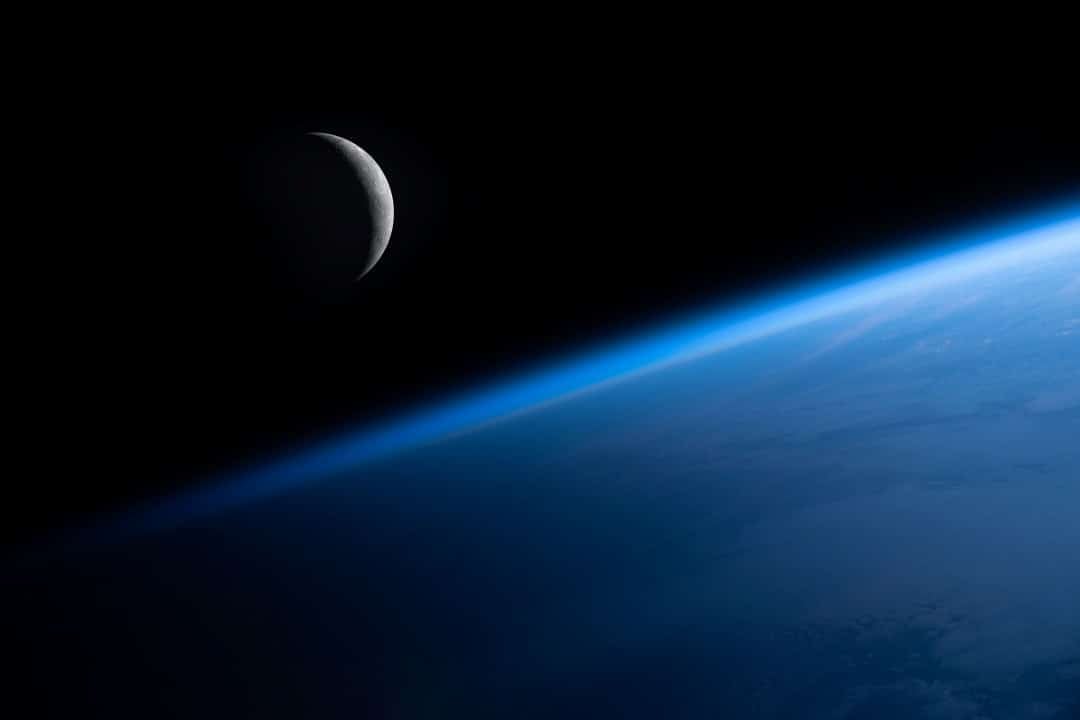
Astronomers recently identified asteroid 2025 PN7 as a quasi-satellite of Terra. The object orbits Sol in sync with the planet, creating the illusion that it accompanies our world like a second Lua. The discovery occurred using the Pan-STARRS telescope, at Havaí, and analyzes show that the phenomenon has persisted since the middle of the last century.
The asteroid measures between 16 and 49 meters in diameter. Ele maintains a 1:1 orbital resonance with Terra, which means that it completes one revolution of Sol in the same period as our planet. The minimum distance between the two bodies reaches around 300 thousand kilometers at some points along the trajectory, a value similar to the average distance of the true Lua.
2025 PN7 is part of the group of asteroids Arjuna, characterized by orbits with low eccentricity and inclination close to those of Terra. Esse type of object is not gravitationally tied to the planet, unlike natural Lua. The current configuration should remain stable until approximately 2083, when solar disturbances will cause the asteroid to gradually move away.
Discovery and observation details
The telescope The object is classified as asteroid Apollo, close to Terra, and its detection required high-precision equipment due to its small size and the distance involved.
Astronomers have calculated that 2025 PN7 maintains stable relative positions in relation to the planet. Mesmo on approaches, safety is total, with no risk of collision. Estudos continue to refine orbital parameters and composition of the celestial body.
Orbital characteristics of the quasi-satellite
The asteroid has a semi-major axis of 1.003 AU and an eccentricity of 0.108. The orbital inclination is around 2 degrees, values that place it in an orbit similar to Earth’s. Essa timing creates the visual effect of tracking, although the actual movement occurs around the Sol.
The quasi-satellite configuration is temporary on astronomical scales. 2025 PN7 entered this phase around the 1960s and will remain that way for another 58 years. Após this period, the gravitational influence of Sol will definitively alter its trajectory.
Other known quasi-satellites of Terra
Terra has at least seven confirmed quasi-satellites, including 2025 PN7 as the most recent. Entre they are objects like 469219 Kamo‘oalewa, 164207 Cardea and 2023 FW13. Esses bodies share similar orbital characteristics, with periods close to a year and distances ranging from millions of kilometers.
These asteroids reveal greater dynamism in the environment near Terra than previously thought. Monitoramentos constants by programs like Pan-STARRS identify new examples regularly.
Origin and ongoing studies
The exact origin of 2025 PN7 remains uncertain. Hipóteses include formation in the asteroid belt or temporary capture in resonance. Pesquisadores analyze spectroscopic data to determine composition, but the small size makes detailed observations difficult.
The study on the object was published in Sociedade Astronômica Americana research notes. Equipes international organizations continue to monitor the asteroid to better understand its orbital evolution and possible interactions with other bodies.
Importance for monitoring nearby objects
The identification reinforces the need for programs dedicated to detecting objects close to Terra. Telescópios and Pan-STARRS contribute to cataloging NEOs and assessing potential risks. 2025 PN7 demonstrates how small bodies can remain undetected for long periods before being noticed.
These discoveries expand knowledge about the space environment around the planet. Elas highlight the complexity of orbital interactions in the inner Sistema Solar.
Future observation perspectives
Advances in telescopes and computer simulations will make it possible to track 2025 PN7 with greater precision in the coming years. Cientistas plan additional observations to confirm parameters and detect subtle variations in trajectory. The object serves as a valuable example for studies of orbital dynamics.
The phenomenon of quasi-satellites continues to attract interest from the scientific community. Cada new case adds important data on the stability of co-orbital orbits.



