

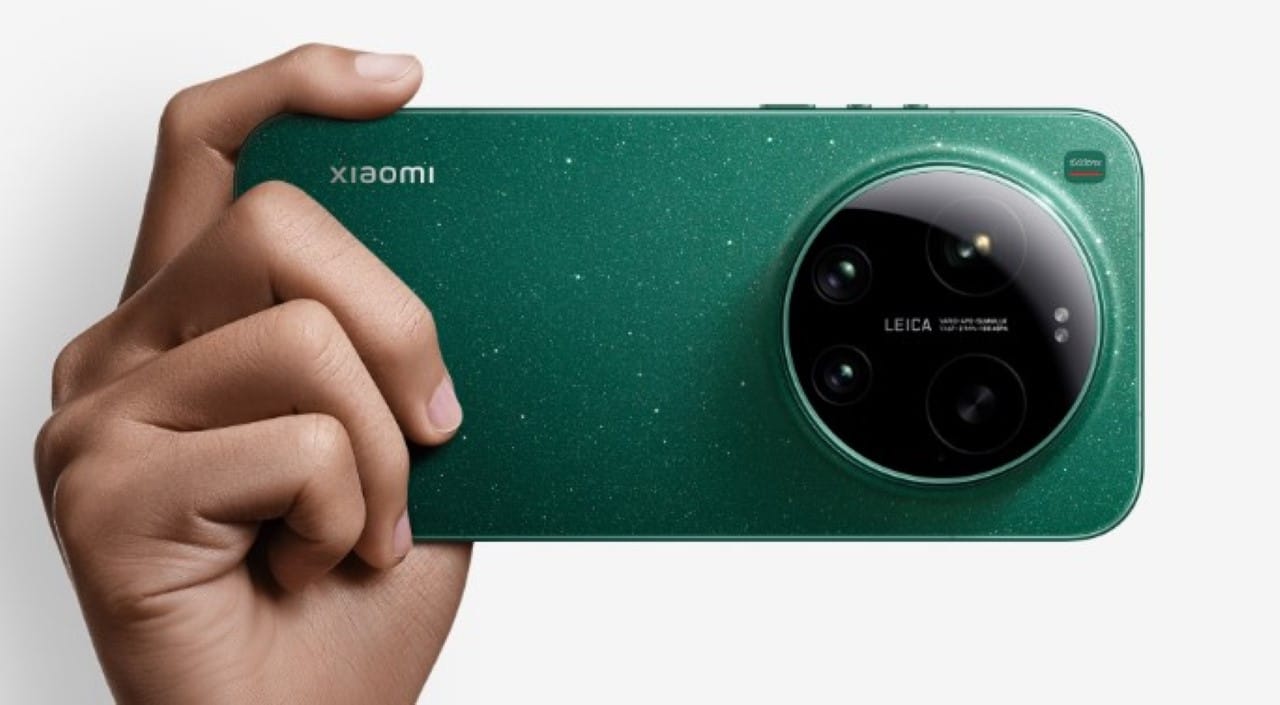
The premium smartphone market is witnessing a new and fierce clash with the recent launch of the Xiaomi 17 Ultra on the Índia. Este new device arrives to compete directly with the Samsung Galaxy S26 Ultra, which was introduced on the market the previous month, both positioned at the top of their respective categories. Ambas manufacturers are betting on cutting-edge hardware and innovations that promise to elevate the user experience to a new level, presenting features that place them on a level of equivalence in several aspects, but with crucial differences that can determine consumer preference.
Xiaomi, known for its aggressiveness in the global market, brought the 17 Ultra equipped with a stunning 6.9-inch AMOLED HyperRGB LTPO screen and the powerful Snapdragon 8 The launch at Índia, which took place on March 11, marks the entry of a robust competitor into a segment already dominated by established names, directly challenging Samsung’s more advanced offerings.
Priced identically at ₹1,39,999 at Índia, both devices target the same target audience looking for the latest in mobile technology. The dispute intensifies in areas such as battery capacity, camera set performance and screen quality, where each model has its advantages and disadvantages. Avaliar these points become fundamental for consumers who want to make the choice that best suits their needs and expectations.
Dueling advanced screens
Both devices feature 6.9-inch AMOLED screens with a 120Hz refresh rate, ensuring fluidity and vibrant colors. However, the Samsung Galaxy S26 Ultra stands out in terms of resolution, offering a QHD+ panel of 1440 x 3120 pixels, while the Xiaomi 17 Essa difference can be noticed in fine details and image sharpness, especially for more demanding users with visual content.
In addition to resolution, the Samsung also stands out in maximum brightness, reaching 2,600 nits, and protection, with the robust Gorilla Glass 2, which includes a DX anti-reflective coating for greater visual comfort. The Xiaomi 17 Ultra, in turn, has the Xiaomi Shield Glass 3, decent protection, but which, in theory, can be overcome by the durability and quality of the glass offered by the
Power and cutting-edge software
When it comes to raw performance, the two flagships are on equal footing, both equipped with the Snapdragon 8 The Xiaomi 17 Ultra comes with LPDDR5X RAM memory and UFS 4.1 storage, specifications that offer speed and efficiency in executing tasks and accessing data. The Samsung Galaxy S26 Ultra also doesn’t disappoint, featuring UFS 4.X storage, ensuring top-notch performance.
The main difference lies in the software and support approach. The Xiaomi 17 Ultra operates with Android 16 and the proprietary HyperOS 3 interface, which promises an optimized and personalized user experience. The Samsung, in turn, offers a commitment of seven major updates from the Android with the One UI 8.5, also based on the Android 16, meaning a significantly longer lifecycle and security for the
Battery capacity and recharge
In terms of battery, the Xiaomi 17 Ultra has a considerable advantage, incorporating a 6000mAh battery, which represents a substantial increase compared to the 5000mAh of the Samsung Galaxy S26 Ultra. Essa extra capacity translates into greater autonomy, allowing the user to spend more time away from the socket, ideal for those who use their smartphone intensively throughout the day for work, studies or entertainment.
The superiority of the Xiaomi also extends to charging. The device supports 90W wired and 50W wireless charging, putting it in a prominent position in the market. In contrast, the Galaxy S26 Ultra offers 45W wired and 15W wireless charging. The charging speeds of the Xiaomi 17 Ultra are significantly faster, allowing complete recharges in a much shorter period of time, a difference that adds great value for users with busy routines.
This difference in battery capacity and charging speed can be a deal breaker for many, especially those who rely on their smartphones for long periods and need quick recharging solutions. The Xiaomi bets on a combination that prioritizes practicality and energy independence, while the Samsung maintains a standard that, although efficient, does not reach the innovations of its direct competitor in this specific aspect.
Advanced camera setup
Mobile photography reaches new heights with the camera configurations of both devices. The Xiaomi 17 Essa combination promises incredible versatility and detail in various lighting conditions, catering to both amateur and experienced photographers.
The Samsung Galaxy S26 Ultra, in turn, is not left behind, featuring a robust set of four cameras. Este includes a 200 MP wide-angle lens as the main sensor, a 50 MP periscope with a powerful 5x optical zoom, a 10 MP telephoto lens with 3x optical zoom, and a 50 MP ultra-wide lens. The Samsung’s multi-lens approach offers a wider range of framing options and focal lengths, ideal for those looking for maximum creative flexibility.
The choice between the two camera systems may depend on individual preferences. Enquanto o Xiaomi stands out for its continuous optical zoom and a very high resolution periscopic sensor, the Samsung offers a greater diversity of lenses and fixed zoom options, which may be more suitable for different photographic scenarios. Ambos the devices are capable of capturing professional quality images, but with different philosophies in their optical engineering.
For photography enthusiasts, the presence of 200 MP sensors in both models guarantees an unprecedented level of detail and cropping capacity. Each brand’s image post-processing technology also plays a crucial role in the final quality of photos, with both companies investing heavily in artificial intelligence to automatically optimize colors, sharpness and exposure.
Design, resistance and extra features
Both smartphones were designed with attention to detail and durability, incorporating IP68 certification, which guarantees water resistance up to 1.5 meters deep, an essential standard for today’s premium devices. The Samsung Galaxy S26 Ultra enriches its offer with the inclusion of the S Samsung also integrates technologies such as UWB (Ultra Wideband) for precise object location and Bluetooth 6.0, which offers better connectivity. The Xiaomi 17 Ultra does not lag behind in modern features, featuring a 3D ultrasonic fingerprint reader for advanced security and a USB 3.2 Gen 2 port, which provides fast and efficient data transfers, ensuring the user experience is fluid and secure in every aspect.
Market and trends
The significant entry of the Xiaomi 17 Ultra into the Indian market, one of the largest in the world, intensifies competition in a segment that is already very competitive. The strategy of offering cutting-edge specifications at a competitive price mirrors the manufacturers’ search for a larger share of consumers willing to invest in high technology. Essa dispute drives innovation, benefiting the end consumer with more options and advanced features.
Market trends indicate a growing demand for devices that offer not only powerful hardware, but also refined software experiences and a robust feature ecosystem. Tanto to Xiaomi and Samsung are aligned with this vision, seeking to improve aspects such as battery life, photographic capacity and longevity of software support. The convergence of technologies and the search for differences are constant in the sector.
The final verdict
When looking at the Xiaomi 17 Ultra and the Samsung Galaxy S26 Ultra, the choice comes down to the consumer’s priorities. Pelo same price of ₹139,999, the Xiaomi offers a larger battery and faster charging, while the Samsung stands out with a higher resolution screen, longer lasting software support and the unique functionality of the S Pen. Ambos are excellent options, and the final decision will depend on individual needs and appreciation of each set of resources.



