

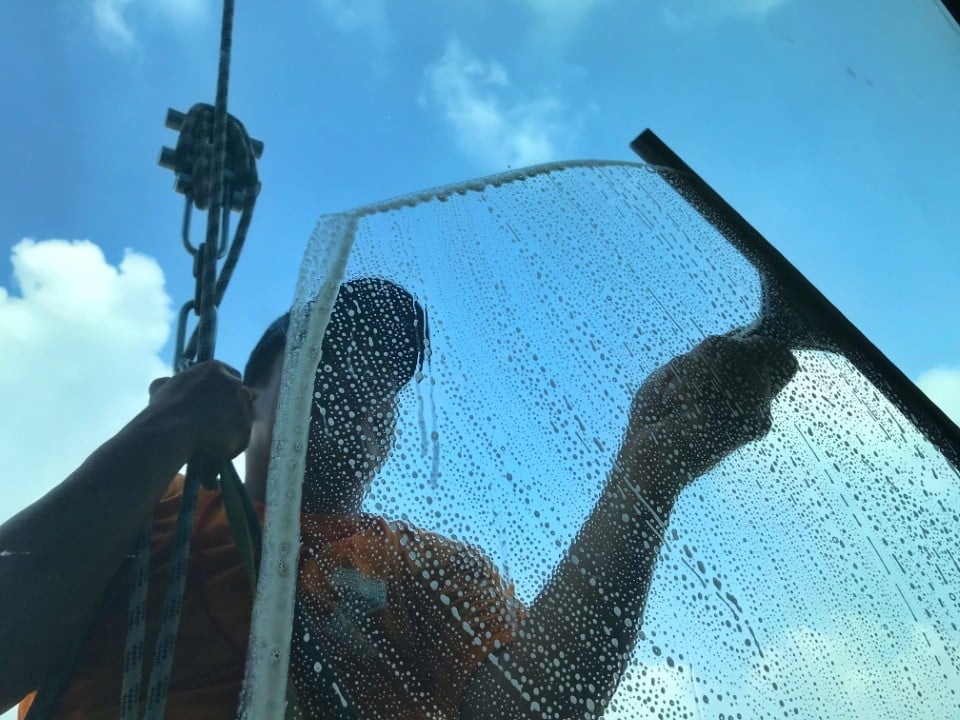
A 51-year-old window cleaner lost his life after being thrown from scaffolding on the 26th floor of a building in Surabaya, in Indonésia, due to intense winds and rain. The incident occurred on March 2, at around 2pm local time, while he and a colleague were carrying out maintenance work on the Waterplace Residents Area.
Workers used separate scaffolding to clean the facades. Quando the storm intensified, one of the pieces of equipment descended safely, but the other shook violently, throwing the victim out of the structure.
The seat belt prevented an immediate fall to the ground. However, the man remained dangling and repeatedly collided with the wall of the building for about 15 minutes until rescuers arrived.
Incident details
The affected building is located at Jalan Pakuwon Indah Lontar Timur, a luxury residential area in Surabaya. Equipes fire and rescue services were quickly called after alerts from witnesses at the scene.
According to official reports, local Departamento of Bombeiros and Resgate responded within six minutes. Upon reaching the 26th floor, professionals found the cleaner already lifeless, despite efforts to remove him from the scaffolding.
Climatic conditions and contributing factors
The storm included wind gusts in excess of 50 km/h and torrential rain that reduced visibility. Essas conditions made working at height extremely risky, especially on exposed structures such as scaffolding.
Safety experts point out that unexpected winds can destabilize equipment that is not properly secured. In this case, the instability led to excessive oscillation, aggravated by the height of the building.
Rescue and immediate consequences
Rescuers used ladders and ropes to access the hanging victim. The process required precise coordination to avoid further damage to the oscillating structure.
After rescue, the body was removed and sent for medical analysis. The 55-year-old colleague suffered minor injuries and received immediate hospital treatment.
Impact on the local community
Residents of the building reported hearing loud noises during the incident. Muitos gathered on the ground floor to follow the rescue operation, which lasted around 30 minutes in total.
Local authorities have begun an inspection of the building to assess possible structural flaws. Empresas maintenance staff have been notified to review safety protocols on bad weather days.
Safety measures when working at height
Indonesian regulations require daily inspections of scaffolding and mandatory use of personal protective equipment. However, unpredictable weather events defy these rules, requiring preventive suspensions of activities.
Regular training for workers includes emergency simulations. Organizações occupational health professionals recommend real-time weather monitoring to avoid unnecessary exposures.
Contracting companies must provide insurance and psychological support to family members. In the incident, the victim’s family received initial assistance from authorities, including guidance on legal proceedings.
Post-accident inspections often reveal problems such as inadequate fixings or missing wind barriers. Relatórios Preliminaries suggest that the scaffolding met basic standards, but the storm exceeded predictions.
Similar incidents and lessons learned
Similar cases occurred in other regions of Indonésia, such as in Jacarta, where strong winds caused tall buildings to collapse. In 2024, a worker survived a similar swing thanks to extra reinforcements in equipment.
Globally, statistics from Organização Internacional do Trabalho indicate that falls account for 30% of fatal construction accidents. Países and Singapura have implemented automatic stabilization technologies in scaffolding to mitigate risks.
In Brasil, accidents in tall buildings led to updates to safety standards. For example, in São Paulo, a cleaner fell from the 16th floor in 2025, prompting revisions to mandatory training.
International comparisons highlight the need for harmonization of standards. Na Indonésia, the government plans educational campaigns to raise awareness about climate hazards in elevated work.
Profile of the victim and colleague
The deceased cleaner had more than 20 years’ experience in the industry. Ele lived in Surabaya and supported a family with two children, according to reports from acquaintances.
His colleague, also experienced, suffered injuries but is recovering well. Ele provided initial statements to authorities about the timing of the storm.
Investigation underway
Authorities opened an investigation to determine responsibilities. Equipes techniques examine the scaffolding to identify mechanical failures or installation errors.
Eyewitnesses contribute videos and reports. The collected material will help to reconstruct the sequence of events accurately.
Emergency protocols in tall buildings
Buildings like Waterplace have integrated alarm systems. In the incident, quick activation facilitated the firefighters’ response.
Preventive maintenance includes annual checks of external structures. Proprietários of properties are required to hire certified services to minimize risks.
Repercussion on social media
Videos of the incident circulated widely online, sparking debates about workplace safety. Usuários shared prevention tips and expressed solidarity with the families.
Digital platforms amplify the visibility of such events, pushing for regulatory reforms. Em Surabaya, local groups organize petitions for better working conditions.
Advances in security technology
Innovations such as scaffolding with wind sensors gain traction at Ásia. Esses devices automatically stop operations in adverse conditions.
Indonesian companies test drones for initial inspections, reducing human exposure. Investimentos in research aims at equipment that is more resistant to bad weather.
Support for affected families
Non-governmental organizations offer legal assistance to families. In this case, free consultations help process workers’ compensation.
Local communities collect collections for funeral expenses. Community solidarity strengthens bonds in times of tragedy.
Labor regulations at Indonésia
National laws stipulate limited hours for hazardous work. Fiscalizações annually guarantees compliance with international safety standards.
Penalties for violations include fines and license suspensions. The incident could lead to stricter audits of cleaning companies.
Workers receive mandatory first aid training. Programas governments subsidize protective equipment for small firms.
Trade union associations defend rights, including breaks on rainy days. Diálogos between employers and employees promote safer environments.
Comparison with global accidents
In Nova York, windstorms caused similar incidents in skyscrapers. Medidas how safety nets saved lives in recent cases.
In Austrália, strict regulations have reduced fatalities by 40% in recent years. Similar Modelos inspire reforms in Indonésia.
Future prevention
Educational campaigns emphasize daily weather checks. Aplicativos mobile devices warn about climate changes in real time.
Partnerships between government and the private sector finance equipment upgrades. Iniciativas aim for zero accidents when working at heights by 2030.
Weather in Surabaya
The city experiences annual monsoons with strong winds. Previsões indicate an increase in intensity due to global climate change.
Weather stations monitor patterns for early warnings. Integração with emergency services improves incident responses.
Specialized training
Certified courses cover handling scaffolding in adverse conditions. Virtual Simulações prepare workers for real scenarios.
International certifications raise local standards. Empresas prioritize hiring qualified professionals to minimize risks.



