

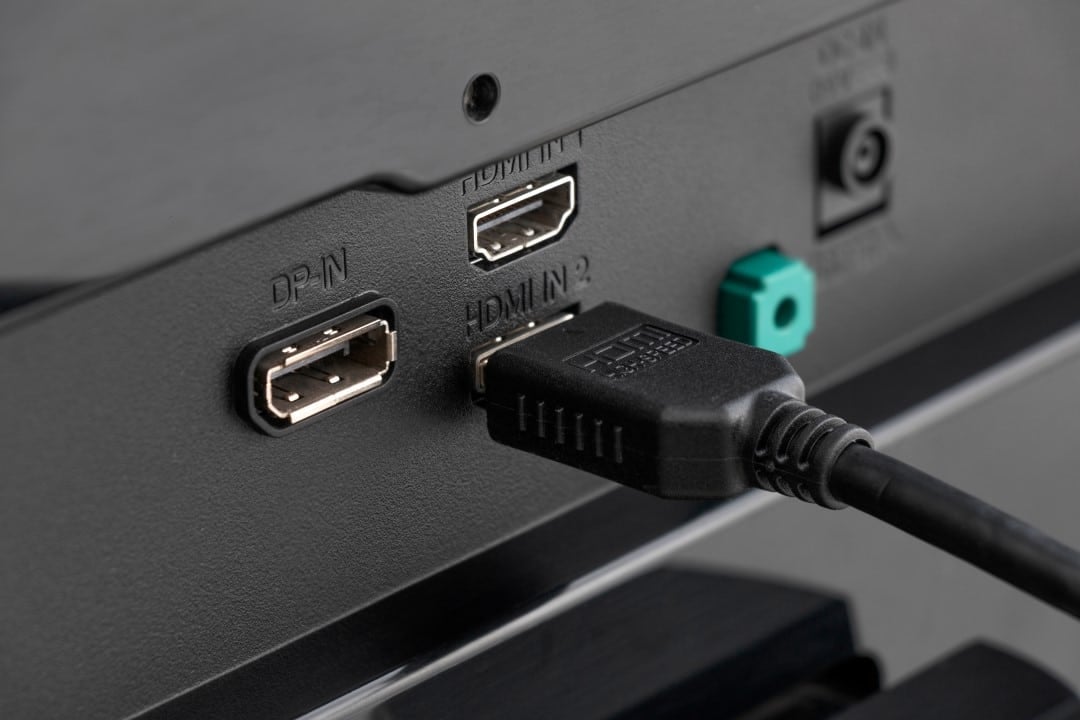
Consumers who invest in state-of-the-art equipment often face an invisible technical hurdle when connecting their devices. Purchasing a modern console or advanced media player does not automatically guarantee enjoyment of the maximum graphical capabilities offered by the display. The bottleneck occurs directly in the communication between the sending device and the receiving screen, creating a barrier that limits the potential of the purchased hardware.
The video input ports on modern television sets come off the assembly lines with intentional bandwidth limitations. Essa restriction directly affects the transmission of complex visual data required by high-performance digital entertainment platforms. Blocking acts as a strict filter that reduces the amount of information processed per second, leveling the image quality down.
The practical result of this technical barrier is the silent degradation of the end user’s visual experience. Funcionalidades advertised on product packaging remain inactive until a manual intervention is performed in the display’s operating system menus. The lack of clear information about this need causes many to use their systems in a sub-optimized way for years.
Business reasons and customer support
The decision to restrict the capacity of communication ports is based on strategies to mitigate failures and reduce operational costs. Fabricantes of electronics design their systems to offer the greatest possible compatibility with legacy equipment. A newly launched device needs to recognize everything from an optical disc player with more than a decade of use to the most powerful console on the current market.
When a high-speed port receives the signal from an older device, protocol incompatibility causes critical display failures. The display may present a completely dark screen, severe color distortions or a complete lack of audio synchronization. Esses errors result in an immediate increase in calls to customer service centers, generating high costs for companies.
To avoid overloading their technical support channels, the industry has chosen to default the initial configuration to safe mode. The consequences of this choice fall on the owners of modern equipment, who have to identify and change parameters manually. The main effects noted include:
– Redução drastic color depth and wide dynamic range disablement.
– Perda sharpness in texts and interface edges due to data compression.
– Impossibilidade to achieve high refresh rates in competitive games.
Direct impact on graphic quality
Bandwidth limitation primarily affects the reproduction of wide dynamic range, known technically by the acronym that defines high contrast and brightness. Sem the data path is fully freed, the display fails to process the dynamic metadata required to display the ten-bit color palette. The resulting image features washed out tones and artificial light transitions, eliminating the realism intended by the developers.
Another significant loss occurs in color sampling compression, a mathematical process that reduces the amount of color data sent over the connection. On restricted ports, the system forces aggressive compression that blurs the boundaries between distinct graphical elements. Esse effect is particularly visible when reading texts and navigating through operating system menus, where letters lose their definition.
Image fluidity also suffers drastic cuts when the factory setting is left intact. Títulos Fast-paced action and virtual competitions that rely on instant responses are limited to standard refresh rates, frustrating demanding gamers. The barrier prevents the hardware from delivering the additional frames that ensure smooth motion and clarity in high-speed scenes.
The video signal processing delay increases considerably under these restrictive conditions. Fragmented communication between the sender and receiver requires extra processing cycles, generating latency that impairs the accuracy of the commands executed by the user. In interactive scenarios, this millisecond delay represents the difference between success and failure in executing a task.
Nomenclatures and adjustments by manufacturer
Solving the problem requires navigating through configuration menus that vary drastically depending on the brand of equipment, creating a confusing scenario for the common consumer. Cada manufacturer adopts its own terminology for the same bandwidth release function. The Samsung, for example, hides this option under the name of input signal expansion, requiring the user to access the general settings of external devices to activate the maximum capacity of each port individually. LG uses a term related to deep colors in high definition, located in the advanced image options of its own operating system. The Sony, in its line of displays, requires the owner to change the port signal format from standard to enhanced, an adjustment often buried in channel and input settings. Outras brands in the Asian market also employ specific technical jargon that is rarely explained clearly in basic instruction manuals. The process requires the signal to be momentarily interrupted during the mode change, causing the screen to flash or restart the connection before fully establishing the new data transmission pattern.
Cabling and infrastructure requirements
Enabling the setting in the display’s operating system solves only part of the technical equation required for high-fidelity transmission. The physical infrastructure that connects devices plays a fundamental role in supporting the massive flow of data required by contemporary resolutions. Cabos of previous generations do not have the shielding or pinout capabilities required to support the transfer rates of the latest audiovisual communications standards.
Using an inappropriate cable on a port configured for maximum capacity results in intermittent signal failures that impair system usability. The user may experience momentary screen blackouts, flickering visual artifacts, or a sudden drop in resolution during processing spikes. Para To ensure stability, it is imperative to use certified drivers that support the transfer speeds established by technology consortia, avoiding physical bottlenecks in communication between devices.
Old device management
Changing the ports to high capacity mode requires extra attention when connecting equipment from previous generations to the same display. An old media player forced to communicate via a modern protocol may logically collapse. The sending device fails to interpret the digital handshake required by the advanced port, resulting in no signal.
In these scenarios, the technical recommendation is to keep specific ports configured in standard compatibility mode, creating a mixed environment. Essa Input segregation ensures that legacy devices operate within their original specifications, while next-generation consoles and players utilize data expressways without interference or system conflicts.
Audio synchronization and feedback protocols
Restricted bandwidth does not exclusively affect the visual elements of data transmission between devices. The audio return protocols, responsible for sending sound from the display to soundbars and external receivers, depend on the same communication path. Quando port operates at reduced capacity, high-resolution three-dimensional audio formats are severely compressed or completely blocked by the system.
The lack of simultaneous processing capability creates noticeable delays between the displayed image and the sound played through the speakers. Releasing the port corrects these timing discrepancies, allowing visual and audio data packets to travel in perfect harmony, restoring the integrity of the original work and eliminating lip sync issues in films and games.
Hardware Automation Perspectives
The development of new interface controllers seeks to eliminate the need for manual intervention when configuring video ports. Engenheiros work on instant recognition protocols that analyze the capacity of the connected device in fractions of a second. Essa Technological evolution aims to dynamically adjust bandwidth, automatically guaranteeing the best possible quality, without sacrificing compatibility with the vast ecosystem of older devices present in homes.



