

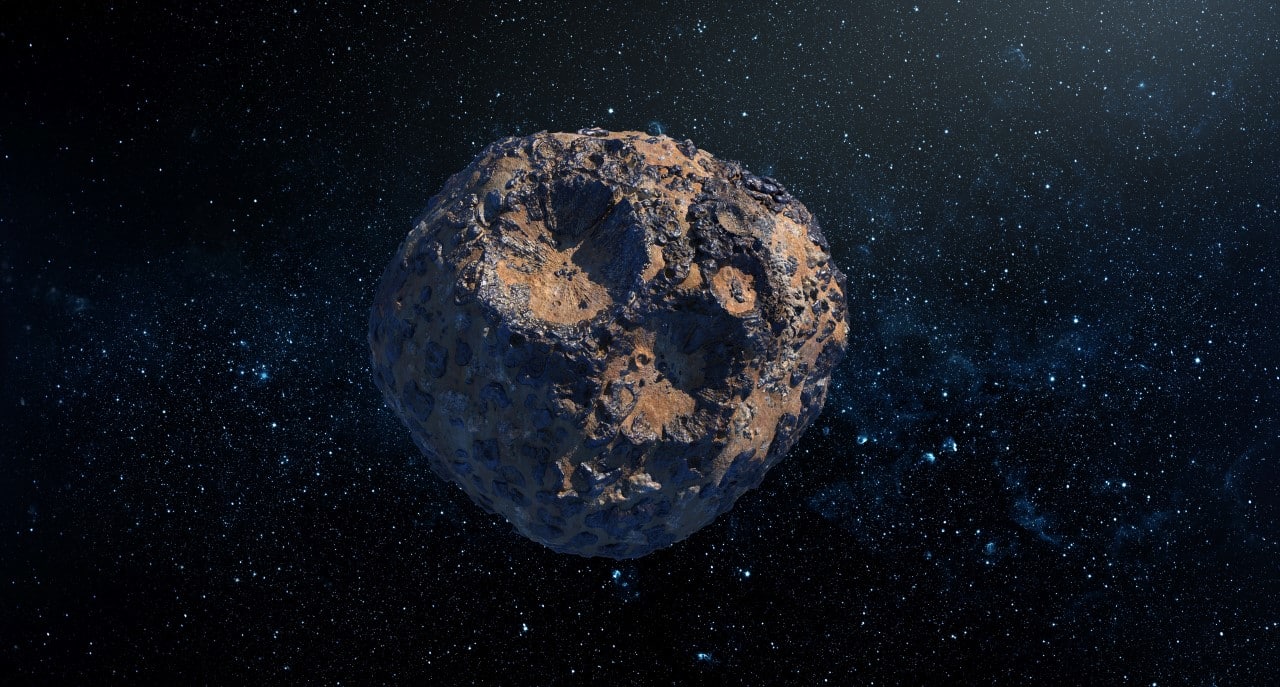
A 160-meter asteroid collided with Mar from Norte 43-46 million years ago, generating a tsunami greater than 100 meters and forming the crater Pesquisadores resolved a scientific debate of more than two decades by confirming impact origin, based on advanced seismic imaging, shocked mineral analysis and numerical simulations. The event occurred during Eoceno Médio and left a well-preserved structure beneath the seabed.
The Silverpit structure, discovered in 2002 through seismic data from oil exploration, has a characteristic circular pattern with a central diameter of 3 kilometers and ring faults extending up to 20 kilometers. Inicialmente, experts disagreed about its formation, considering possibilities such as volcanic collapse or underground salt movement. In 2009, an informal vote among geologists rejected the impact hypothesis, but recent evidence has changed the consensus.
Decisive evidence of impact
Petrographic analyzes revealed grains of quartz and feldspar shocked at the bottom of the crater, minerals deformed by extreme pressures that only occur in hypervelocity events. Esses crystals were extracted from samples from nearby oil wells and confirm the action of an impact.
Dr. Uisdean Nicholson of Universidade Heriot-Watt at The images show details of the crater’s morphology that align perfectly with models of cosmic collisions.
Simulations recreate the event
Numerical models indicate that the asteroid, about 160 meters in diameter, approached at a shallow angle from the west. The collision generated a curtain of water and fragmented rock 1.5 kilometers high in just a few minutes.
When collapsing, this curtain released a tsunami more than 100 meters high, spreading across the ancient Mar region. The phenomenon would surpass in scale any wave recorded in modern times in the area.
Crater preservation details
The Silverpit crater remains exceptionally preserved, buried 700 meters below the current seafloor. Sua location on the ancient European continent and subsequent sedimentary cover protected the structure from significant erosion.
The depth and integrity allow detailed studies on impact processes in marine environments. Pesquisadores highlight that few underwater impact craters have such a level of global conservation.
Geological context of the impact
The event took place between 43 and 46 million years ago, in the period Eoceno Médio, when the configuration of the continents differed from today. The Mar of the Norte was a shallow marine basin, which facilitated the generation of the tsunami.
Biostratigraphy of nearby sediments precisely dates the formation of the crater in this time window. Nenhum impact similar in scale has been recorded in the region since then.
Contributions to planetary knowledge
The confirmation reinforces the understanding of how impacts shape planetary surfaces in aquatic environments. The presence of shocked minerals serves as a definitive marker to identify similar structures in other locations.
Prof. Gareth Collins, from Imperial College London, contributed simulations that validated the observational data. Ele described the new evidence as decisive in ending the controversy.
The study integrates multiple lines of investigation, from geophysics to petrology, to establish the extraterrestrial origin of the structure. The Silverpit crater joins a handful of others confirmed as hypervelocity impacts in Terra.



