

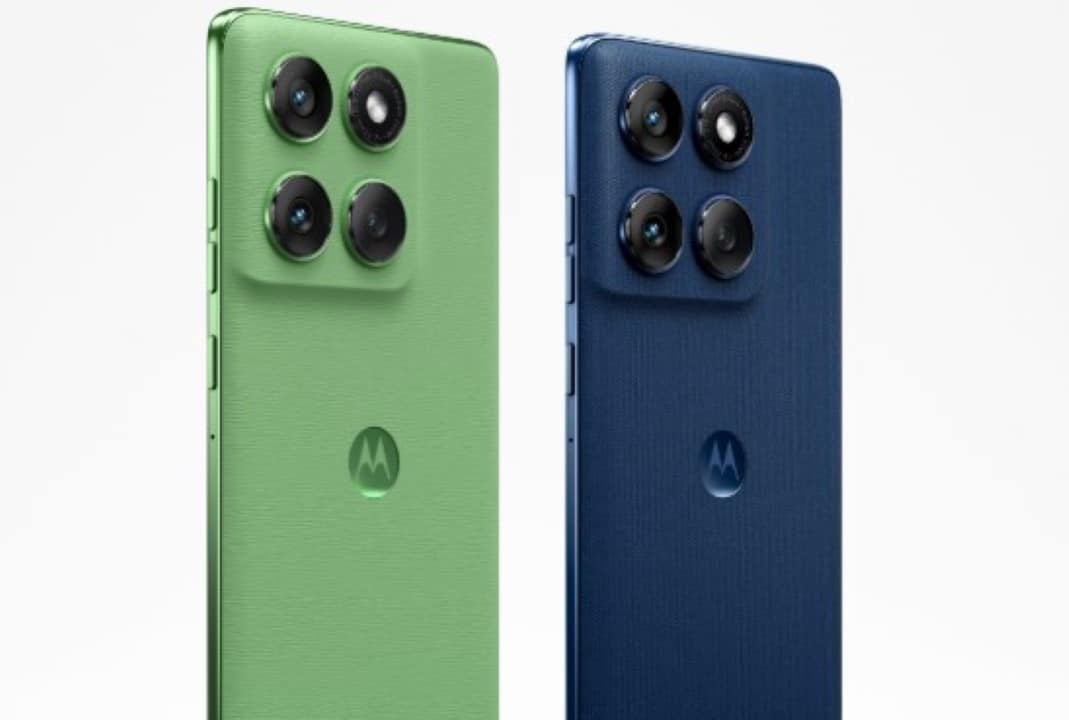
The launch of the Motorola Edge 60 5G attracted attention in the smartphone market, mainly due to a detail in its technical sheet that aroused consumers’ curiosity: the promise of 24 GB of RAM. Para Many users, accustomed to mid-range devices that generally offer 6 or 8 GB, this number sounds like a revolutionary leap.
However, this specification hides a mechanism that deserves to be understood before making any purchasing decision. Of the announced 24 GB, a significant part is actually made up of virtual RAM, a resource known as RAM Boost, which uses the device’s internal storage as an extension of the main memory.
With the device now available on sale, for less than R$2,000, it is essential to analyze in depth the implications of this technology and assess whether the overall package of the Edge 60 5G offers a cost-benefit ratio that really makes up for the investment.
Demystifying RAM Boost: understand the technology
Conventional RAM memory is a physical component, a dedicated chip, whose primary function is to temporarily store the data that the processor needs to access at maximum speed. Esta is the most agile memory on a cell phone, essential for fluidity in running applications and transitioning between different tasks. Quando a smartphone has 12 GB of real RAM, this means it has a robust capacity to handle demanding multitasking and heavy gaming.
RAM Boost, or its variation known as RAM Plus or Expansão RAM in other brands, operates differently. Ele works by reserving a portion of the device’s internal storage to use as if it were RAM memory. The idea is that, when the 12 GB of physical RAM is close to its usage limit, the system automatically uses this additional space, preventing background applications from crashing or closing unexpectedly, ensuring a more continuous experience.
However, a crucial difference lies in speed. Internal storage memory, even though it is fast – especially in modern devices with technologies such as UFS –, has read and write speeds that are notably lower than physical RAM. Isso implies that when activating RAM
Additionally, it is important to note that the space allocated to RAM Boost is permanently unavailable for storing files, photos or videos while the feature is active. No Motorola Edge 60 5G, this means that a portion of the generous 512 GB of internal storage is reserved for this function, even if it is not being used in its entirety by virtual memory at that specific moment.
When does RAM Boost really matter?
For most users, the 12 GB of real RAM present in the Motorola Edge 60 5G is already more than enough for intensive use. Este memory volume provides comfort for demanding tasks, such as running the latest games with maximum graphics, performing video editing directly on the device or keeping multiple applications open simultaneously without any bottlenecks. It’s unlikely that most consumers will be able to exhaust the 12 GB of physical RAM in their daily routines.
RAM Boost, therefore, acquires greater relevance on devices that have a smaller amount of real RAM, such as 4 or 6 GB. In Nesses cases, the physical memory limit is reached much more easily, making the virtual expansion feature a valuable aid in maintaining performance and stability. On a phone with 12 GB of physical RAM, it acts more as an additional security layer or a “safety net”, rather than a feature that will be actively and frequently used by the system.
A practical recommendation for Edge 60 5G users is to consider keeping the Boost RAM feature disabled on a daily basis. Caso want an extra precaution, activating it with a lower value, such as 4 GB, may be sufficient. Essa approach not only preserves the maximum internal storage space available for your personal files, but also ensures that extra protection in extreme demand situations is still available, without compromising the device’s overall performance.
Beyond memory: Edge 60 5G screen and performance
The memory is, without a doubt, an attraction, but the Motorola Edge 60 5G delivers a set of hardware that stands out in its price range. The 6.7-inch pOLED Quad-Curve screen, with a resolution of 1220×2712 pixels and a fluid refresh rate of 120 Hz, offers a high-quality visual experience. Seja To browse the internet, watch movies and series or enjoy games, the panel with HDR10+ support guarantees vibrant colors, deep blacks and high contrast.
The curvature on the four edges of the display is not just an aesthetic detail; it gives the device a premium look, something rarely found on cell phones in this price category. Essa feature, combined with pOLED technology, which offers greater flexibility and durability compared to traditional OLED panels, contributes to visual immersion and a sophisticated design.
At the heart of the device, the Dimensity 7300 processor, operating at 2.5 GHz, combined with 12 GB of real RAM and 512 GB of internal storage, ensures fluid and responsive performance. Este hardware is capable of handling everyday use, from browsing social media to running more demanding applications and games that demand greater graphics processing power, ensuring that the operating system runs without interruptions.
Photographic capabilities and improved durability
The Motorola Edge 60 5G’s camera set is one of its strong points. The 50 MP main rear camera, equipped with an Sony sensor, promises to capture detailed, high-quality images in various lighting conditions. The Este sensor is complemented by advanced features, including intelligent stabilization, which minimizes blur in photos and videos, and the Night Vision mode, which significantly improves captures in low-light environments, revealing details that would be lost on conventional cameras.
Furthermore, the integration of Adobe Scanner offers a practical tool to scan documents clearly directly from your cell phone, optimizing workflows and organization. Regarding the front camera, the Edge 60 5G surprises by also featuring a 50 MP sensor. Essa high resolution is a welcome advantage for those who value detailed, high-quality selfies, and for those who frequently make video calls, ensuring a clear and professional image.
The resistance of the device is another aspect that deserves to be highlighted. The Motorola Edge 60 5G has IP68 and IP69 certifications. The IP68 rating ensures robust protection against dust and water immersion in specific conditions, while IP69, a military-grade certification, provides additional resistance against high-pressure, high-temperature water jets. Este level of durability is a feature that few competitors in the same price range offer, providing greater peace of mind to the user in different situations, from a rainy day to more challenging environments.
Robust battery and 5G connectivity
Autonomy is a crucial factor for smartphone users, and the Motorola Edge 60 5G meets this demand with a 5,200 mAh battery. Essa generous capacity, combined with the efficient processor, promises a long duration, allowing the device to withstand a full day of intense use without the need for frequent recharges.
For when the battery eventually needs a charge, the device has fast charging technology. Esse feature minimizes downtime, ensuring that the cell phone is ready for use in a short time, an invaluable benefit in the rush of everyday life. 5G connectivity, in turn, complements the set, offering ultra-fast internet speeds for streaming, downloads and browsing, an essential standard in modern devices.
The final verdict on the Motorola Edge 60 5G
In short, Motorola managed to position the Edge 60 5G as an extremely competitive option in the market, especially with the current price below R$2,000. The device features a premium pOLED screen with a high refresh rate, 50 MP cameras on both the rear and front, a generous 512 GB internal storage and a rare combination of IP68 and IP69 resistance certifications, in addition to 5G connectivity. Para consumers who are considering switching from a previous generation mid-range smartphone, the leap in specifications and usage experience will be undeniably significant.
However, it is essential not to get carried away just by the “24 GB RAM” number advertised so prominently by marketing. What the device actually has is 12 GB of physical RAM, an already excellent amount and more than enough for the vast majority of current applications and games. The additional 12 GB refers to RAM Boost, which acts as a virtual memory backup. Utilizando this feature with an understanding of its characteristics and limitations, the cell phone will deliver exactly what it promises, offering remarkable performance and a robust user experience in its category.



