
Square Enix ends exclusivity and launches final chapter of Final Fantasy VII for consoles and PC
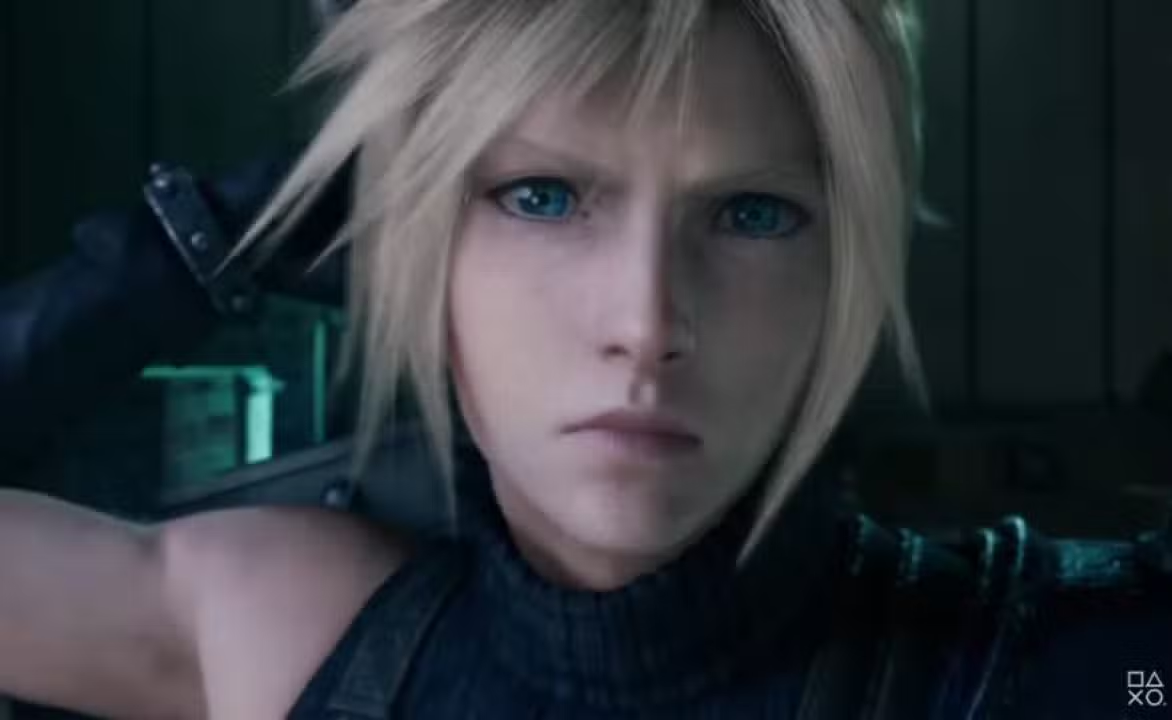
Square Enix has officially made a profound change in its distribution strategy for the long-awaited third and final chapter of the trilogy of recreation of the classic RPG originally released in the nineties. Diferente of the model adopted in the two previous titles, which maintained temporary exclusivity contracts with the PlayStation manufacturer, the outcome of the saga will be available simultaneously for PlayStation 5, Xbox Series X|S and computers. The decision marks a turning point in the Japanese publisher’s commercial approach, which now seeks to maximize the reach of its high-budget productions from the first day of sales, eliminating hardware barriers that have limited the performance of its most recent releases.
The movement occurs after a period of internal reevaluation motivated by financial results that were below the projections established by the company’s shareholders. Temporary exclusivity, previously seen as a guarantee of early revenue, has proven insufficient to cover the rising development costs of current super-productions.

With the adoption of simultaneous multiplatform launch, the developer intends to reach a considerably larger installed base of players. The measure reflects a necessary adaptation to the new realities of the digital entertainment industry, where the profitability of massive projects depends on sales spread across multiple ecosystems.
Commercial restructuring of the Japanese developer
The transition to the multiplatform model is directly linked to Square Enix’s recent business plan, focused on an aggressive restructuring of its global operations. The company has begun a process of canceling smaller projects and redirecting resources to its main franchises, with the strict guideline that future major titles not be restricted to a single platform. Essa new corporate policy aims to mitigate the risks associated with developing AAA-rated games, whose budgets often exceed the hundreds of millions of dollars mark and require massive sales volume just to break even.
Recent financial documents from the publisher indicated that audience limitations imposed by exclusivity agreements resulted in lost market opportunities, especially in regions where competing computers or consoles have greater penetration. By foregoing the financial incentives offered by hardware manufacturers to keep a game exclusive, Square Enix is banking on the strength of its intellectual property to generate organic revenue through direct sales to consumers on all available fronts, setting a new standard for its future global releases.
Launch history and the hardware market
The journey of recreating this universe began in 2020, when the first part was released exclusively for the PlayStation 4. The title remained restricted to the console for more than a year before receiving an enhanced version for the PlayStation 5 and, later, being made available for computers through specific digital stores, which fragmented the player base and diluted the impact of the initial marketing campaigns.
The second chapter of the trilogy followed a similar path in early 2024, arriving on the market only for the PlayStation 5. Despite the largely favorable critical reception, industry reports pointed out that initial sales did not reach the company’s most optimistic goals, a direct reflection of the console’s installed base at the time of launch and the absence of players on other platforms who had already consumed the first part on the computer.
Audience fragmentation has become a clear obstacle to the franchise’s long-term sustainability. The company’s management understood that forcing consumers to purchase specific hardware to continue following a continuous narrative resulted in a significant dropout rate between chapters.
Technical details and innovations at the end of the trilogy
The development of the third part is advancing with the use of cutting-edge graphics engines, which allows a visual and performance leap compared to previous games. The production team confirmed that the title is being built to make the most of the capabilities of current consoles and modern computers, definitively leaving behind any support for hardware from past generations.
One of the most anticipated technical innovations is the implementation of the Highwind flying ship, which will allow free exploration of the world map. Rendering a full-scale world, without apparent loading screens during flight, requires intensive use of solid-state storage drives (SSD) and fast data processing, justifying exclusivity for advanced hardware platforms.



The combat system will also undergo refinements, further integrating real-time action with classic tactical commands. The development team works to balance the fluidity of confrontations with the need for strategy, introducing new synergy mechanics between the characters that make up the main group.
For the computer environment, the game will have native support for image resizing technologies based on artificial intelligence, ensuring stable frame rates even at high resolutions. Cross-platform optimization from day one of development aims to avoid the technical issues that affected late conversions of previous titles.
Strategic approach with the Microsoft ecosystem
The inclusion of the Xbox Series X|S consoles in the launch planning represents a milestone in the relationship between Square Enix and Microsoft. Durante years, the presence of major Japanese RPGs on the North American platform was scarce, but recent negotiations and visits by executives from the Microsoft games division to Japão resulted in a significant commercial rapprochement.
The arrival of the title on Xbox not only meets a long-standing demand from console owners, but also inserts the franchise into a robust digital ecosystem. The game’s availability on the platform increases the brand’s visibility in Western markets where Microsoft hardware has a strong commercial presence.
The future of major RPG productions on the global stage
Square Enix’s decision to abandon exclusivity reflects a structural transformation in the electronic games industry, where production costs for AAA titles have reached levels that make restriction to a single platform unfeasible, unless the project is fully financed by the hardware manufacturer. Developing a global-scale RPG currently requires teams made up of hundreds of professionals, years of research and development of proprietary technologies, as well as multimillion-dollar marketing campaigns. By choosing to launch simultaneously on PlayStation, Xbox and PC, the company sets a precedent that could influence other Japanese developers to reevaluate their exclusivity contracts. The current market demonstrates that consumer loyalty is increasingly linked to the convenience and accessibility of software, regardless of the device used. Essa paradigm shift ensures that intellectual properties maintain their cultural relevance and financial viability in a scenario of extreme competition and inflated budgets.
Expectations for the outcome of the narrative
With the development structure consolidated and the distribution strategy defined, the production team’s focus turns entirely to finalizing the narrative content and polishing the mechanics. The conclusion of the trilogy promises to reinterpret the final events of the 1997 game, offering answers to the mysteries introduced in the previous parts and delivering a conclusion technically and visually in line with the most demanding standards of the current generation of digital entertainment platforms.
…
Veja Tambem em News (EN)

Research reveals that parents are unaware of how their children use artificial intelligence

Samsung releases new system update with new features for Galaxy Watch 4 users

Digital retail reduces the value of the Galaxy S25 5G smartphone with bank bonuses and device exchange

Amazon’s wireless CarPlay adapter has a 50% discount and high approval ratings from drivers

Zach Cregger’s new Resident Evil ignores games and focuses on an unprecedented story with new characters

Rumor suggests that Nintendo is preparing a special edition of the Switch 2 with a remake of Ocarina of Time

Apple accelerates production of the iPhone 17e and develops new Air model with dual camera system

Epic Games platform releases twelve high-budget games at no permanent cost for PC users

PlayStation 5 Pro price drop accelerates digital retail sales and eliminates global stocks

New Galaxy Watch 9 firmware appears on server and confirms progress in software development

Apple’s commemorative project tests cell phone with 1.1 millimeter edge and curved screen for 2027
