

The digital entertainment market is facing a profound reconfiguration driven by the constant increase in the price of big-budget releases. Acquiring new titles has become a financial challenge for most consumers, as new products frequently reach virtual and physical shelves costing more than four hundred reais. Esse scenario removes a significant portion of the public from interactive experiences paid in advance.
The economic barrier becomes evident when the sector’s costs are compared with the salary reality of the Brazilian population. With the current minimum wage set at R$1,621, investing in just one video game launch represents a disproportionate share of the monthly budget of workers and families. The situation directly affects those who live on a per capita income of half a minimum wage, stipulated at R$810.50, requiring a redirection of expenses towards basic needs.
As a direct response to this limitation in purchasing power, the segment of interactive works with no initial cost is experiencing accelerated expansion across several platforms. The migration of users to free access catalogs consolidates a new consumption pattern, where technical and narrative quality does not necessarily require an immediate financial outlay from the player.
Economic factors redefine access to digital leisure
The passing on of costs to the end consumer reflects a combination of macroeconomic factors that make the production and distribution of software more expensive in the national territory. Exchange rate fluctuation, combined with a specific tax burden that affects the import and licensing of technology products, creates a high pricing environment. Para the average user, purchasing a newly released title requires rigorous financial planning, transforming what was previously a regular consumption habit into a sporadic event. Budget restrictions force individuals to carefully evaluate each acquisition, reducing the volume of sales of traditional games and shifting public attention to more accessible alternatives or alternatives that are completely exempt from prior charges.
Faced with the impossibility of keeping up with the traditional industry’s release calendar, the player base begins to prioritize ecosystems that offer continuous entertainment without financial barriers. Essa change in behavior does not represent an abandonment of the interactive environment, but rather a pragmatic adaptation to current economic conditions. Publishers, aware of this transition, adjust their commercial strategies to capture the attention of this massive audience looking for viable leisure options. The result is an increasingly polarized market, where high-cost productions try to justify their prices while a wide range of free services absorb most of users’ time and daily engagement on computers and consoles.
Studios adapt monetization models to attract audiences
The proliferation of open access works changes the profitability dynamics of developers, who replace direct sales with continuous monetization systems based on long-term engagement. By removing the price barrier of entry, companies are able to attract millions of simultaneous users, forming global communities that sustain the product’s popularity over the years. Financial revenue is generated optionally, through the sale of season passes, content expansions, virtual currencies and purely cosmetic items that do not provide competitive advantages in matches. Essa strategic approach allows studios to maintain an active and loyal player base, while spreading the costs of development and server maintenance. The offer of robust demonstrations and free access weekends is also consolidated as an effective marketing tool, allowing consumers to test the mechanics and technical performance of productions before deciding to invest any amount, thus guaranteeing the economic viability of entire franchises in a highly competitive market.
FBC Firebreak bets on tactical cooperation mechanics
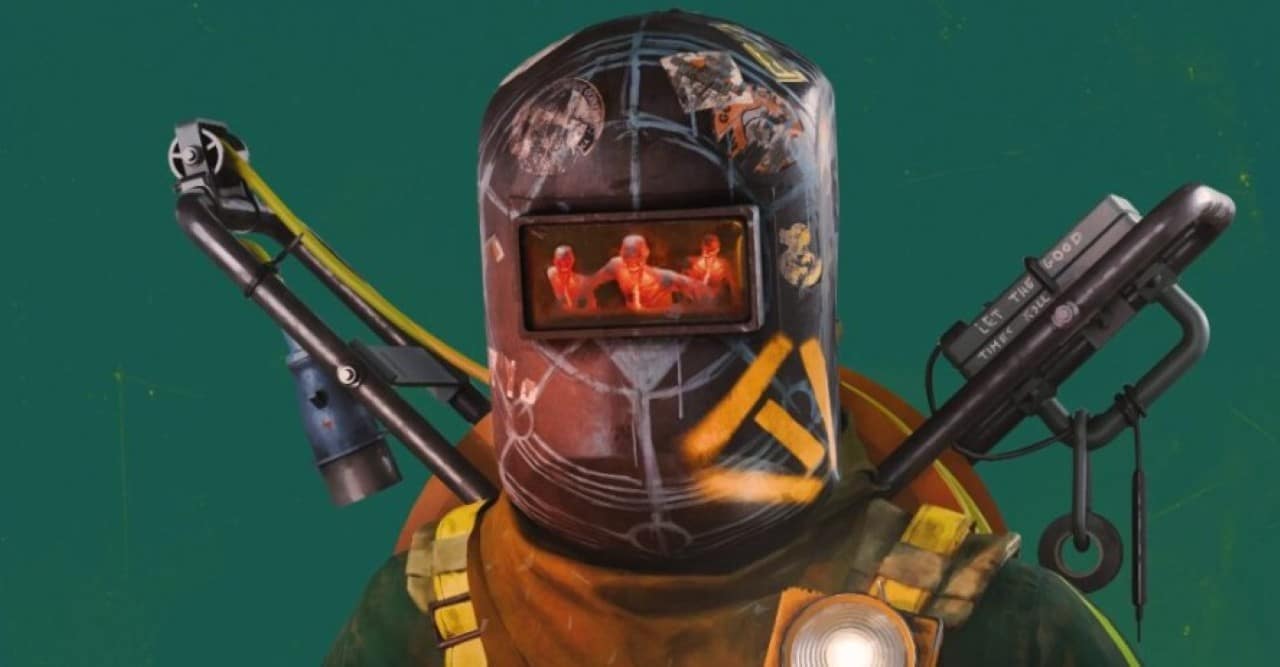
The catalog of affordable options was recently reinforced by FBC: Firebreak, made available at no additional cost to owners of Xbox consoles during a specific promotional period. The work, developed by Remedy Entertainment, moves away from narratives focused on a single player and directs all its efforts towards building a cooperative multiplayer experience.
The title’s setting transports participants back to the universe established by the acclaimed Control franchise, expanding the mythology of the secret government agency known as Departamento Federal from Controle. Squads formed by players are tasked with entering the changing facilities of Casa Mais Antiga to neutralize anomalies and hostile entities.
Progress in missions requires rigorous tactical coordination between team members, who take on the role of specialized agents equipped with modified weaponry. Survival in unpredictable scenarios depends on the group’s ability to combine specific skills to contain supernatural threats and restore order to the government complex.
National production gains prominence with free demonstration
Entertainment software development at Brasil sees significant advancements with the release of Sophie:Starlight Whispers, the inaugural project created by the team at independent studio Youth Gaming. The full version of the interactive adventure reached the main digital computer storefronts with a suggested price of R$49.99.
With the aim of circumventing the public’s financial restrictions and expanding the reach of the work, the developers chose to release an extensive and free demonstration through the Steam platform. Essa strategy allows interested parties to try out the movement and combat mechanics without the need to make an immediate purchase.
The title adopts the classic structure of the metroidvania genre, requiring users to explore a vast, interconnected map, where access to new areas depends on acquiring specific skills. The art direction focuses on detailed graphics in the pixel art style, creating a visual atmosphere that takes us back to the classics of the sixteen-bit era.
The narrative immersion of the Brazilian project is reinforced by the implementation of complete dubbing in the local language, with the participation of recognized professionals in the localization market. Esse investment in audio facilitates understanding of the plot and establishes a more direct connection between the player and the characters spread across the fantasy setting.
Survival competitions maintain industry leadership
The arena survival format, popularly classified as battle royale, maintains its position of dominance in the no-initial-cost entertainment segment. Produções on a global scale, like Apex Legends and Fortnite, brings together a massive base of competitors on a daily basis, operating with integrated servers that allow simultaneous matches between users of computers, desktop consoles and mobile devices.
Retention of this gigantic audience is guaranteed by a strict schedule of seasonal updates that change the geography of the maps and introduce new gameplay dynamics. The constant addition of new characters, balanced weaponry and themed limited-time events ensures that the competitive environment remains fresh, encouraging daily player return without imposing access fees.
Strategy and action options diversify the market
The open-world action RPG segment finds its greatest current representative in Genshin Impact, which offers vast exploration and combat based on elemental reactions with graphic quality comparable to paid productions. The system delivers hundreds of hours of narrative content and complex puzzles completely free of charge, allowing the formation of online groups to overcome challenges in specific domains.
For audiences looking for intellectual challenges and a rhythmic rhythm, automatic combat simulators and digital card games emerge as solid alternatives. Obras, like Teamfight Tactics and
Monitoring of virtual stores guarantees expansion of libraries
Building a diverse and cost-free digital collection requires the consumer to establish a routine for monitoring the main software distribution platforms. Vitrines like Epic Games Store, Steam, PlayStation



