

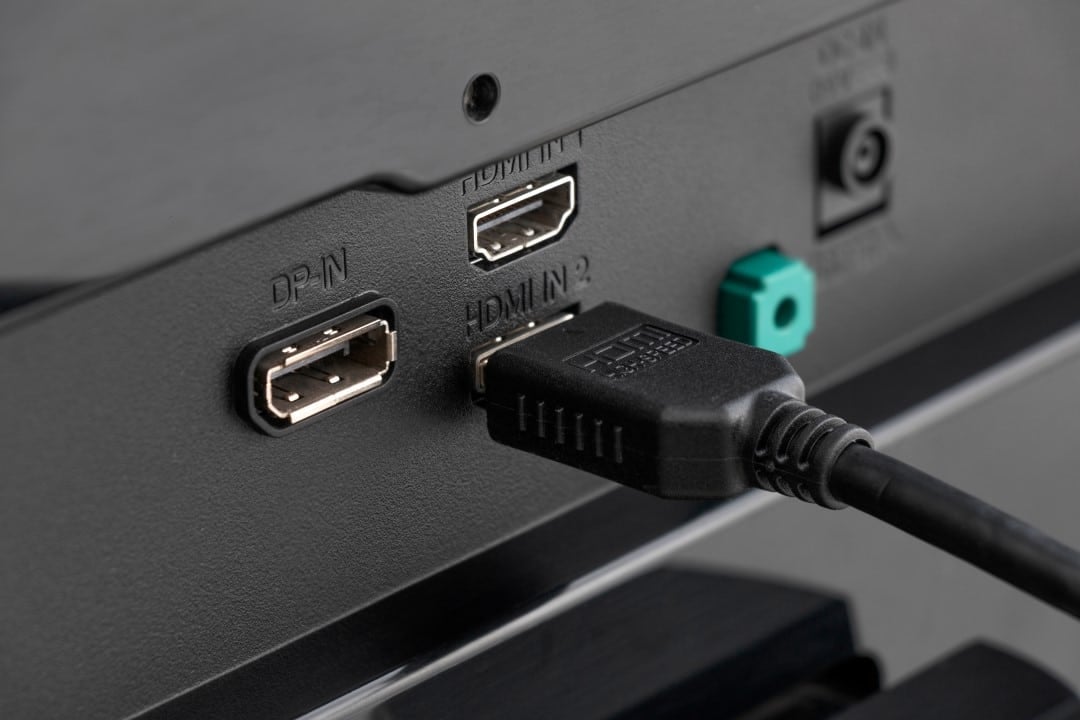
Consumers purchasing high-resolution monitors and televisions to take advantage of the full potential of next-generation consoles and streaming devices often run into an unexpected technical hurdle. Devices leave the assembly lines with bandwidth restrictions activated by default on the connection ports. Essa compatibility measure adopted by manufacturers prevents the display of advanced features, such as high frame rate and superior dynamic range, frustrating the immediate visual experience after installation. The technical barrier requires direct intervention in the screen’s operating system menus to release the full capacity of the equipment and guarantee the graphical fidelity designed by the developers.
Technical reasons for factory restriction
Manufacturers’ decision to limit the capacity of input ports is based on the need to ensure compatibility with older devices. Equipamentos legacy devices, such as media players manufactured more than a decade ago or set-top boxes from traditional carriers, experience communication failures when receiving high-speed signals designed for current technology.
When an older device is connected to a port operating at full capacity, timing errors occur that result in black screens, no audio, or constant image flickering. Para To avoid a high volume of returns and calls at customer service centers, the industry chose to establish a conservative factory standard at all physical entrances.
Direct impacts on the graphical experience
Maintaining compatibility mode results in significant losses in visual fidelity and performance of modern applications. The restriction directly affects color depth, preventing reproduction of the ten-bit standard required for realistic, detailed dynamic range in high-contrast scenes.
Among the main problems reported by users who maintain the original configuration, the following stand out: – Drastic Redução in the palette of colors available on the screen; – Textos and blurry menus due to video signal compression; – Bloqueio refresh rate of one hundred and twenty frames per second; – Aumento in response delay to control commands.
Forcefully downgrading the signal to a compressed format degrades fine visual elements on the screen. In competitive environments, the lack of a high refresh rate and increased latency compromise the precision of movements and reaction time, nullifying the advantages of cutting-edge hardware.
Nomenclatures used by the main brands on the market
Each manufacturer adopts its own terminology for the function that frees up the total bandwidth of the connections. Essa Lack of industry standardization confuses television owners during the initial setup process for video game consoles and media players.
On devices from the South Korean brand equipped with the Tizen operating system, the functionality is generally called expanded input signal or ultra high definition colors. The user needs to navigate through the external device management options to find the activation key corresponding to the port used.
Another large Asian manufacturer, using its proprietary platform, usually classifies the feature as deep colors in ultra high definition. Activation requires access to the advanced picture settings panel, where the owner must individually select which inputs will receive the enhanced signal.
A third traditional brand integrates tuning into its televisions under the Enhanced Format nomenclature. The operating system requires the consumer to change the port status from standard to enhanced, thus allowing the data pass-through required for high resolutions and uncompressed color processing.
The importance of physical cable infrastructure
Changing settings in the television software solves only part of the technical bottleneck, making it imperative to use adequate cabling to support intense information traffic. Cabos old or poor physical quality fail when trying to transmit the volume of data generated by high spatial resolutions combined with deep color processing. Communication between the console and the screen requires an interference-free expressway, where the integrity of the digital signal must be maintained from the source to the final destination, without loss of data packets.
To ensure seamless operation of advanced features, industry standards establish strict transfer speed requirements. The previous generation connection protocol requires cables certified for eighteen gigabits per second, while the latest protocol, necessary for maximum fluidity in modern games, requires cables capable of traveling forty-eight gigabits per second. The use of non-certified wires results in abrupt image interruptions, failures in signal recognition by the monitor and general degradation of the stability of the entertainment system.
Security and device management procedures
The transition process from restricted mode to high capacity mode requires caution in managing the physical connections on the equipment’s rear panel. Especialistas recommend that changing software settings be performed only on specific ports where modern consoles or advanced media players are connected, keeping the other entries in compatibility mode. Essa technical segregation prevents systemic instabilities if old devices are accidentally connected to ports configured for high speed. Além Additionally, activating the broadband feature often forces the television to restart the communications protocol, causing a brief black screen that confirms the application of the new image processing guidelines. Careful cable organization and correct identification of each input facilitates long-term maintenance of the ecosystem, ensuring that each device operates within its ideal hardware limits without compromising the overall stability of the network of interconnected devices.
Evolution of data transmission protocols
The ongoing transition to increasingly dense media formats puts pressure on the development of new digital communication standards. The technology industry works to mitigate these initial bottlenecks by seeking automated solutions that identify the capacity of the connected device and adjust bandwidth without the need for manual consumer intervention in internal settings.
Consequences of incorrect color processing
Forced compression of the video signal drastically affects the way graphics are rendered on the screen. The phenomenon known as subsampling reduces the amount of color information sent to adjacent blocks of pixels, saving transmission space at the expense of visual accuracy and geometric sharpness.
In advanced processing environments with text-rich interfaces, this loss of color data creates jagged edges and visual artifacts around letters and icons. Restoring full bandwidth eliminates this compression, delivering a clean image that respects the original intent of content creators and software developers.



