

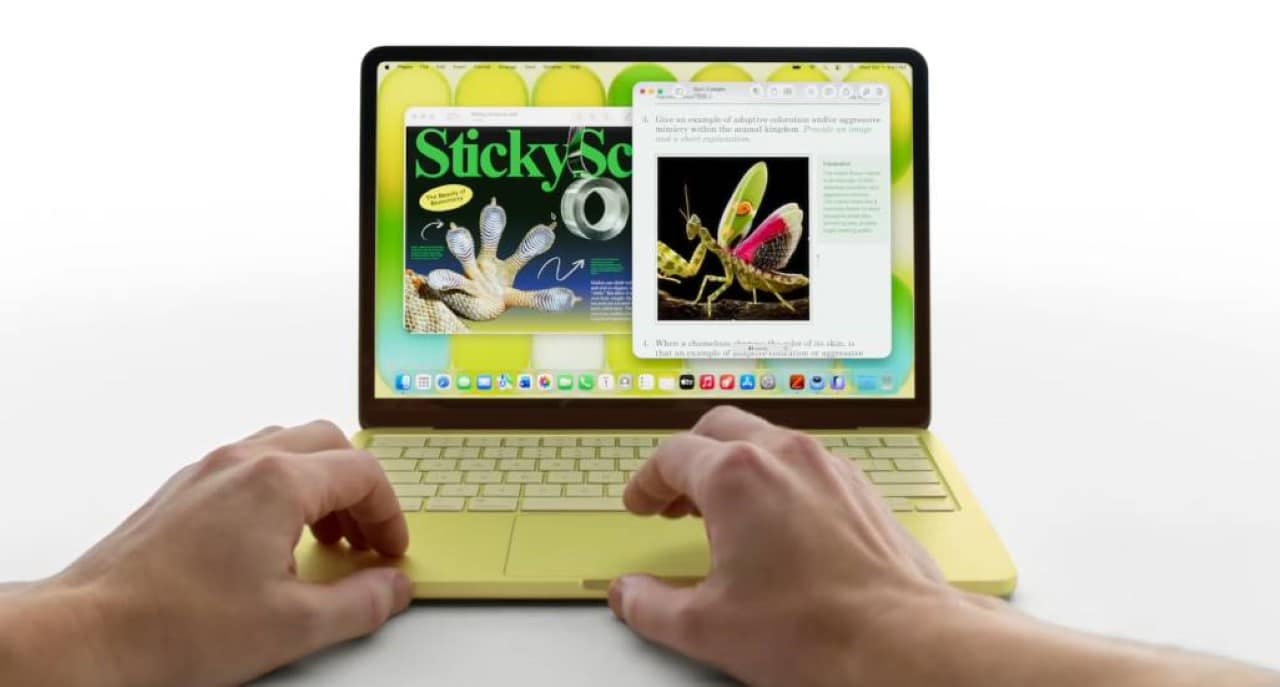
The North American technology manufacturer recently made its newest entry-level notebook computer available on the international market, priced from five hundred and ninety-nine dollars. The equipment, developed specifically for everyday tasks and equipped with the brand’s latest generation proprietary processor, underwent a detailed physical analysis carried out by electronics maintenance specialists located at Austrália. The technical procedure for opening the chassis highlighted a significant change in the company’s construction philosophy, revealing internal access largely facilitated by the almost total absence of adhesive tapes or industrial glues that traditionally held the components to the aluminum structure.
The mobile device subverts the assembly logic adopted by the industry over the last decade, prioritizing mechanical fixation over permanent chemical solutions. The discovery generated immediate repercussions among information technology professionals and defenders of the right to repair, as the new internal architecture drastically reduces the technical barrier necessary to replace parts worn out due to continuous use.
Visual documentation of the disassembly process confirmed that the company redesigned critical components to operate independently. Essa engineering approach not only lowers the cost of spare parts on the parallel and official market, but also reduces the bench time required for diagnoses and physical repairs in technical assistance centers around the world.
Internal architecture abandons history of industrial adhesives
For years, the assembly of the brand’s portable computers was characterized by the extensive use of high-holding adhesive substances, designed to maintain the thin profile of the devices. Essa manufacturing practice required technicians to apply tightly controlled heat and use specific chemical solvents to separate parts during any physical repair procedure, increasing the risk of collateral damage to adjacent circuits.
The new model changes this paradigm by adopting a mechanical fixation system based entirely on type Torx screws. The deliberate choice of T3, T5 and T8 standards allows independent repair shops to use common precision wrenches, eliminating the need for complex proprietary tools that severely limited access to internal hardware in previous generations of computers in the same line.
Port modularity reduces technical maintenance costs
The device’s internal architecture features a high degree of separation between peripheral components and the main board. Elementos from frequent mechanical wear, as the USB-C connection ports used for charging and data transfer, in addition to the analog input for headphones, operate completely independently of the central logic circuit.
This modular configuration ensures that a physical failure in a specific connector does not require costly replacement of the entire motherboard. Maintenance professionals are able to isolate and disconnect only the defective part, reducing the financial cost of replacement parts and optimizing the workflow necessary to complete the repair service in assistance.
The routing of flat communication cables also underwent a thorough engineering review, featuring an organized layout that avoids unnecessary overlaps within the chassis. The visual and physical organization of the internal wires prevents accidental damage, such as breaks or excessive bends, during the routine process of assembling and disassembling electronic equipment.
Independent keyboard system meets long-standing user demand
One of the biggest advances documented in the physical analysis concerns the keyboard fixing system, a historically problematic component in previous generations of the manufacturer’s computers. In past models, replacing a single faulty key or a damaged actuation mechanism often required replacing the entire top cover of the metal chassis.
This unique piece of the past encompassed the aluminum structure, the navigation trackpad and, in many cases, the battery itself that was glued in from the factory. The official instruction manual provided by the company now details a technical procedure in which the keyboard can be removed and replaced completely isolated from the rest of the housing.
The new typing interface is secured by a series of easy-to-access screws, allowing technology professionals to perform a complete component change in just a few minutes. Removal simply requires disconnecting a main ribbon cable and removing the security latches around the perimeter of the keyboard.
This structural change meets a long-standing demand from corporate users and independent technicians, who criticized the high financial cost associated with simple repairs. The change represents a direct adaptation to the needs of educational and business environments, where equipment suffers continuous use, accidental liquid spills and accelerated mechanical wear.
Battery fixation with screws eliminates thermal risks
The notebook’s power supply module features one of the most praised modifications by hardware experts during disassembly. The battery, designed to provide up to sixteen hours of autonomy in typical browsing and text editing use, is attached to the aluminum casing using eighteen standardized screws, completely abandoning the use of elastic release straps or puddles of industrial glue, which means that the power cell is removed immediately after removing the metal safety locks.
The ease of extracting the battery drastically reduces the risk of accidental puncture or chemical fire during maintenance, serious accidents that can occur when technicians try to pry away power cells that are tightly bonded to metal. Como battery chemical degradation is a natural and inevitable process in any rechargeable electronic device, simplifying this specific exchange extends the overall useful life of the equipment and reduces the volume of electronic waste generated by the premature disposal of entire machines that still have adequate processing capacity.
Compact mainboard reflects mobile processor efficiency
The computer’s processing center occupies a significantly reduced area within the thirteen-inch chassis, reflecting advances in semiconductor miniaturization. The motherboard houses the A18 Pro chip, the same high-energy efficiency silicon used in the North American manufacturer’s latest cell phones. The miniaturization of logic circuits leaves ample internal space, which directly contributes to passive heat dissipation and facilitates tool handling during opening, eliminating the need for noisy mechanical fans. Apesar ease of physical access to peripherals, the equipment maintains the industrial practice of soldering fundamental components directly to the main board. The random access memory and solid-state storage module do not have modular expansion slots. Essa restrictive hardware feature prevents owners from making future upgrades to storage capacity or processing speed, requiring that the configuration chosen at the time of purchase remains unchanged throughout the product’s useful life, which requires rigorous prior planning on the part of buyers.
Focus on education sector drives engineering choices
The development of the portable computer with a strategic focus on educational institutions dictated a large part of the engineering decisions applied to the external and internal chassis. The machined aluminum construction offers considerably greater mechanical resistance than the injected plastics used in competing equipment in the same price range, while the modular internal architecture allows the technology departments of schools and universities to carry out routine maintenance in their laboratories, without the logistical need to ship defective machines to distant authorized repair centers.
Technical specifications balance performance and everyday durability
The equipment arrives on the retail market equipped with eight gigabytes of unified memory in its base version, an amount that works together with the main processor to manage multiple simultaneous tasks and execute artificial intelligence resources processed locally, without depending on cloud servers. The thirteen-inch Liquid Retina technology screen provides the color accuracy and visual quality necessary for prolonged reading, editing complex documents and media consumption, technical characteristics required by both university students and professionals working remotely or hybridly.
The manufacturer offers the product in a palette of vibrant and updated colors, including officially cataloged options such as blush, indigo, silver and citrus. The anodized metal exterior finish maintains the brand’s premium visual standard, combining the widely recognizable aesthetics of the computer line with the new and praised philosophy of internal repairability. The strategic union between a more affordable initial price, improved physical durability against daily impacts and the extreme simplification of repair processes positions the device as a long-lasting tool, redefining expectations for the entry-level personal technology market.



