

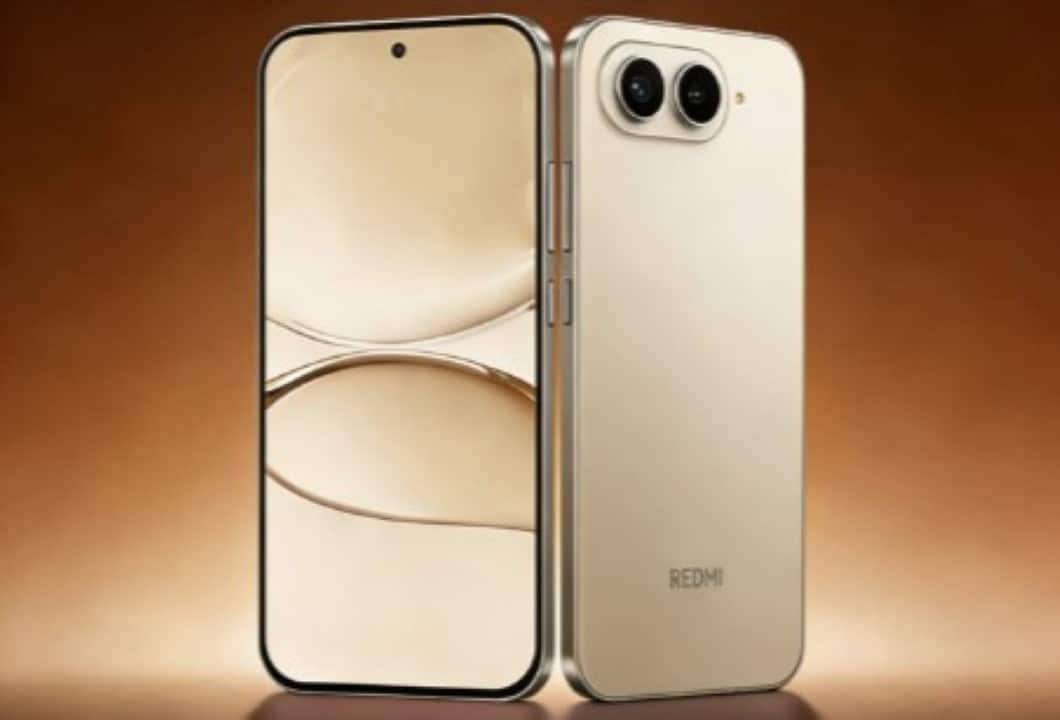
The mobile devices subsidiary of the Chinese technology giant confirmed the launch of its new generation of smartphones focused on the advanced mid-range segment. The official announcement details the arrival of two key variants designed to redefine hardware standards in international e-retail. The company’s engineers developed an internal architecture capable of accommodating extremely high-performance components, maintaining an ergonomic design and reduced thickness for daily use.
The great difference of this new family of cell phones lies in the implementation of unprecedented energy storage and data processing technologies. The commercial strategy focuses on meeting the rigorous demands of consumers who require high performance for electronic games and productivity applications. The expectation of the telecommunications sector is that the new models will establish a higher level of cost-benefit in global mobile telephony.
The operating system chosen to manage the entire new set of hardware is HyperOS 3, developed based on the Android 16 architecture. Esta software integration ensures a fluid browsing interface and ensures the receipt of continuous security packages. Optimizing the source code acts directly on managing the energy consumption of new processors integrated into devices.
Value structure and availability in international retail
The global distribution schedule foresees the devices arriving on virtual and physical shelves from the end of the first quarter. The brand’s aggressive pricing policy was maintained, positioning the devices competitively against direct competitors from other Asian manufacturers. The base model in the line has a suggested starting price of 399 euros in the European market.
In direct conversion to national currency, without the application of import taxes or local customs fees, this amount represents approximately R$2,425. The most advanced variant in the portfolio requires a slightly higher investment, justified by the substantial improvements in battery and graphics processing capacity.
- Entry-level version: The standard model delivers high memory and storage capacity at an affordable price for the category.
- Premium version: The most advanced model, configured with 12 GB of RAM and 512 GB of internal space, has a starting price of 529 euros.
- Direct conversion: The value of the most expensive model reaches around R$3,215 at the current exchange rate, disregarding national taxes.
- Visual options: Colors available at the time of purchase include black, white and a special titanium finish.
Processing architecture and thermal performance
The processing core of the most advanced model is powered by the MediaTek Dimensity 9500 chip, a newly announced platform that focuses on energy efficiency and raw computing power. Este processor works in conjunction with the Immortalis-G925 MC12 graphics processing unit, designed specifically for rendering complex three-dimensional scenes. The hardware combination ensures frame rate stability in high-resolution games, preventing sudden performance drops during prolonged intensive use sessions.
The standard version of the line does not present a significant difference in relation to the superior model, housing the Dimensity 8500 Ambos cell phones use the LPDDR5x Ultra RAM memory standard to speed up the transition between simultaneous tasks, ensuring that dozens of applications remain open in the background without crashes.
Innovation in energy storage and recharging
The most significant innovation of the new generation is found in the battery module, which adopts silicon-carbon anode technology in its chemical composition. Esta structural change allows the storage of a substantially greater amount of energy in a reduced physical space.
The most robust model breaks category records by integrating a power cell with a total capacity of 8500 mAh. The standard device in the series also has impressive numbers, housing a 6500 mAh battery that guarantees long periods of continuous use without the need for recharging.
The thickness of the devices remains controlled despite the increase in energy capacity, measuring 8.2 millimeters in the superior version and 8.38 millimeters in the entry-level version. The weight of smartphones varies between 201 and 218 grams, maintaining ergonomics during prolonged handling.
The power replacement system supports 100W ultra-fast charging technology through a wired connection, with the plug adapter included in the original factory packaging. The devices also support wireless charging with power up to 27W and reverse charging functionality for smaller accessories.
Visual display panel specifications
The smartphones’ visual interaction interface is built on high-resolution AMOLED technology panels, optimized for faithful color reproduction and deep contrasts. The larger device sports a 6.83-inch screen, delivering an exact resolution of 2772 x 1280 pixels. The display refresh rate reaches 120 Hz, ensuring the fluidity necessary for browsing social networks and executing dynamic media.
The panel’s peak brightness reaches 2000 nits, a technical specification that ensures perfect legibility of the information displayed even under direct sunlight. The entry-level model in the series has slightly smaller dimensions, with a 6.59-inch screen and a resolution of 2756 x 1268 pixels, maintaining the same refresh rate to standardize the user experience.
The physical integrity of the front panel is protected by the application of Corning Gorilla Glass 7i tempered glass, developed to resist deep scratches and accidental impacts. Users’ eye health has received special attention through the implementation of 3840Hz PWM dimming technology on both displays, minimizing visual fatigue during nighttime reading.
Photoset and video capture settings
The image capture system has been restructured to meet the demands of contemporary mobile photography, using high-resolution sensors equipped with native optical image stabilization. The most advanced smartphone in the range employs the 50-megapixel Omnivision Light Fusion 600 sensor as its main lens, characterized by a focal aperture of f/1.50, which maximizes the capture of ambient light for detailed night photography. The standard version adopts the Sony IMX882 sensor, also with 50 megapixels of resolution and optical stabilization, operating with an aperture of f/1.59. The rear optical array of both devices is complemented by an 8-megapixel ultra-wide-angle lens with f/2.2 aperture, designed specifically for capturing wide landscapes. The front camera houses a 20 megapixel sensor dedicated to recording self-portraits and making video calls in high definition. Image processing software integrates artificial intelligence algorithms for automatic scene detection, adjusting color and exposure parameters in real time, while video recording reaches 4K resolution with hybrid stabilization.
Biometric connectivity and security standards
The wireless connectivity infrastructure incorporates the latest protocols approved by international regulatory agencies, offering native support for the Wi-Fi 7E standard for superior data transfer rates and lower latency. Communication with nearby peripherals is managed by the Bluetooth 5.4 module, which establishes simultaneous connections with multiple accessories while maintaining low power consumption. The traditional infrared ray emitter was kept on the top edge of the chassis, allowing the cell phone to act as a universal remote control. Data protection is guaranteed by a fingerprint reader positioned under the AMOLED screen and three-dimensional facial recognition.
System integration and daily usability
The virtual environment introduces tools focused on multitasking productivity, such as running applications in resizable floating windows. The interface allows deep customization of system icons, menus and animations, adapting the layout to individual preferences.
Intelligent memory management suspends inactive background processes to direct processing power to applications in active use. The introduction of batteries with a silicon-carbon anode represents a milestone in the manufacturer’s engineering, solving the historical dilemma between energy autonomy and fine design in the mobile technology market.



