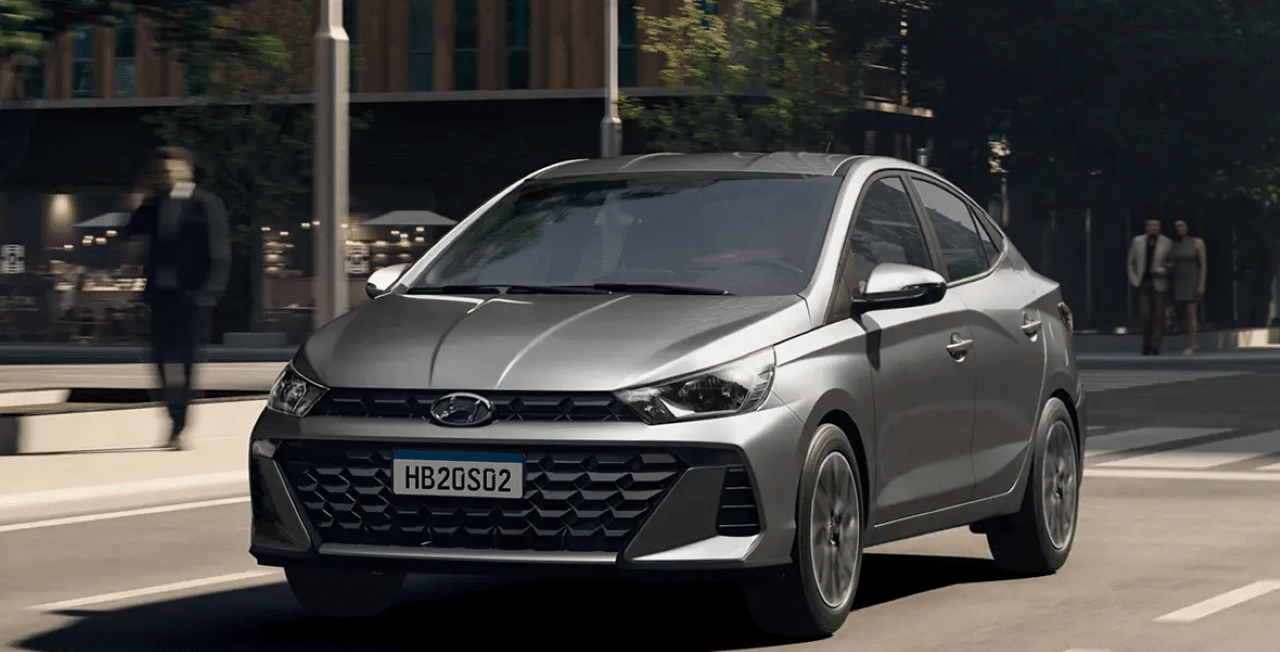
The Brazilian automotive retail scenario presented a significant turnaround at the beginning of March 2026, redefining the positions of the best-selling vehicles. Após a February of undisputed leadership, BYD Dolphin Mini recorded a notable drop, leaving the podium in direct-to-consumer sales. Enquanto That said, the Hyundai HB20 enjoyed a surprising rise, starting from ninth place to reach second place in the partial ranking.
This unexpected movement reconfigured the market dynamics, placing the Volkswagen Polo in the first provisional position and bringing established models back to the center of the disputes. The rapid change in consumer preferences and sales strategies shows the volatility and intense competitiveness of the sector. The data reflects a snapshot in time, but indicates important trends that deserve attention.
The performance of each model at the beginning of March defies the expectations generated by the previous month’s closing. Tal Instability signals a period of adaptation and agile response on the part of automakers, seeking to maintain or gain space in a constantly changing market. With each new partial, strategies are reevaluated to serve an increasingly diverse audience.
Changes in the automotive sales ranking
The first days of March 2026 were marked by a redefinition of positions in the ranking of passenger cars most sold directly to the end consumer. Segundo partial surveys, the Volkswagen Polo took the lead, consolidating itself as the preferred model of buyers in this initial period of the month. With 4,417 units registered, the German automaker’s hatch came out on top.
Following this March session, the Hyundai HB20 recorded an impressive performance, reaching 3,860 registrations and securing second position. Esta significant rise put him ahead of several competitors, many of which had stood out in the previous month. The reorganization of the top of the list demonstrates the agility with which the market can react to various factors.
BYD Dolphin Mini performance
The BYD Dolphin Mini, which ended February 2026 in first place in retail sales, had a drastic change in its performance in March. The electric model, which had licensed 4,810 units that month, fell to eighth place in the first eleven days of March, registering 2,709 units. Esta change represents a significant loss of space in the short period.
Despite the recent drop, the Dolphin Mini had demonstrated strength in the year to date, leading January and February among passenger cars sold directly to consumers, with a total of 7,606 units. Sua performance in February, surpassing consolidated models such as the Volkswagen Tera and Hyundai Creta, signaled an advance in electric vehicles in the Brazilian market. The swing in March, however, highlights the challenging nature of maintaining a lead in automotive retail.
The start of the Hyundai HB20
The Hyundai HB20 showed a movement opposite to that of the Dolphin Mini, showing a notable boost in the March sales ranking. In February, the Korean automaker’s hatch occupied ninth position, with 2,559 units licensed in retail, far from the leaders of that month. Sua performance then reflected a phase of lesser protagonism on the national scene.
However, in March, the HB20 reversed the trend and jumped to second place, with an impressive 3,860 registrations up to the 11th. The change in level is an indication of Hyundai’s ability to adapt and the public’s lasting preference.
This significant rise of the HB20 in the March partial ranking highlights a notable recovery in relation to the previous month, when the car was behind important competitors such as the Dolphin Mini itself, the Tera, the Creta, as well as models such as the Song, Tracker and Polo. The ability to react quickly and gain positions consolidates the HB20 as one of the pillars of the Brazilian automotive market.
The reconfiguration of the top 10
The comparative analysis between the end of February and the end of March 2026 reveals a complete reconfiguration of the ranking of the best-selling cars in retail. Enquanto the top 3 of February was made up of the BYD Dolphin Mini, Volkswagen Tera and Hyundai Creta, the scenario changed radically in the first eleven days of March, with the
Essa change was not limited to just the first places; Hyundai Creta, who was on the podium in February, dropped to seventh place, and Dolphin Mini, the previous leader, dropped to eighth place. Além In addition, the March partial marked the entry of other models into the best-selling group, such as the Fiat Mobi, the Volkswagen T-Cross and the Fiat Argo, which did not appear in the top three in the previous month. This intense movement indicates a more dispersed sales distribution and fierce competition in different segments of the light vehicle market, with emphasis on the rise of hatchbacks and compacts.
Differences between monthly and partial data
For an accurate understanding of automotive retail numbers, it is crucial to distinguish between data for a full month and partial surveys. BYD’s lead Dolphin Mini, widely reported in February, corresponded to that month’s total sales. Já the rise of Volkswagen Polo and Hyundai HB20, as well as the subsequent fall of
This differentiation is essential to avoid distorted comparisons between periods with different natures. A month ended offers a consolidated view, while a partial one in progress reflects a trend that can still be changed. Contudo, even though it was a limited cut, the March partial already signaled a relevant change in the order of best-selling cars, with a scenario quite different from that observed just a few weeks earlier.
Implications for the market and consumers
The intense movement in the automotive sales ranking suggests a growing market sensitivity to news and promotional offers from automakers. Para consumers, this dynamic can translate into a scenario of greater competitiveness, with more options and possibly more advantageous conditions. The agility in the brands’ response becomes a differentiator.
Other featured and trending models
In addition to the protagonists of this turnaround, other models also demonstrated relevant performances at the beginning of March. Volkswagen Tera remained in the top three, consolidating its presence at the top of retail. Modelos like Fiat Mobi, Volkswagen T-Cross and Fiat Argo, which did not appear in prominent positions in February, emerged in the March partial, showing the strength of more accessible and versatile vehicles.
The return of these compacts and hatchbacks to the spotlight highlights a possible consumer preference for segments that balance cost and benefit, especially in an economic context that demands more rational choices. The variety of options in the top 10, with the presence of electric and combustion models, reflects the complexity and diversity of the national automotive market.
The competition for each position in the sales ranking remains intense, with automakers investing in differentiators to attract and retain their customers. The rapid alternation between leaders is a thermometer of competition and the brands’ ability to innovate and adapt to public demands. The light vehicle market continues to be one of the most active and strategic in the economy.
Retail overview at the beginning of the year
The comparison between the February closings and the partial data from March 2026 clearly indicates an automotive retail sector in effervescence, where leadership positions are fluid and disputed in each period. The fall of the BYD Dolphin Mini from leadership to eighth place and the remarkable rise of the Hyundai HB20 to second place, behind only the
Esses movements confirm that the Brazilian vehicle market remains in constant transformation, driven by a combination of factors such as launches, financing conditions, and ever-changing consumer preferences. The agility of manufacturers in adjusting their sales and marketing strategies is essential to navigate this dynamic environment and ensure continued relevance for their models on the national scene.