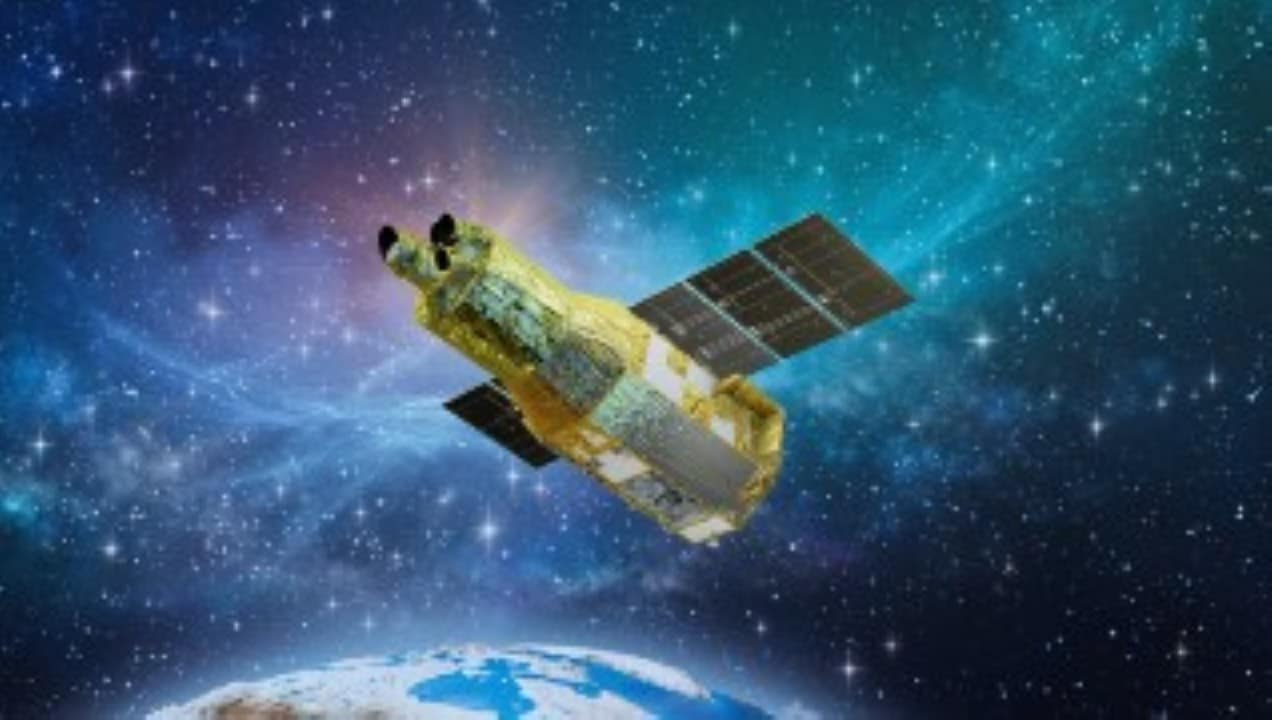
Startup Starcloud has taken a significant step forward by submitting a formal application to Comissão Federal from Comunicações (FCC) of Estados Unidos, seeking approval for an ambitious constellation of up to 88,000 satellites. Esta initiative aims to establish the largest space data center in history, operating from low Earth orbit. The project is designed to meet the growing demand for computing power, especially for artificial intelligence (AI) applications and other data-intensive technologies.
The movement of Starcloud reflects a growing belief in the technology sector: traditional ground-based data centers are facing considerable challenges in keeping up with the exponential growth rate of AI and applications that require massive data processing. The company’s proposal suggests that the space solution can offer a more scalable and cost-efficient data infrastructure, bypassing the physical and energy limitations imposed by the construction and maintenance of large facilities on land.
Starcloud’s vision for the future of decentralized computing in space offers a robust and innovative alternative. With physical space running out and high energy costs becoming barriers to the expansion of conventional data centers, taking processing outside of Terra presents itself as a promising strategy. The ability to operate in an environment with unique advantages is at the heart of this audacious technological endeavor.
The need for computational expansion
The dizzying increase in artificial intelligence and applications that require large volumes of data in Terra has pressured traditional data centers to operate at the limit of their capabilities. Empresas technology companies globally seek solutions to expand processing power without incurring prohibitive costs or depleting natural resources such as water and energy. The search for alternatives has led to the exploration of less conventional environments.
Given this scenario, Starcloud argues that ground data centers are struggling to keep up, either due to a lack of adequate physical space for new construction, or due to the difficulty in ensuring the energy supply necessary for large-scale operations. Terrestrial infrastructure faces intrinsic barriers that limit its growth potential and long-term efficiency, driving innovation beyond planetary boundaries.
Unique advantages of the space environment
Space offers a series of undeniable advantages for installing data centers, overcoming terrestrial limitations. One of the main ones is the almost constant solar energy, available in heliosynchronous orbits, which can be used continuously and abundantly, without the day and night interruptions that affect installations on land. Outro significant benefit is radiative cooling, a passive and highly efficient method for dissipating heat generated by equipment, eliminating the need for large refrigeration systems and massive water consumption. The absence of gravity and vacuum conditions also contribute to a stable operating environment with less mechanical wear, allowing the sizing of systems and power levels that would be unfeasible in the terrestrial environment, in addition to offering an environment naturally isolated from interference and direct physical threats.
Technical details and the issue of security
Starcloud plans to launch its satellites in narrow orbital bands, with altitudes ranging between 600 and 850 kilometers above Terra. The selection of these heliosynchronous orbits is crucial to ensuring a constant supply of solar energy, essential for data processing operations. The company is investing in technologies that maximize the energy efficiency and autonomy of each unit.
Sustainability and safety in space are priority aspects for the project. Starcloud has guaranteed that each satellite will be designed to completely disintegrate upon re-entering the Earth’s atmosphere, a preventive measure to prevent the accumulation of space debris. Este commitment demonstrates a concern for the longevity and viability of space operations.
To mitigate risks, the startup will adopt a rigorous initial testing strategy. Satélites will be launched into lower orbits for performance and safety checks before being raised to their final operational positions. Essa approach allows any eventual failure or malfunction to be identified and corrected, ensuring that faulty satellites can re-enter the atmosphere in a safe and controlled manner.
The interconnection and network architecture of 88,000 satellites will enable distributed and redundant processing capacity. The goal is to create a robust infrastructure that can support intensive workloads, offering cloud computing and AI processing services with low latency to users around the world. The technology used aims to optimize communication between units and with ground stations.
The regulatory path and first results
Submitting a request to Comissão Federal of Comunicações (FCC) is a mandatory critical step for Starcloud. The FCC serves as the primary regulatory agency for communications in the U.S., responsible for licensing satellite operations and ensuring they comply with domestic and international standards. Approval is essential so that the constellation can operate legally, avoiding interference with other networks.
The approval process with the FCC involves a detailed analysis of the technical feasibility of the project, its potential impact on the radio frequency spectrum and the mitigation of space debris risks. Starcloud needs to demonstrate a robust plan for managing its in-orbit operations, including safety measures and a decommissioning schedule that ensures the sustainability of the space environment.
Despite regulatory challenges, Starcloud has already achieved notable practical results. The company launched the Starcloud-1, its first satellite, equipped with an Nvidia H100 processor. Este high-performance hardware is being successfully used to run a version of Gemini’s Gemini artificial intelligence model in space, validating the technological capability and premise of its orbital data center concept.
Future perspectives and the impact of artificial intelligence
The future of Starcloud and similar projects is intrinsically linked to the advancement and growing demand for artificial intelligence. With increasingly complex algorithms and applications that require real-time and large-scale processing, the need for robust computing infrastructure will only increase. Space data centers could become a vital component to sustain this evolution.
The company has already announced plans for the launch of Starcloud-2, scheduled for 2027. Este next satellite promises to incorporate even more advanced technology, capable of supporting operations on an even larger scale, demonstrating the trajectory of innovation and expansion planned by the startup. The ability to process data closer to its origin, or more efficiently globally, could revolutionize many industries.
The presence of data centers in low Earth orbit can accelerate research and development in areas such as machine learning, big data analysis, and even emerging sectors such as quantum computing. By removing terrestrial barriers, Starcloud aims to democratize access to unprecedented processing power, driving the next generation of global technological and scientific innovations.
Expansion and the global technology landscape
Starcloud’s proposal not only challenges computing conventions, but also aligns with a global trend of seeking innovation in high-tech sectors. Investment in space infrastructure for commercial purposes represents a new chapter in the technology race, where data processing capacity in space could become a crucial competitive differentiator. Tal undertaking requires vast capital and expertise.