
Weather service confirms meteor as origin of mysterious boom in Cleveland

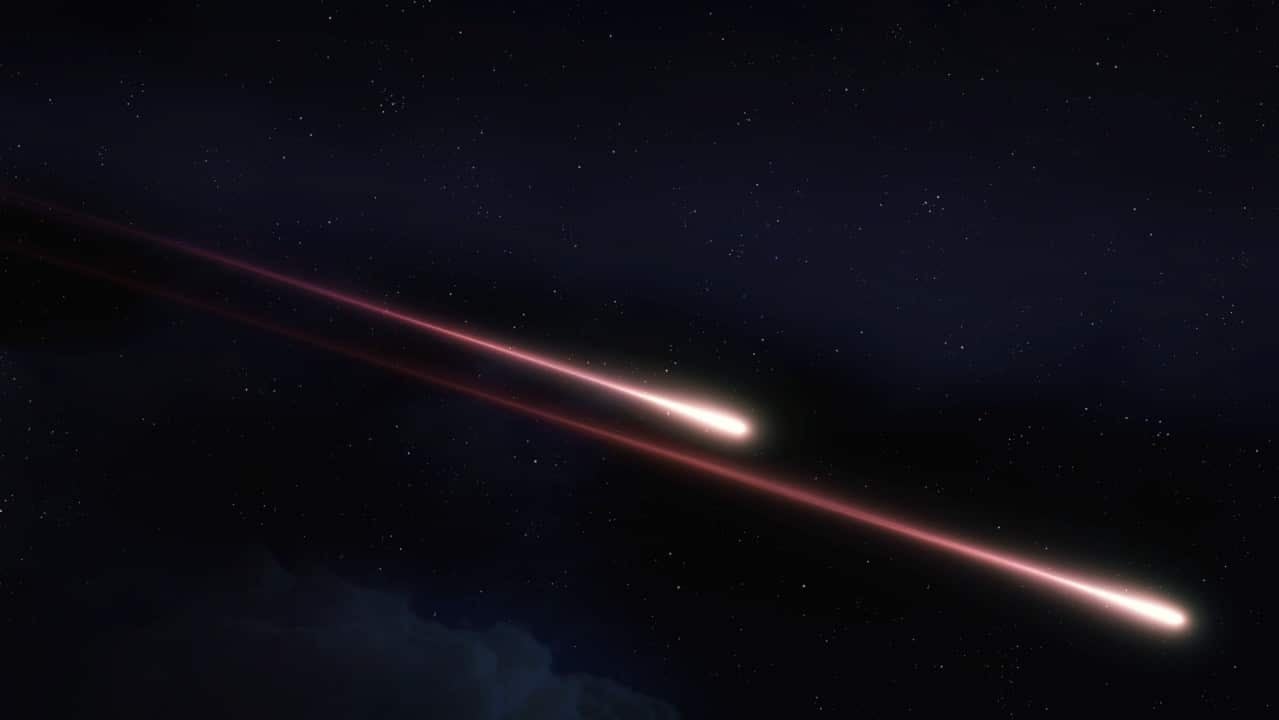
A loud bang shook the region of Cleveland, in the Estados Unidos, generating apprehension among residents. The cause of the unusual sound, which spread over vast areas and caused homes to shake, was later identified.
Serviço Nacional of Meteorologia (NWS) clarified on Tuesday that the phenomenon was “probably the result of a meteor.” The information brought relief to many who feared it was an explosion or other dangerous event, given the impact felt.
The characteristic sound of the bang was heard not only in Cleveland, but also in distant locations such as Nova York, demonstrating the magnitude of the event. Relatos of residents indicated that the tremor in their homes was quite significant.
Confirmation of the space phenomenon
The official confirmation of Serviço Nacional from Meteorologia brought clarity to an event that initially generated much speculation. The bang, described by witnesses as powerful, echoed for kilometers, causing immediate concern in several communities. The harmless nature of the occurrence helped dispel the initial fear.
Quick analysis and outreach by the NWS was crucial to calming the population. Muitos residents had expressed great fear on social media and in interviews with local media, where the scenario of a possible explosion was the main hypothesis raised.
The technology behind detection
The identification of the meteor was possible thanks to advanced instruments such as the geostationary ray mapper (GLM). Este device, essential for atmospheric monitoring, is capable of detecting rapid flashes of light. Embora its primary function is to map continuous atmospheric discharges, it also has the ability to identify celestial phenomena.
The Administração Nacional Oceânica and Atmosférica (NOAA) describes the GLM as a tool that continuously monitors bright flashes in the atmosphere, which can be either lightning or other luminous events. Meteoros, upon entering the atmosphere, produce intense and bright flashes, very similar to lightning, which allows them to be captured by the GLM.
Serviço Nacional of Meteorologia released an image captured by the instrument, which showed a green flash over the area of Cleveland, solidifying the meteor theory. The accuracy of this equipment is vital for understanding and explaining atmospheric events.
The impact on the community and reports
The impact of the crash was notable, with testimonies from residents who described the event as something they had never experienced before. The sensation that the entire house was shaking caused widespread fright, leading many to search for information about what could have happened.
The initial uncertainty sparked a wave of communication on social platforms and news outlets, where people shared their experiences and sought answers. Esse type of event, although of natural origin, demonstrates how celestial phenomena can generate intense reactions at the terrestrial level.
Concern for public safety is always the first reaction to unexplained sounds and tremors, which highlights the importance of rapid response from authorities. Misinformation in such scenarios can easily lead to panic, making clarity in communications essential. The mobilization of the community in search of explanations is a reflection of the human instinct to understand and react to unusual events that affect their environment.
Unraveling the celestial sound barrier
Meteorologist Jeff Tanchak, from WOIO, explained that the boom was a sonic boom, caused by the meteor breaking the sound barrier in its atmospheric trajectory. Este phenomenon occurs when an object travels faster than the speed of sound, generating shock waves that manifest as an explosive sound.
Although the exact moment the celestial object entered Earth’s atmosphere is still not completely clear, the sonic boom explanation is consistent with the nature of fast-moving meteors. Friction with the air and high speed create conditions for these waves to be generated, reaching the ground with intensity.
Surveillance of celestial objects
Incidentes and Cleveland highlight the importance of continuous surveillance of space and the Earth’s atmosphere by various scientific and governmental organizations. Instituições like NOAA, the NWS and Sociedade Americana of Meteoros (AMS) play crucial roles in monitoring celestial objects, detecting atmospheric phenomena and disseminating accurate information to the public. Eles collect data, analyze patterns, and investigate reported sightings to deepen our understanding of the universe and ensure safety. Transparent, evidence-based communication is critical to avoiding speculation and unfounded fears, allowing science to answer complex questions in an accessible way.
The recent history of sightings on Ohio
Não is the first time that celestial objects have attracted attention in the skies of Ohio. Nas weeks before the crash in Cleveland, the region recorded other sightings. In mid-February, a meteor was captured by a doorbell camera around 11:30 p.m., according to CBS affiliate WNBS.
Shortly afterwards, on March 15, another fireball was recorded on cameras, confirming meteoric activity in the area. Esses events demonstrate that the passage of meteors is a relatively common phenomenon, although not all of them generate such a noticeable bang.
Safety procedures and future observations
Quando deals with phenomena such as meteor strikes, it is important to reiterate that most events are harmless and occur far from populated areas. The Earth’s atmosphere acts as a protective shield, disintegrating most objects before they reach the ground. In rare cases of meteorites reaching the surface, government agencies and research institutions work to locate and study these fragments, contributing to the advancement of planetary science.
The continuous observation and study of these phenomena is crucial to understanding the composition of our solar system and atmospheric processes. Technological advances, such as the use of lightning mappers, allow for more effective detection and faster response to occurrences, offering the population explanations based on scientific data.
The science of meteoroids and the Earth’s atmosphere
Meteors are fragments of rock or metal that break off from asteroids or comets and enter the Earth’s atmosphere at high speed. Antes after entering the atmosphere, these bodies are called meteoroids. Upon reaching the atmosphere, the intense friction with the air causes extreme heating, causing them to glow and disintegrate, creating the luminous trail we know as a “shooting star”. The boom sound, like the one heard in Cleveland, occurs when a particularly large and fast-moving meteor passes through the atmosphere, generating a sonic boom. Most burn up completely, but the largest can leave fragments that, if they reach the ground, are called meteorites, providing scientists with valuable clues about the formation and evolution of our solar system.
The event on Cleveland serves as a vivid reminder of the constant interaction between our planet and the surrounding space. The ability to quickly identify and explain these phenomena is a testament to the sophistication of modern science and the dedication of meteorologists. Enquanto to Sociedade Americana from Meteoros has not yet released details about the specific sighting, attention remains on the analysis of these celestial bodies.



