

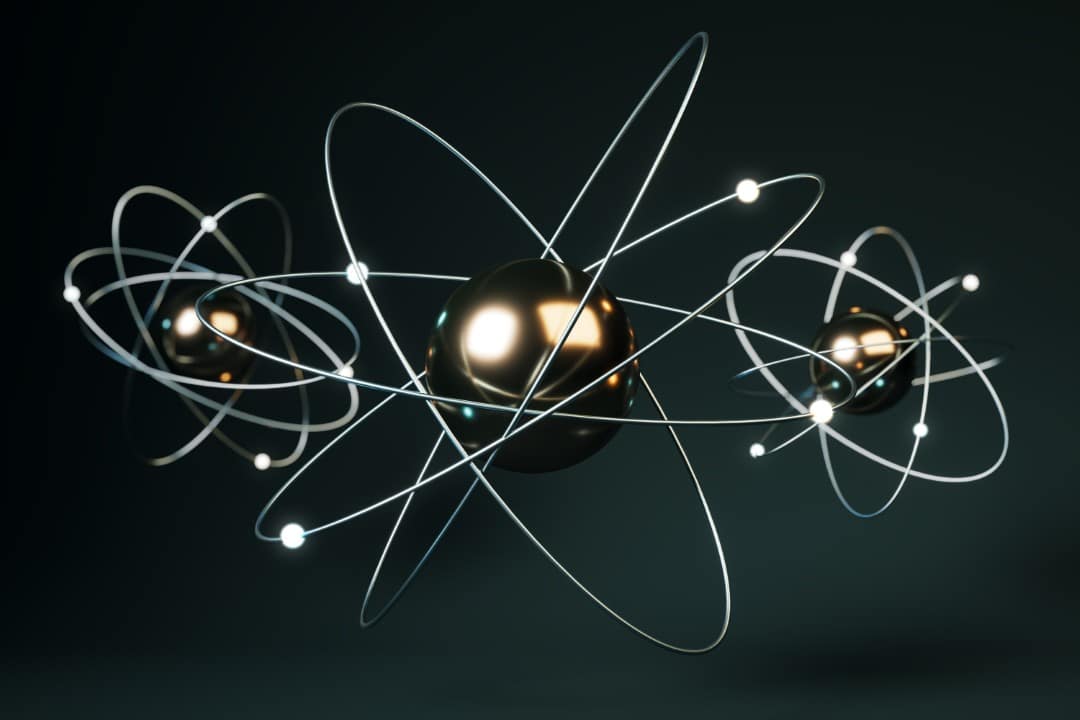
The Grande Colisor of Hádrons (LHC), operated by Organização Europeia for Pesquisa Nuclear (Cern), was the scene of the discovery of a new subatomic particle that promises to revolutionize the understanding of nuclear physics. The particle, called baryon $Xi_{cc}^{++}$, is composed of two “enchanted” quarks and one “u” quark, presenting a mass significantly greater than that of conventional protons and neutrons. Este finding occurred during the analysis of data collected by the LHCb experiment, located on the border between França and Suíça, where beams of protons are collided at speeds close to that of light. The identification of this unprecedented structure allows physicists to test with unprecedented precision Cromodinâmica Quântica, which is the theory that describes the strong force responsible for keeping the nuclei of atoms together.
The existence of particles with two heavy quarks had been predicted by theoretical models for decades, but practical detection remained one of the biggest challenges for the international scientific community. The researchers explain that, unlike ordinary baryons, where the three quarks perform a balanced “dance”, in this new particle the two heavy enchanted quarks act as a central binary system, with the light quark orbiting around them. Essa unique structural configuration provides a natural laboratory for observing how matter behaves under extreme conditions of density and energy. Além confirms Modelo Padrão predictions of physics, the discovery provides crucial data on the stability of matter and the fundamental interactions that govern the universe since its first moments after Big Bang.
Physical properties and structure of baryon with double charm
The new particle discovered has a double positive electrical charge, resulting from the combination of its three elementary constituents that form its structural basis. Enquanto the protons that make up the nucleus of everyday atoms have light quarks, the baryon $Xi_{cc}^{++}$ is dominated by the presence of two “charm” quarks, which are considerably more massive than the “up” and “down” types. The Essa characteristic makes the particle almost four times heavier than an ordinary proton, a difference in scale that makes it easier to study the internal tensions caused by the strong force.
Scientists compare this particle’s system to a binary star system, where two massive stars orbit each other while a smaller planet rotates in a more distant orbit. In the subatomic world, this asymmetry of masses between the enchanted quarks and the light quark allows for more simplified mathematical calculations to predict particle behavior. From these observations, the Cern team hopes to fine-tune the parameters of computer simulations that attempt to describe how hadrons are formed and held together inside stars and in high-energy laboratories.
The fundamental role of the strong force in the cohesion of matter
The strong nuclear force is the most powerful of nature’s four fundamental interactions, acting as the “glue” that prevents atomic nuclei from falling apart due to electrical repulsion. Despite its importance, the exact functioning of this force in complex systems still has gaps that the new discovery can help to definitively fill. By analyzing how enchanted quarks interact within the newly discovered baryon, physicists can measure the strength of this bond under high-mass conditions.
- The strong force acts over extremely short distances, on the order of $10^{-15}$ meters.
- Gluons are the mediating particles that transmit this force between quarks.
- The new particle makes it possible to test whether the strong force behaves in the same way with heavy and light quarks.
- Preliminary results indicate that the observed cohesion strictly follows the most robust theoretical predictions.
The precision of the data obtained by the LHCb detector was fundamental in distinguishing the signal from the new particle among billions of other collisions that occurred at the accelerator. The identification process requires computers to filter out particle trails that last just a fraction of a second before transforming into other forms of energy and matter. Esse technological success demonstrates that the Cern infrastructure remains the most advanced tool on the planet for exploring the limits of physical knowledge and the elementary constitution of reality.
Technological advances in rare particle detection in Cern
The detection of baryon $Xi_{cc}^{++}$ was only possible thanks to recent upgrades to the data processing systems and silicon sensors of the LHCb experiment. Esses components are capable of recording the trajectory of particles with a resolution of micrometers, allowing us to identify the exact point where the particle was created and where it decayed. The cutting-edge technology developed for these experiments often finds applications in other areas, such as diagnostic medicine and the development of new semiconductor materials.
The high radiation environment inside the LHC tunnel requires the materials used in the detectors to be extremely resistant and precise at the same time. Durante months of continuous operation, billions of events have been recorded and stored in data centers around the world for later analysis by thousands of scientists. Este global collaborative effort is what allows discoveries of such magnitude to be validated and published with high scientific rigor, ensuring that new data on enchanted quarks are accepted by the international academic community.
Implications of the discovery for the standard model of physics
Modelo Padrão is the theory that describes all known particles and three of the four fundamental forces, having been tested extensively in recent decades. The discovery of a particle with two heavy quarks once again validates the robustness of this model, while also offering clues as to where it might fail. Cada new particle found works like a piece of a puzzle that helps explain why the visible universe is composed of matter instead of antimatter.
- The confirmation of the existence of the baryon reinforces the classification of quarks into six distinct types.
- Researchers are now looking for other variations of particles that may contain “bottom” quarks.
- The measured mass of the new particle will serve as a standard for future searches in next-generation accelerators.
- Studies of the lifetime of this particle reveal details about the weak interaction at subatomic levels.
The search for new forms of matter does not end with this finding, as Cern plans to increase the luminosity of collisions in the coming years to explore even higher energies. Cientistas believe that the family of “enchanted” particles may be much broader than previously imagined, containing energy states that have not yet been observed. The baryon $Xi_{cc}^{++}$ is just the first representative of a new class of subatomic objects that will be intensively studied in the next decade of experimental research.
Perspectives for future research on enchanted quarks
The next step for the LHCb team is to more accurately measure the average lifetime of the new particle before it decays into lighter particles. Essa measurement is crucial because lifetime is directly influenced by the weak force, another of the fundamental interactions that govern radioactivity and nuclear fusion in stars. Compreender this process will allow physicists to refine the fundamental constants of nature that appear in several equations of theoretical physics and cosmology.
In addition to intrinsic properties, the scientific community is interested in observing how these heavy particles interact in dense quark and gluon plasma environments. Esse state of matter is that believed to have existed in the first microseconds after the birth of the universe, before protons and neutrons were formed. By recreating and observing these conditions on a small scale, researchers can look back in time and understand the early evolution of the cosmos and the formation of the first atomic structures.
Understanding nuclear stability and fundamental forces
The stability of everything we see, from the cells in the human body to distant galaxies, depends entirely on the delicate balance between subatomic forces. The discovery of Cern provides a new ruler to measure this balance, allowing scientists to understand why certain combinations of quarks are stable while others disintegrate instantly. Essa understanding is vital for applied nuclear physics, influencing everything from energy production to the synthesis of new chemical elements in the laboratory.
The complexity of the strong force lies in the fact that, unlike gravity, it becomes more intense as quarks try to move away from each other. Esse phenomenon, known as confinement, is the reason why we never find isolated quarks in nature, always in groups of two or three. The new particle with two enchanted quarks challenges theorists to explain how this confinement operates when most of the mass is concentrated in two central points, changing the traditional dynamics of previously known light baryons.
Contribution of international collaboration in the LHCB experiment
The success of this experiment is the direct result of cooperation between hundreds of research institutions from dozens of countries, including significant contributions from Brazilian and Latin American scientists. The infrastructure needed to make such discoveries exceeds the financial and technical capacity of any single nation, highlighting the importance of open and collaborative science. No Cern, sharing resources and knowledge allows humanity to advance into the frontiers of the unknown in an efficient and transparent manner.
Analyzing the double charm baryon data involved years of instrument calibration and developing artificial intelligence algorithms to recognize complex patterns in the collision results. Esse continued effort ensures that the discovery is free from statistical errors and that the results can be replicated by other independent research groups. Transparency in the scientific methods used at LHCb ensures that each new particle added to the official catalog is based on solid and verifiable evidence.



